Abstract: As a treasure of Chinese green Tea, Biluochun is steeped in mystery and romance through its origins and legends. This article analyzes the historical roots, cultural connotations, quality characteristics, production processes, market trends, and values of China's Biluochun tea to elucidate its history, culture, and modern value. (Limited expertise; errors are inevitable. Please bear with me. Personal opinion; April 2024.)
I. The Historical Origins of Biluochun Tea
1.1 Origin and Legends
Biluochun tea, as a gem of Chinese green teas, is shrouded in mystery and romance through its origins and legends. Historical records indicate that Biluochun originated from Dongting Mountain near Lake Taihu, where the mountains and water converge, providing ideal conditions for tea cultivation. There is a widely circulated legend about Biluochun's origin.
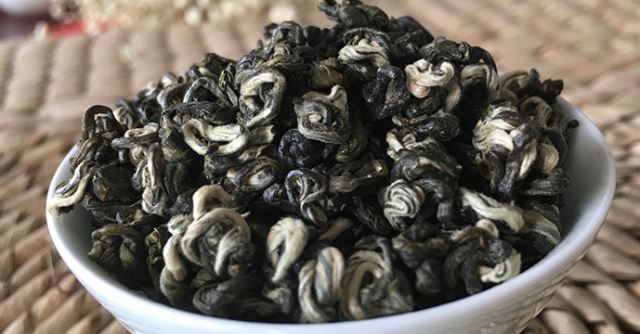
Legend has it that long ago, there lived a diligent and kind-hearted maiden on Dongting Mountain by Lake Taihu. She would go up the mountain daily to pick tea leaves, skillfully crafting them into fragrant and delicious beverages. One day, she encountered an elderly man with white hair who told her about a miraculous tea tree on the mountain. He said its leaves were curled like snails, green in color, and had an intoxicating aroma, and drinking it could prolong life. Intrigued, the maiden followed the old man to find this wondrous tea tree.
After a strenuous search, the maiden finally found the magical tea tree. She carefully picked the leaves and made them at home with great care. When the first cup of Biluochun was brewed, the entire house was filled with a refreshing fragrance. After tasting it, she felt invigorated and as if she were in a paradise. From then on, Biluochun became renowned far and wide, becoming a precious tea variety.
This legend not only adds a touch of mystique to Biluochun but also reflects people's yearning for a better life. Today, Biluochun is an integral part of Chinese tea culture, attracting countless tea enthusiasts with its unique qualities and cultural significance. While savoring Biluochun, people also appreciate the depth of Chinese tea culture.
1.2 Ancient Textual Records
In ancient texts, Biluochun tea is frequently mentioned, with its unique qualities and flavors praised by scholars throughout history. According to the Suzhou Annals, Biluochun was already a tribute tea during the Tang Dynasty, indicating its high quality. The famous Song Dynasty scholar Su Shi wrote, “People say the mountains and waters are excellent, with Biluochun under ten thousand families,” vividly depicting the scenery of Biluochun amidst the Suzhou mountains and waters. In his work “Tea Notes,” Ming Dynasty tea sage Xu Chishe lavished praise upon Biluochun, saying it had “a fresh aroma and a mellow taste, unmatched by other teas.”
Ancient texts not only document the quality of Biluochun but also detail its unique production process. “Qing Jia Lu” records that the production of Biluochun involves meticulous steps, including picking, fixing, rolling, and drying. Each step requires careful handling to produce high-quality Biluochun. Additionally, these texts record the circulation of Biluochun during the Ming and Qing Dynasties, noting its export overseas and its role in international tea exchanges.
Through a deep study of ancient texts, we can see how Biluochun maintained its unique qualities and flavors throughout history. These texts provide insights into Biluochun's historical origins, cultural significance, quality characteristics, production processes, and market status. The praise and records in ancient texts further attest to Biluochun's importance and unique value in Chinese tea culture.
1.3 Notables and Biluochun
Throughout history, there have been intricate connections between notable figures and Biluochun tea. Since ancient times, Biluochun has attracted the admiration of countless scholars due to its unique qualities and flavors. Tang Dynasty poet Lu Yu lavished praise upon Biluochun in his work “The Classic of Tea,” commending its “fragrance like orchids and lilies, and taste like sweet dew.” Song Dynasty scholar Su Dongpo had a particular fondness for Biluochun, writing in his poetry, “Biluochun flying emerald amidst the beauty of Lake Taihu, with the new rain singing the fragrance of clouds and waters.” These verses not only showcase Biluochun's exquisite qualities but also reflect the profound affection of notable figures for Biluochun.
Ming Dynasty writer Feng Menglong frequently mentioned Biluochun in his works, describing it as “green like a snail, fragrant like orchids and lilies.” This description not only accurately captures Biluochun's appearance but also embodies its unique aroma. Qing Dynasty Emperor Qianlong was particularly fond of Biluochun, often tasting it during his southern tours and praising it for its “clear fragrance and mellow taste, indescribably wonderful.” The admiration and endorsement of these notable figures not only enhanced Biluochun's reputation but also enriched its cultural significance.
Besides the admiration expressed in literature, notable figures incorporated Biluochun into their daily lives. Historical records show that Ming Dynasty painter Wen Zhengming depicted images of Biluochun tea trees in his paintings, showcasing his love and reverence for Biluochun. Qing Dynasty scholar Zheng Banqiao considered Biluochun an essential part of his daily routine, writing in his poetry, “The fragrance of Biluochun fills the room, idly sipping fragrant tea.” These personal connections between notable figures and Biluochun further highlight its significant place in their hearts.
By examining the relationships between notable figures and Biluochun, we find that Biluochun won their admiration and endorsement not just for its unique qualities and flavors, but also for its important role in their lives. Their admiration and endorsement not only increased Biluochun's reputation and prestige but also added rich cultural significance and historical depth. Biluochun continues to attract modern attention and appreciation with its unique charm.
II. Cultural Connotations of Biluochun Tea
2.1 Biluochun in the Context of Tea Culture
Biluochun, as one of China's traditional teas, holds a significant position in tea culture due to its profound cultural heritage and unique quality features. In the context of tea culture, Biluochun is more than just a beverage; it is a symbol and a carrier of culture and tradition.
Within tea culture, Biluochun stands out as a shining gem due to its unique production techniques and quality characteristics. Historical records show that the production techniques of Biluochun have a long history, refined over generations by tea farmers to form distinctive processes for picking, initial processing, and finishing. These techniques not only ensure the stability and excellence of Biluochun's quality but also make it unique within tea culture.
In the context of tea culture, the quality features of Biluochun are fully displayed and recognized. Its appearance is curled like a snail, with a Silver-green hue, a refreshing aroma, and a fresh, sweet aftertaste. These features have earned Biluochun a prestigious reputation among tea enthusiasts, making it one of the most beloved varieties. Additionally, the identification and selection techniques for Biluochun have become important components of tea culture, infusing vitality into the preservation and development of tea culture.
Beyond being a beverage, Biluochun plays a significant role in tea culture. It is a key component in tea ceremonies, where its unique qualities serve as a medium for tea masters to showcase their skills. Furthermore, Biluochun is widely used in health and wellness practices, with its abundant polyphenols, amino acids, and other nutrients offering antioxidant and anti-aging benefits, making it highly popular.
In summary, Biluochun, within the context of tea culture, possesses unique quality features and production techniques, carrying rich cultural significance and Health benefits. Under the influence of tea culture, Biluochun will continue to be preserved and developed, bringing more beauty and enjoyment to people's lives.
2.2 Biluochun and Poetry
Biluochun tea, as a treasure of Chinese tea culture, has always been closely associated with poetry. Throughout ancient texts, there are numerous beautiful depictions and heartfelt praises of Biluochun. In his work “The Classic of Tea,” Tang Dynasty poet Lu Yu provided detailed descriptions of Biluochun's color, aroma, taste, and shape, praising its “aroma like orchids and