Pu'er Tea is known for its characteristic of improving with age, but this improvement requires a certain amount of time and proper storage conditions.
In terms of home storage, a while ago, a tea enthusiast from Guangdong consulted our appraiser via WeChat:
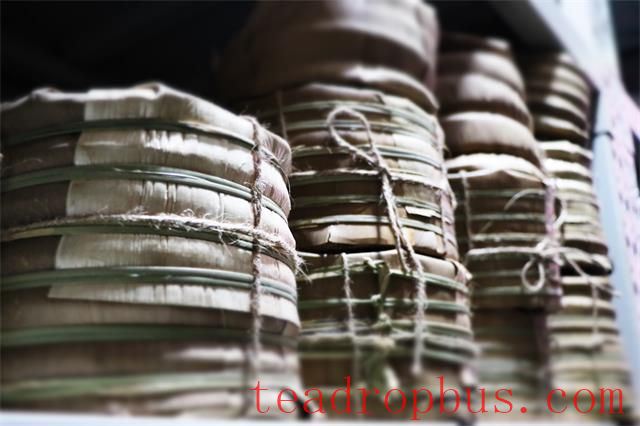
“Why does other people's Pu'er tea improve over time, while mine gets ruined? After a few years, some taste even worse, and some even develop moldy or rotten flavors.”
Upon inquiry, we learned that his method of storing tea was learned from a friend in Kunming. The friend mentioned that in Kunming, he casually places the tea on shelves without special management, and after a few years, the flavor improves. Therefore, he used the same method to store his Pu'er tea in Guangdong.
Upon hearing his storage method, we felt sorry for those few cakes of good tea, but also wanted to prevent such tragedies from happening again.
In fact, different regions have different climate types and geographical environments, resulting in variations in temperature and humidity.
During the storage process, the transformation of the internal substances in Pu'er tea has specific requirements for temperature and humidity, leading to different considerations for storing Pu'er tea in different regions.
So, what are the considerations for storing Pu'er tea in the Guangdong region?
According to the book “Chemistry of Yunnan Pu'er Tea,” the optimal temperature for storing Pu'er tea is between 20-30°C, and the average humidity needs to be controlled below 75%, along with suitable ventilation conditions, to ensure the formation of Pu'er tea's excellent flavor quality.
Guangdong is located in the eastern coastal area of China and has a subtropical monsoon climate, with high temperatures throughout the year, abundant rainfall in summer, and high humidity.
The temperature can reach above 40°C at its highest and drop below 0°C at its lowest, with significant fluctuations. The humidity is highest in March, April, and May, generally exceeding 93%.
In a high-temperature and high-humidity environment, the oxidation rate of tea leaves accelerates, effective substances rapidly decrease, and the internal substances become diluted.
Aromatic substances quickly volatilize in high temperatures, reducing the soluble substances in the tea, which results in an inferior taste when brewed.
Secondly, if stored in a high-humidity environment for a long time, Pu'er tea is prone to mold, imparting a moldy flavor whether dry or brewed.
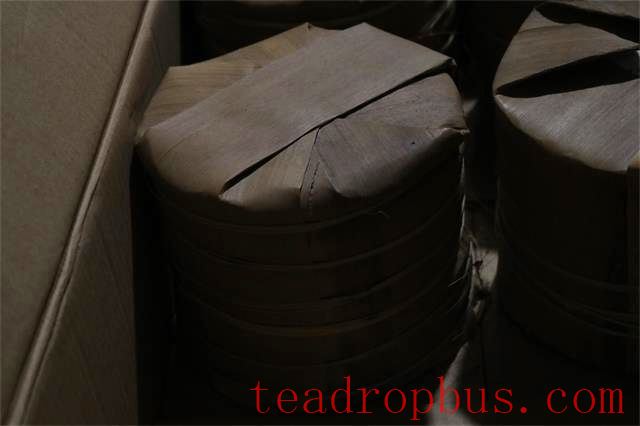
Additionally, tea leaves have strong adsorption properties. When placed in a high-humidity area, a large amount of moisture in the air will be absorbed by the tea leaves, producing a damp taste in the tea infusion.
Pu'er tea stored for a long time in high-temperature and high-humidity environments will undergo deterioration, developing a rotten flavor. Such tea is not recommended for consumption due to health concerns or taste quality.
Therefore, when storing Pu'er tea in Guangdong, the most critical factors to control are humidity and temperature. Specific methods include:
1. Controlling Temperature and Humidity
During hot and dry seasons, humidity control is not necessary, but temperature control is required. Pu'er tea cakes can be stored on indoor tea racks that provide good ventilation and heat dissipation.
During hot and rainy seasons, both temperature and humidity need to be controlled. Air conditioning can be used to regulate the temperature.
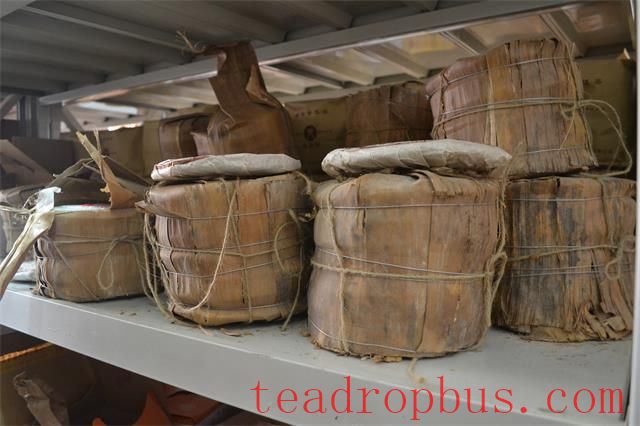
Dehumidifiers can be used for humidity control, or strong-absorbent charcoal can be placed on the floor. However, more importantly, windows should be kept closed to prevent high-humidity outdoor air from entering. Tea can be stored in boxes made of material with strong drying properties.
2. Using Different Methods for Different Storage Environments
In large storage environments where a lot of tea is stored, the amount of absorbed moisture naturally increases, so dehumidifiers can be used.
For home storage, clean, odorless charcoal can be placed around the stored tea to absorb moisture and reduce humidity.
3. Prevention is Better Than Cure
Attention should be paid to disaster prevention. For example, the typhoon “Mangkhut” had a significant impact on tea warehouses in Guangdong, destroying many Pu'er teas submerged in water. Therefore, prevention is key.
In areas prone to flooding, try to store tea in higher floors of buildings to avoid flood damage.