The production area of Ruian Qingming Morning Tea is located on the high mountains along the shores of Ruian's water source protection zone, where it is often shrouded in mist and boasts superior natural conditions.
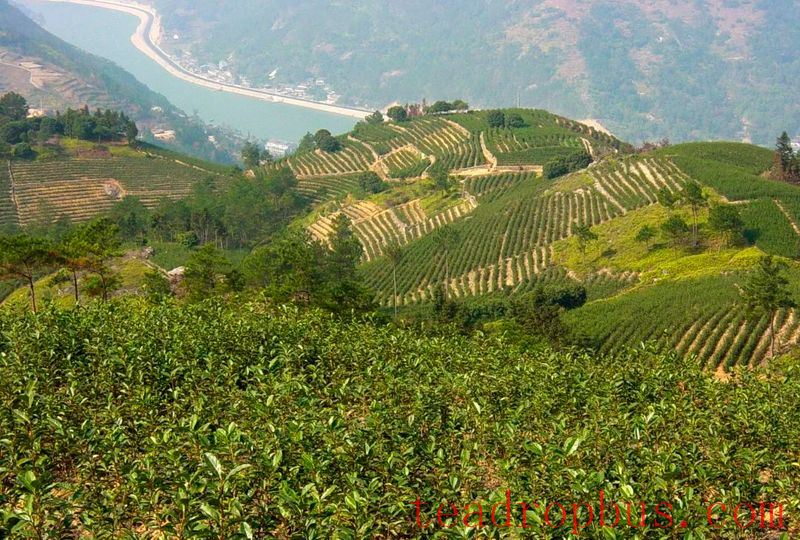
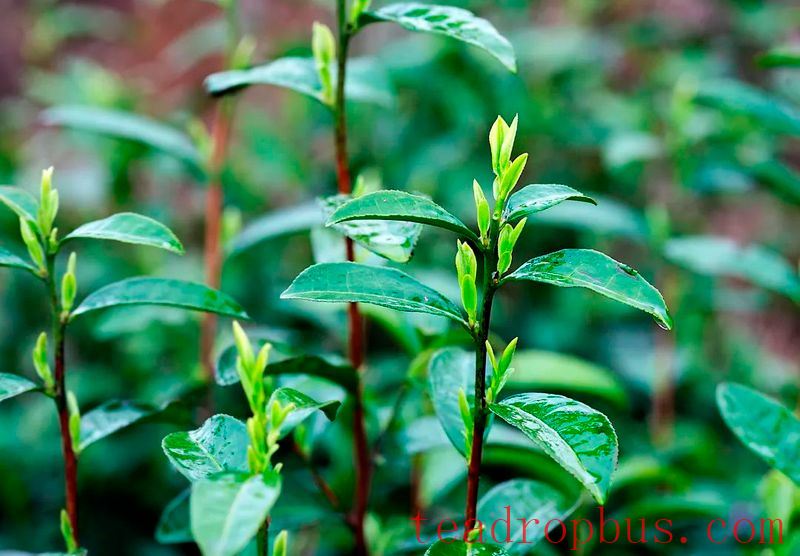
The average temperature for the sprouting period of Ruian Qingming Morning Tea is 8°C, which is 2-3°C lower than that of ordinary tea varieties. It sprouts about 20 days earlier than the West Lake Longjing variety, making it a rare ultra-early variety. Harvesting begins right after the Spring Festival and enters its peak production season around the Qingming Festival, hitting the market over ten days earlier than other varieties. The “Ruian Qingming Morning” tea is processed using the “Warm Stir-fry Green” method, producing a Green Tea with tightly bound twisted leaves and a lustrous green color; its aroma is fresh and elegant; the broth is bright light green; the taste is rich and refreshingly mellow; the infused leaves are tender and uniform. In 2012, “Ruian Qingming Morning” was registered as a certified geographical indication trademark.
Ruian has a long history of tea production. According to the “Tang History: Food and Goods Annals,” during the Tang Dynasty, there were 10 states and 55 counties in Zhejiang Province that produced tea, including Yongjia, Angu, Hengyang, and Lecun Counties (Angu is today's Ruian). During the Tang Dynasty, tea was offered as tribute, while in the Song Dynasty, it became popular among the people. Ruian has always been a center of cultural prosperity, and many intellectuals have formed a deep bond with Ruian Qingming Morning Tea. Over 1,500 years ago, Tao Hongjing, known as the “Mountain Chancellor,” lived in seclusion and practiced Daoism in Mount Tao, savoring tea and cultivating medicinal herbs beside Fugquan Temple, authoring the “Compendium of Materia Medica.” The Eastern Jin Daoist Xu Xun, revered as “Xu Zhenjun,” once practiced Daoism at the foot of Holy Well Mountain, drawing water from the Holy Well to drink the Qingming Morning Tea, performing miracles with divine powers. During the Southern Song Dynasty, spanning a hundred years, the literati of Caocun, represented by Cao Bin, a former Minister of Rites, lived below Holy Well Mountain, drinking tea and reading scriptures, producing numerous talents, including nearly a hundred civil and military scholars, earning the village the title of “China's First Village of Scholars.” In the Ming dynasty, during the Jianwen reign, the loyal minister Zhuo Jing composed poems while drinking tea, expressing his loyalty and integrity in “Guest Arrival”: “It takes repeated calls to prepare tea outside the bamboo grove, and there's no liquor to be bought around the village. Sharing coarse wheat meals without difficulty, one knows that such a man isn't shallow in spirit.” Sun Yiyán, a scholar of late Qing literature, praised Ruian Qingming Morning Tea as having a flavor surpassing that of Dragon Well.

Method of Enjoyment
Choice of Teaware
The best choice for brewing Ruian Qingming Morning Tea is a glass cup, especially a tall straight glass cup. This not only enhances transparency, allowing people to appreciate the tea and its appearance, but also prevents young tea leaves from being overcooked, preserving their fresh color and delicate flavor.
Warming the Cup
Before starting to brew, rinse the teaware with hot water to raise its temperature, helping to bring out the aroma of the tea.
Adding the Tea
Ruian Qingming Morning Tea comes in needle-shaped and flat varieties, and the mid-infusion method can be used: add water to one-third full, then add the tea, let it soak, and then add water to seven-tenths full; or the bottom infusion method can be used: add the tea first, then pour in the water. Generally, use 3-5 grams of tea, depending on personal taste.
Brewing
In general, it is most suitable to brew with hot water at 80-90°C.
Tasting
First, observe its shape, then smell its fragrance, and finally savor its taste.