Geographical Location and Historical Development
The Wenshan Prefecture is located in the southeastern part of Yunnan Province, between longitudes 103°35′ to 106°12′ east and latitudes 22°40′ to 24°28′ north. To the east, it borders Baise City in Guangxi Zhuang Autonomous Region; to the south, it adjoins Vietnam; to the west, it neighbors Honghe Hani and Yi Autonomous Prefecture; and to the north, it shares a boundary with Qujing City. The forest coverage rate reaches 50%. The international border is 438 kilometers long, and the land area is nearly 32,000 square kilometers.
In the Western Han Dynasty's Yuanding sixth year (111 BC), Wenshan Prefecture belonged to Zangke Commandery. From the Three Kingdoms to the Eastern Jin period (220-316 AD), Zangke Commandery was divided to establish Xinggu Commandery. During the Tang Dynasty, it came under the jurisdiction of Nanning Prefectural Commandery and Tonghai Prefectural Commandery. In the Song Dynasty, it belonged to Xiushan Commandery and Shicheng Commandery, also known as Temao Dao. In the Ming Dynasty, it was governed by Lin'an Circuit Pacification Commissioner. In the Qing Dynasty, it came under the administration of Guangnan Prefecture, and Kaihua Prefecture was added. During the Republic of China period, it successively belonged to Linqingguang Circuit, Mengzi Circuit, and in 1942, it was under the Second Administrative Inspectorate District, which became the Fourth Administrative Inspectorate in 1946. After the founding of the People's Republic of China, it was named Wenshan Special District. On April 1, 1958, the Wenshan Zhuang and Miao Autonomous Prefecture was established. As of 2025, Wenshan Prefecture governs one city and seven counties (Wenshan City, Yanshan County, Xichou County, Malipo County, Maguan County, Qiubei County, Guangnan County, Funing County), 104 towns (townships and subdistricts), and 960 administrative villages (community residents committees). There are 11 ethnic minorities, with a resident population of 3.6907 million people.
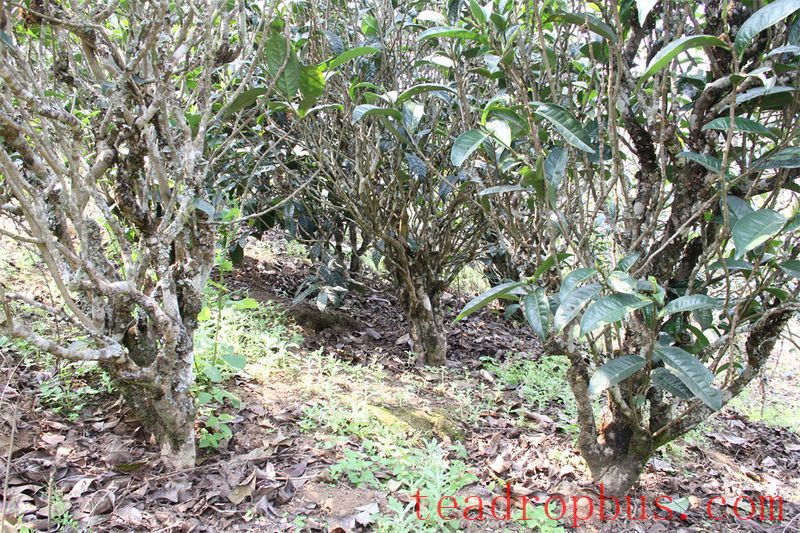
The “Guangnan County Annals” compiled in 1825 (1995 edition) records: “The cultivation of Tea in Guangnan began in the 13th year of the Chongzhen era of the Ming Dynasty (1640 AD), initially concentrated around Dihuxi Village.” According to “From the Qing Dynasty to Chinese Tea: The Most Authentic Pu'er Tea,” the earliest tea product development and brand creation in Wenshan Prefecture can be traced back to ‘Daughter Tea (also known as Girl Tea)' and ‘Bamboo Tube Tea' from Dihuxi Village in Guangnan County. According to Zhang Hong's “New Words of Southern Yunnan” in the first year of the Qianlong era (1736): “Daughter Tea is also a type of bud tea, picked after the Grain Rain period, made into balls weighing from one to ten catties, all gathered and processed by ethnic women, sold for silver to accumulate as dowry, hence the name.” The earliest recorded history of tea introduction is: “In 1907, Guangnan in Wenshan started to introduce large-leaf tea.” “By the 1930s, the tea production situation in Yunnan Province was roughly as follows: Xishuangbanna, about 20,000 piculs; … Shidian, about 2,000 piculs; Guangnan, about 5,000 piculs. These teas, whether in terms of processing techniques or origin of the tea variety, can be considered as Pu'er tea in a broad sense.”
After the mid-1960s, with financial support from the state, the Malipo County Bazidu Tea Factory and Guangnan County Dihuxi Tea Factory successively purchased tea kneading machines from Simao, marking the beginning of mechanical tea production in the prefecture. From the mid-1970s to the end of the 12th Five-Year Plan, the region experienced successive waves of modern tea plantation production and development. With the advancement of modern tea science and technology and the increasing application of processing machinery, the tea industry showed an accelerated development trend.
Geographic Environment and Climate
The tea region of Wenshan Prefecture is situated on the southeastern slope of the Yunnan-Guizhou Plateau, covering most of the Liuzhao Mountain Range. The Tropic of Cancer runs through its middle. The highest point is Mount Laojun in Wenshan at an altitude of 2,991.2 meters, while the lowest point is Tianbao National Border Port in Malipo County at an altitude of 107 meters. The average altitude ranges between 1,000 and 1,800 meters, with mountainous and semi-mountainous areas accounting for 97% of the total area, karst areas occupying 51%, and distinct karst topography and geomorphology features. The tea region of Wenshan Prefecture has a subtropical plateau monsoon climate, influenced by warm and humid airflows from the Bay of Bengal and Beibu Gulf during summer, and predominantly by dry and cold airflows from the west and northwest in winter. Most regions experience mild summers and winters without severe cold, with rainy and hot seasons coinciding, small annual temperature differences, and large diurnal temperature variations. The terrain is highly undulating, and the three-dimensional climate characteristics are particularly pronounced.
The entire prefecture is divided into six climatic zones: tropical, southern subtropical, central subtropical, northern subtropical, warm temperate, and mid-temperate. The annual average temperature ranges from 15.8°C to 19.3°C, with frost-free periods lasting 356 days. Annual average precipitation ranges from 992.2 to 1,329.4 millimeters, with an average value of 1,254 millimeters, and the annual average sunshine duration is between 1,494.2 and 2,055.5 hours. It is characterized by abundant rainfall but uneven distribution, with more in the southwest and less in the northeast and central-western regions. The region has distinct dry and wet seasons, rich solar radiation energy, and sufficient thermal resources. The soils in the tea region of Wenshan Prefecture are mostly red soil, yellow soil, and yellow-brown soil, with the largest area being red soil series, followed by limestone soil and paddy soil. The pH values of most areas range from 5.5 to 6.5. The unique geographical location and climatic environment of Wenshan Prefecture have nurtured the diversity of Camellia species.