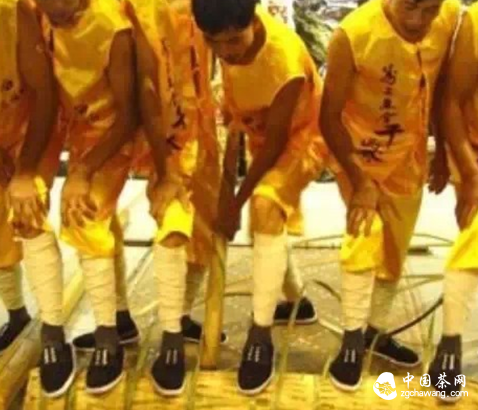
Anhua Dark Tea can be divided into "Three Tips, Three Bricks, and One Hua Juan." Among them, the "Three Bricks" are: Hua Zhuan (Floral Brick), Hei Zhuan (Black Brick), and Fu Zhuan (Fu Brick). Anhua Dark Tea was historically mainly supplied as border-sale tea, continuously transported to the homes of herders thousands of miles away in the frontier regions. It was believed to counteract the effects of rich meats, reduce heat, and significantly aid in fat digestion, becoming a common beverage for the people of the borderlands. What makes these three brick teas so remarkable, and what are their respective characteristics?
First, Hua Zhuan (Floral Brick), evolved from Hua Juan tea, with patterned designs printed around the edges of the brick surface.
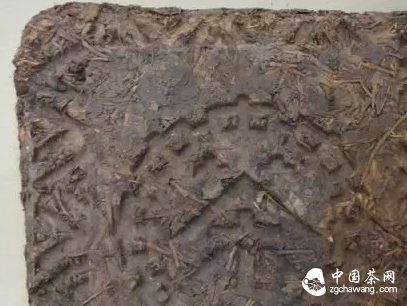
The processing method for Hua Juan involved using high-quality raw dark tea leaves, compacted with a rod and hammer into a cylindrical shape within a long bamboo basket. Later, "Hua Juan" was reformed into rectangular brick tea, with patterned edges on the front. The brick surface has a blackish-brown color, the inner quality features a pure aroma, a rich and slightly astringent taste, a reddish-yellow liquor, and evenly mixed old and tender leaves in the brewed tea.
Second, Hei Zhuan (Black Brick). The pressing process for Hei Zhuan is basically the same as that for Hua Zhuan.
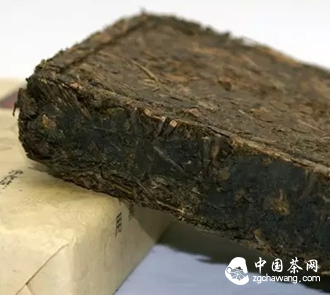
Hei Zhuan tea is named because it uses raw dark tea leaves as its material, resulting in a black, moist appearance, and the finished product is brick-shaped. During production, the raw material is first sieved, sorted, cleaned, and blended in proportion. During machine pressing, it undergoes high-temperature steam sterilization first, then high-pressure shaping, inspection and trimming, slow drying, and finally packaging into the finished brick tea.
The brick surface is smooth and flat with distinct edges and corners; the tea leaves have a pure aroma, the liquor is reddish-yellow tending towards brown, and the taste is relatively mellow and rich. This product is a semi-fermented tea, which removes the grassy smell from fresh leaves. Combined with the compactness of the brick, it is not prone to dampness and mold. It can be stored for several years without losing its flavor and improves with age. It is suitable for boiling and drinking and can also be mixed with dairy products and sugar for consumption.
Third, Fu Zhuan: Processed during the dog days of summer (Fu Tian), hence called "Fu Zhuan Tea." The pressing of Fu Zhuan Tea involves steps such as raw material processing, steam piling, pressing and shaping, flowering and drying, and finished product packaging. Its pressing procedure is basically the same as that for Hei Zhuan and Hua Zhuan, with the main difference being the thickness of the brick. This is because Fu Zhuan has a unique "flowering" process, which, besides requiring many conditions, importantly demands that the brick body be moderately compact to facilitate the reproduction of microorganisms.
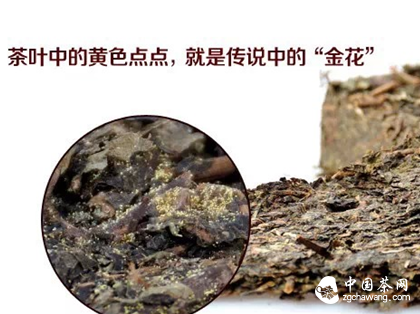
Another difference between Fu Zhuan and Hei/Hua Zhuan is that after being removed from the brick mold, Fu Zhuan is not sent directly to the drying room. Instead, to promote "flowering," it is first wrapped in trademark paper and then sent to the drying room. The drying speed is not rushed; the entire drying period takes more than twice as long to allow for slow "flowering" (i.e., the growth of Eurotium cristatum). Its medicinal effect is similar to that of Smilax glabra (Tu Fu Ling), hence it is called "Fu Tea" or "Blessing Tea." Previously made entirely by hand, it is now largely machine-pressed.