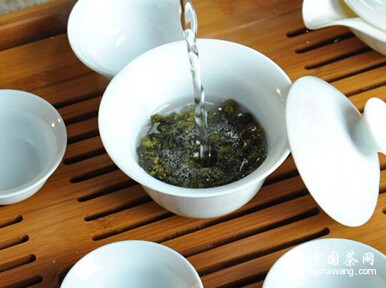
Spiral Pour
This water line allows the edge parts of the lid bowl and the tea leaves on the surface to come into direct contact with the poured water, increasing the fusion of tea and water at the first moment of pouring.
This pouring method is suitable for black tea, green tea, and white tea. It is also appropriate for later stages of brewing when the flavor has become weaker and the tea essence needs to be extracted more quickly.
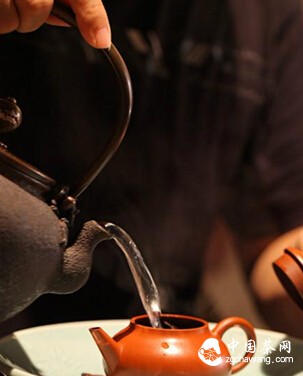
Circle Pour
Circle pour, as the name suggests, means the water line rotates a full circle along the lid or cup rim, and when withdrawing the water, it returns to the starting point. When pouring, attention should be paid to adjusting the rotation speed according to the pouring speed: if the water stream is thin, rotate slowly; if thick, rotate quickly.
This water line allows the edge parts of the tea to come into contact with water first, while the central part of the surface mainly contacts the water only after the water level rises, resulting in lower fusion of tea and water at the first moment of pouring.
This pouring method is suitable for green teas with relatively high tenderness.
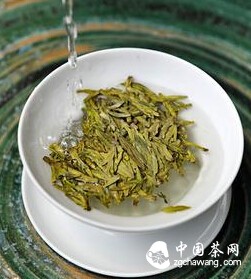
Single-Point Pour
This refers to pouring water at a fixed point. In this method, only one side of the tea comes into contact with the water, resulting in poor fusion at the beginning of pouring. A quick note: if the pouring point is on the edge of the lid bowl, the fusion is better compared to pouring between the bowl and the tea leaves.
This pouring method is suitable for teas that need to be poured out quickly, or for broken tea leaves.
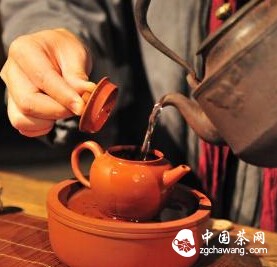
Center-Point Pour
The center-point pour is a rather extreme method, usually paired with a thin water stream and slow, prolonged pouring. In this way, only a small central part of the tea leaves directly contacts the water stream, while the rest dissolves at an extremely slow pace, minimizing the fusion of tea and water at the first moment and creating the most distinct layering in the tea soup. For many teas with fermentation characteristics, this can result in overly concentrated flavor and separation from the tea soup.
This pouring method is suitable for teas with relatively high aroma.