Say Goodbye to "Deficiency" Health Practices
Modern people are increasingly busy. After work each day, they take a car home. Whenever they have free time, they prefer to stay at home and sleep. Few people like to exercise, resulting in either one kind of "deficiency" or another. In short, the body is always in a sub-healthy state. So what methods can help everyone break free from "deficiency" and bid farewell to this word for us office workers?
Below, Qiao'en Tea Industry introduces a method to say goodbye to "deficiency" and welcome the best time, restoring our vitality.
What is Tea Moxibustion?
Tea moxibustion refers to using the heat of tea steam, through meridians or acupoints, to stimulate the body's immune function, balancing body and mind. Tea moxibustion uses heat as yang and tea as a purifier, combining meridians activation, yang elevation, and turbidity removal. It is simple, easy to perform, and effective.
Tea Moxibustion Can Treat Illnesses Like Acupuncture
Everyone is familiar with acupuncture and moxibustion. In fact, there is also something called tea moxibustion. Tea can cleanse all meridians and detoxify various poisons. Food and medicine share the same origin; tea leaves are also medicine, capable of treating diseases and even resisting smog.
Tea can be divided into four grades: baby tea, maiden tea, adult tea, and old man tea.
Tea harvested before Qingming Festival is baby tea. Drinking it is not very bitter, but it puts pressure on the stomach. Because baby tea, like infants, has strong vitality, people with stomach acid or the elderly can drink some baby tea to supplement vitality.
Tea harvested before Guyu (Grain Rain) is called maiden tea. Although cheaper than baby tea, it is most suitable for the Chinese spleen and stomach, being relatively mild. It tastes bitter but has energy.
Tea harvested before Lixia (Start of Summer) is adult tea. It has a strong flavor but lacks vitality.
Tea harvested before Liqiu (Start of Autumn) is called old man tea. It tastes very bitter but has no energy. Elderly people who drink it feel comfortable in the stomach, satisfying the palate without harming the spleen and stomach.
How to Perform Tea Moxibustion?
The first step is smelling. After waking up and freshening up, put about 5 grams of tea leaves in a cup, pour boiling water over them, and smell the rising steam. Alternately press one nostril and inhale, three times for each nostril, then inhale with both nostrils three times. After each inhalation through the nose, exhale completely through the mouth. Beneficial components like tea polyphenols and tea glycerin evaporate with the boiling water. Inhaling them into the lungs helps exchange fresh air with waste gas, preventing pollutants like PM2.5 from staying in the body. The body has self-cleaning functions, but when it is unwell, impurities can take advantage. The action of smelling the tea steam is like a high-pressure water gun in a car wash, expanding the alveoli, allowing impurities to swirl with the hot air, then expelling bacteria and viruses through forceful exhalation.
The second step is looking. Stare at the area above the cup mouth for one minute, then switch eyes, letting the eyes be covered with steam. Then move the eyes while looking, rotating 30 to 50 times, then continue with the other eye. The eyes are the windows of the liver; when liver function is strong, the eyes are good. The steam carrying tea polyphenols and tea glycerin attaches to the eyeballs, also stimulating tears, thus helping detoxification. People with liver issues may cry without tears because toxins in the liver need to be expelled but the tear ducts are blocked. At the same time, blink more to stimulate the muscles around the eyes and the fundus arteries, increasing the elasticity of the eyeballs, making the eyes brighter.
The third step is steaming. First, steam the lower jaw for two minutes to warm it, which benefits the spleen and stomach. Then steam the area between the eyebrows (yintang) for another two minutes. The yintang point corresponds to the pituitary gland, which can be considered the command center of hormones in the body. If this command center is strong, hormone secretion is robust, and the body is healthy. The system that produces hormones in the body cannot be reversed, but it can be slowed down, which is what we call youthfulness. As long as the pituitary gland and hormone production system are good, even the elderly can walk briskly.
The fourth step is drinking. Humans typically have 32 teeth. The visible part of incisors is at most 1.5 cm, but an incisor is actually 5.2 to 5.6 cm long, meaning about 4 cm is embedded in the gums and jawbone. 32 teeth are like 32 needles piercing the oral cavity, and the nerves in the teeth are highly developed. Through tea moxibustion, we stimulate acupoints and nerves, promoting blood circulation.
After the above steps, the tea water temperature is around 70°C. Holding this temperature in the mouth may cause tooth soreness, which is a good sign. Drinking tea raises yang energy, and through the teeth, it acts on the brain and can also warm the governor vessel (du mai) along the spine. At the same time, the heat stimulates gum regeneration, reducing tooth pain. Good teeth mean food is chewed finely, digested quickly in the stomach, relieving pressure on the stomach.
Some people, after one month of tea moxibustion, feel as though they always have a preserved plum in their mouth. Initially suspecting high blood sugar, a blood test shows no problem. This is actually due to gum regeneration caused by tea moxibustion, breaking through the oral mucosa, with cells and proteins dissociating, leading to abundant saliva production. This is one of the benefits of tea moxibustion.
Drinking tea has rules. Drinking tea in the morning raises yang; it should be drunk in the morning. In the afternoon, one should nourish yin, for example, by taking American ginseng or Dendrobium officinale. Tea is alkaline, while the human body tends to be acidic. Both Western and traditional Chinese medicine suggest that excess acidity in the body is harmful, so drinking tea helps balance acidity and alkalinity. Tea should be drunk hot; cold tea has toxic tea glycerin and tea polyphenols and harms the spleen and stomach. The entire tea moxibustion process — one, smelling cleans the lungs; two, looking brightens the eyes; three, steaming delays aging and increases vitality; four, drinking heats the teeth. After completing these steps, brew a second round of tea, filling the cup to about 80%.
Tea moxibustion also brings an unexpected benefit: the process of inhaling and exhaling drives the movement of the diaphragm. Lung problems usually occur in the lower lobes, where dust and bacteria mostly settle. When you fully inhale and then exhale, these bacteria are expelled. Additionally, the breathing movement stimulates the diaphragms between the upper, middle, and lower jiaos. Taoist, Confucian, and Buddhist traditions all advocate diaphragm exercise to enhance core energy. Some athletes may have well-developed muscles but poor performance due to insufficient diaphragm energy, which we call weak adrenaline function.
Choosing the Right Tea Can Double the Effect
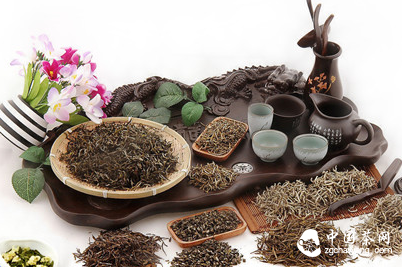
Adding other ingredients to tea can enhance the effects of tea moxibustion. If the lungs are not in good condition, drink mulberry leaf tea. Pick mulberry leaves, wash them clean, dry them, and crush them. Brew them as tea. This is one of the best foods for preventing and treating pneumonia. It also has cosmetic benefits. Silkworms eating other leaves become thin, dark, and produce yellow cocoons, but when eating mulberry leaves, they become plump, white, and produce white cocoons. This shows mulberry leaf's whitening effect. Lotus leaf tea is also excellent, fragrant, moistening the lungs and nourishing yin. Other options include peach tree leaves, eucommia, pear leaves, jasmine, and flowers of red-leafed loropetalum. Flower petals are the most essential part of a plant. Men can drink eucommia to nourish the kidneys. Women can drink peach blossom to improve blood flow, pear blossom to moisten the lungs, and jasmine to beautify the skin. However, not all petals are edible; for example, rhododendron, azalea, and oleander flowers cannot be eaten.
Eating more lotus root is also beneficial. Southern lotus root is better than northern Chinese yam. Similarly, water chestnuts can be eaten more and can even help treat lung cancer. Current soil and water sources may not be safe, so buy water chestnuts, soak them in salted water for a while, wash them thoroughly, and then eat them raw. Boiling them is safer, though the effect is slightly reduced. Avoid buying peeled ones when purchasing.
Regarding the conflict between drinking tea and taking medication: if you take medication with tea, half of the drug's effect will be destroyed, so use warm water instead. In spring, go to bed early and rise early; in summer, go to bed late and rise early; in autumn, go to bed early and rise early; in winter, go to bed early and rise late. Wake up during the Yin hour (3:00–5:00 AM), or later around 6:00 AM. Freshen up and then perform tea moxibustion, which takes about 17 minutes. After finishing, tidy up and then have breakfast. It is best to wait at least 45 minutes before taking medication. The two activities do not interfere. Tea removes toxins, making drug absorption better. If you need to take medicine immediately upon waking, wait an hour before tea moxibustion. This ensures no interference and is definitely beneficial.
People with stomach cold can also perform tea moxibustion. Add some warming ingredients, such as goji berries, red dates, astragalus, or old ginger, to suppress the cold. Everyone is different. Explore and compare according to your own preferences. What makes you comfortable is the best prescription for you.
In fact, fitness and health practices are all around us. If we master health knowledge well, our material and cultural life will have genuine charm. Our goal is health, happiness, and longevity. Today, there is no single standard for health. People have many different body types. One person's tonic may be another's poison. So we must explore on our own, absorb various health knowledge, and adapt according to our own body. What suits you is good.