Gynostemma pentaphyllum is a perennial herbaceous vine plant of the Cucurbitaceae family, also known as five-leaf ginseng or longevity grass. In Japan, due to its sweet taste, it is called sweet tea vine. The seven-leaf variety produced in Yunnan has a bitter taste and is also known as seven-leaf gall. Gynostemma pentaphyllum can be described as a combination of "food, medicine, and drink."
Gynostemma pentaphyllum was recorded as early as the Ming Dynasty in the "Famine Relief Herbal," where it was used as a wild vegetable substitute for grain to tide over famines.
Modern Japanese scholars have discovered that Gynostemma pentaphyllum contains saponins with the same chemical structure as ginseng saponins and have isolated more than 80 types of saponin chemical substances, attracting attention worldwide. Research has also found that Gynostemma pentaphyllum is rich in small molecule polysaccharides, more than 18 types of free amino acids, abundant vitamins, more than 23 types of macro and trace elements, especially boron, magnesium, manganese, zinc, molybdenum, selenium, copper, etc., as well as rich flavonoid bioactive substances. Clinically, it is widely used for lowering blood lipids, blood pressure, blood sugar, weight loss, anti-cancer, anti-fatigue, anti-ulcer, anti-stress, anti-dementia, improving sleep, relieving constipation, beautifying hair, and delaying aging.
Since the 1980s, China has been investigating resources, developing products, and some products have entered the international market. Developing Gynostemma pentaphyllum into a tea is a major health trend nowadays. However, consumers are often confused by the difficulty of selection, uneven quality, varying prices, and mixed varieties of genuine and fake products. How to identify them has become a new topic, and the following is a discussion.
First, identify by smell: High-quality, especially wild, Gynostemma pentaphyllum has a wild and pure fragrance, natural and refreshing, and very long-lasting, remaining even after months or years. Inferior quality has a shallow or unnatural smell. Coarse and poor quality smells like dried vegetable or has no smell at all.
Second, observe the color of the tea brewed with hot water: High-quality Gynostemma pentaphyllum releases color as soon as water is added. The tea has a tender green color, clear and transparent, and remains unchanged even after many infusions, lasting for six or seven brews. Inferior quality is slow to release color, and the color is an old yellow. Usually, after two or three infusions, the color fades. Fake and poor quality Gynostemma pentaphyllum is even more reluctant to release color, and the tea has a pale and weak color.
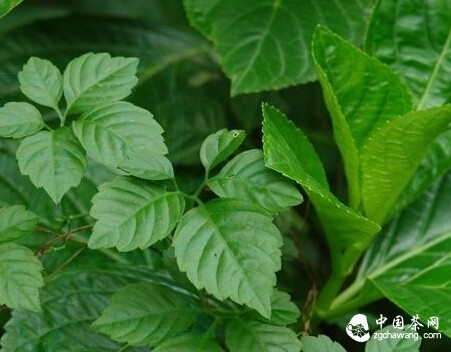
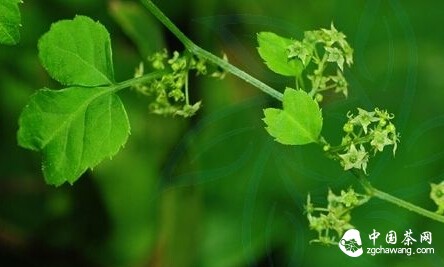
Third, observe the shape when brewed: High-quality wild Gynostemma pentaphyllum, when brewed, the curled tender leaves and stems quickly unfold. The compound leaves have five leaflets with shallow serrations. Because the stems and leaves are tender, there are sometimes broken pieces, but the stems and leaves spread out like light swallows fluttering their wings, increasing in volume. Inferior quality has old and thick stems and leaves, and sometimes the vine and leaves are long and continuous, lacking elegance. Fake ones are even more coarse with long vines and large leaves, making them unsuitable for tea.
Fourth, taste the brewed tea: High-quality Gynostemma pentaphyllum is not very bitter, with a slight bitterness, and not very sweet, but with a sweet and mellow aftertaste. It is very natural and refreshing, and even those who do not like tea will drink cup after cup without stopping. Depending on the origin, some are sweeter and some are more bitter. The sweeter ones are slightly better for regulating the spleen, while the more bitter ones are stronger for clearing heat and detoxifying. As long as the taste is mellow, it can be considered high quality. It is important to note that some products, because they are bitter, have sugar artificially added during processing, resulting in a bitter-sweet taste that is very unnatural and unpleasant. Another type has a bitter-sour taste, a gelatinous texture when chewed, and causes a tingling sensation on the tongue. This is clearly not genuine and is a counterfeit product called Cayratia japonica, which has a very similar appearance and grows vigorously, making it easy to harvest and often used by profiteers to pass off as genuine.
Fifth, consider the origin: There are 16 species and 2 varieties of Gynostemma pentaphyllum worldwide, with 14 species and 2 varieties in China. Gynostemma pentaphyllum is cultivated artificially throughout China. As health awareness increases, wild products free from pesticides and artificial chemicals are becoming more precious and favored by the market. Several well-known origins include the Gynostemma pentaphyllum from the primeval forests of Dayao Mountain in Guangxi, which is of good quality but rarely seen on the market. The bitter Gynostemma pentaphyllum from the Shennongjia area in Hubei has strong heat-clearing and detoxifying properties but has been absent from the national market for many years. The Gynostemma pentaphyllum dragon whiskers from the Qinba region in Shaanxi are quite valuable and are known as "Qinba ginseng." Due to the high mountains, suitable climate, abundant rainfall, and fertile soil in the primeval forests, it grows luxuriantly and has excellent quality. Once brewed, it has a complete color, aroma, and taste, making it popular in domestic and international markets. Truly, a unique place produces unique products. Currently, many products do not indicate the origin, manufacturer, batch number, or production date. Do not be easily deceived by low prices.
Sixth, consider the processing: A key factor for Gynostemma pentaphyllum tea is the need for timely deactivation of enzymes through high-tech processing to remove some components that hinder the absorption of all nutrients. Otherwise, if simply air-dried or sun-dried, most of the effective nutrients in Gynostemma pentaphyllum cannot be utilized by the human body. The Xi'an Aokeda brand of Gynostemma pentaphyllum has its factory at the foot of the mountains, enabling timely deactivation of enzymes with advanced technology and high-tech processing, preserving all effective nutrients for absorption, which is truly rare. Many small private enterprises lack technical guidance and find it difficult to preserve all nutrients for absorption and develop high-quality products.
Seventh, observe the effects: High-quality Gynostemma pentaphyllum has a preventive effect on chronic diseases and can be used as an adjuvant with medication for acute diseases. Low-quality ones have weak effects, and fake ones can have adverse effects.
Brewing Gynostemma pentaphyllum together with Wushi tea can relieve early cold symptoms. For those with severe fever, use 5 grams of Gynostemma pentaphyllum and 1 pack of Wushi tea. For those with severe chills, use 2 packs of Wushi tea and 3 grams of Gynostemma pentaphyllum.
For hypertension in heat-prone individuals, drinking 4 grams of tea daily serves as an adjuvant. Combining it with fish oil can enhance the effect.
For insomnia and constipation due to yin deficiency with internal heat, drink 3 to 5 grams of Gynostemma pentaphyllum tea daily. For those with severe yin deficiency or menopausal women, add Voge Youth 100.
For children with hyperactivity disorder, Gynostemma pentaphyllum can be used as an adjuvant by drinking 4 grams of tea daily.
For those with cold body constitutions, Gynostemma pentaphyllum is not suitable. If there is a special preference, it should be consumed under the guidance of a doctor.
The development and research of Gynostemma pentaphyllum are ongoing, and the identification of Gynostemma pentaphyllum also requires continuous accumulation of practical experience. This article is merely an attempt to spark further discussion and exchange with enthusiasts of Gynostemma pentaphyllum, aiming to clarify the source and promote authenticity.