When I used to hear the phrase “firewood, rice, oil, salt, soy sauce, vinegar, and Tea,” I would always wonder why tea was included. Later, as I learned more about the history and culture of tea, I came to truly understand this saying. China is the birthplace of tea, and we Chinese are also the earliest nation to produce and drink tea.
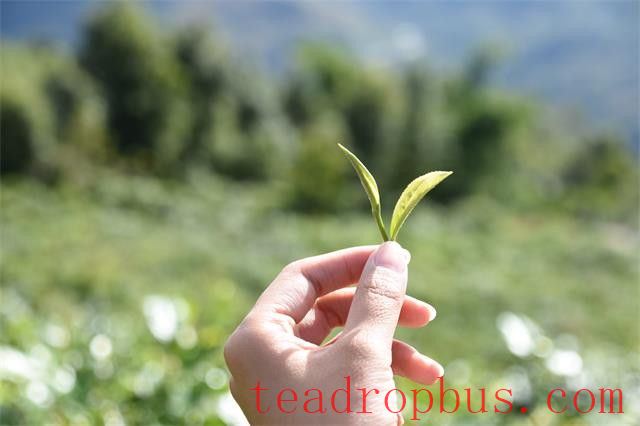
Speaking of tea, one person often comes to mind: Lu Yu. Lu Yu was a man from the Tang Dynasty who secluded himself in the mountains for 26 years, disengaging from worldly affairs to fully dedicate himself to writing “The Classic of Tea,” which is the oldest and most complete monograph on tea in existence. Nowadays, Tea culture has become an integral part of Chinese culture, but many people still have a limited understanding of specific details related to tea.
For example, when buying tea, you may often hear the terms “Pre-Ming Tea” and “Post-Ming Tea,” but what do they specifically refer to? Many people are unsure. Today, let's discuss this topic and explore:
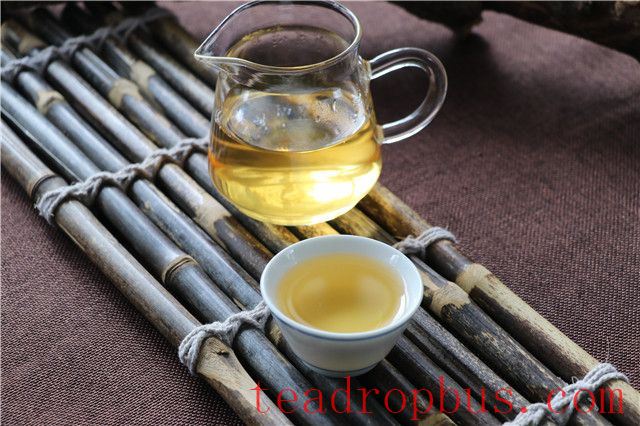
What are the differences between Pre-Ming Tea and Post-Ming Tea?
01 Different Harvest Times
In ancient times, our ancestors would generally arrange agricultural activities based on solar terms and seasonal characteristics. “Pre-Ming Tea” and “Post-Ming Tea” are classifications of tea made according to these solar terms and seasons. The “Ming” here refers to the Qingming Festival, serving as a dividing point. Pre-Ming Tea refers to tea harvested before the Qingming Festival, while Post-Ming Tea refers to tea harvested after the festival.
Generally, early varieties of tea begin sprouting during the Awakening of Insects and Spring Equinox periods, and by the time of the Qingming Festival, tea can be harvested. Similar to Pre-Ming and Post-Ming Teas, other teas classified by solar terms and seasons include Rain Tea, Fire Tea, and Three Springs Tea, among others.
From a harvest time perspective, Pre-Ming Tea refers to tea harvested before the Qingming Festival, while Post-Ming Tea refers to tea harvested after the festival. The division is based on the Qingming Festival.
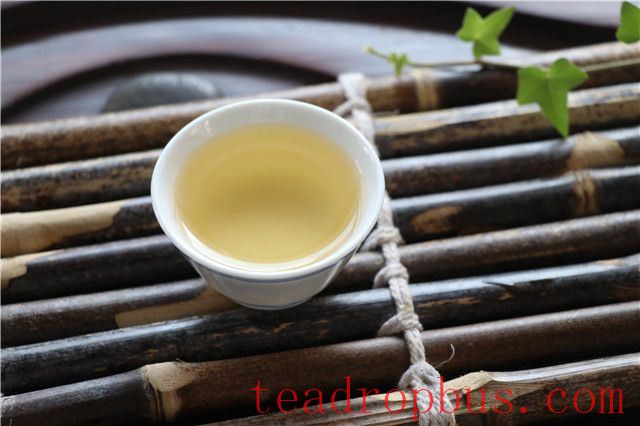
02 Different Aesthetic Characteristics
Pre-Ming Tea is from early spring, when the tea leaves are just forming. The buds and leaves are relatively tender, with compact buds and short, tightly wrapped shoots. The appearance is a fresh green color with a glossy sheen, looking vibrant and fresh, evoking the spirit of spring.
Post-Ming Tea is harvested after the Qingming Festival when temperatures have gradually risen, causing the tea buds to grow rapidly. At this stage, the tea appears looser and even begins to curl and turn yellow, with a darker color and lacking a glossy sheen. If harvested after the Grain Rain period, the tea will appear coarser and older.
From an aesthetic perspective, Pre-Ming Tea has a tender appearance with a glossy sheen and compact buds, while Post-Ming Tea appears older, with looser leaves, a darker color, and lacks a glossy sheen.
03 Different Taste and Flavor
Based on the season of harvest, tea can be divided into Spring Tea, Summer Tea, Autumn Tea, and Winter Tea. It is well-known that in spring, the temperature is mild, and there is ample sunlight without being overly intense. New tea buds generate more amino acids and esters to absorb the sunlight, resulting in a better taste. After spring, temperatures rise, and the Metabolism of the tea increases, leading to a bitterer taste.
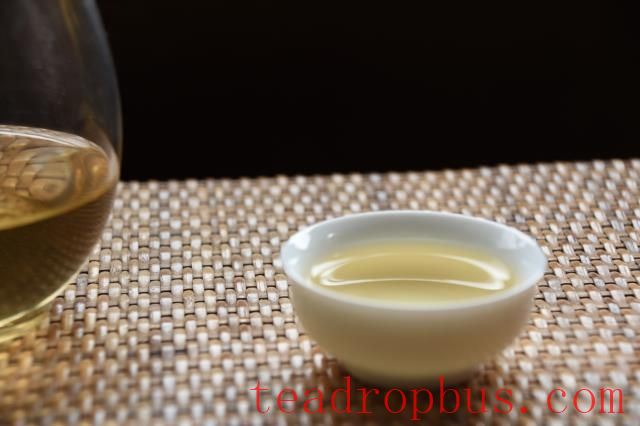
Pre-Ming Tea belongs to the category of Spring Tea. At this time, the tea is tender, with high sweetness and light bitterness, giving it a fragrant and refreshing taste. Post-Ming Tea generally falls under the categories of Summer Tea, Autumn Tea, or even Winter Tea. At this stage, the tea is older, with a stronger bitterness, making it less desirable in terms of taste.
From a taste and flavor perspective, Pre-Ming Tea is tender with a sweet and refreshing taste, while Post-Ming Tea is older with a stronger bitterness.
04 Different Value of the Tea
Regarding Pre-Ming Tea and Post-Ming Tea, there is a saying in the industry, “Pre-Ming Tea is as precious as gold.”
In regions with distinct seasons, after accumulating nutrients throughout the winter, the tea plants will have more abundant nourishment. Coupled with the climatic characteristics of spring, the tea produced at this time will have higher amino acid content and lower levels of polyphenols, which contribute to bitterness. Additionally, due to minimal exposure to pesticides, the quality is higher.
The quality of Post-Ming Tea is generally lower. The tea contains more polyphenols, making it less delicate and fresh than Pre-Ming Tea. Aside from being cheaper than Pre-Ming Tea, it lags behind in terms of overall value.
From a value perspective, Pre-Ming Tea has higher amino acid content and is less exposed to pesticides, making it significantly more valuable than Post-Ming Tea.
As summarized above, the differences between Pre-Ming Tea and Post-Ming Tea primarily lie in four aspects: different harvest times, different aesthetic characteristics, different taste and flavor, and different value. When you encounter these two types of tea in the future, don't confuse them anymore.