In the scorching summer heat, milk tea shops that use various famous Chinese teas to create thirst-quenching drinks can be found on every street corner. The lingering aftertaste of these refreshing beverages is enchanting. When it comes to drinking tea, it's a Chinese invention that has benefited all of humanity. From the tea-chewing practices of ancient Chinese ancestors to the tea porridge of the Shang and Zhou dynasties, from the tea brewing methods of the Tang Dynasty to the tea whisking of the Song Dynasty, and from the infusion practices of the Ming Dynasty that have continued to this day, no other beverage has permeated Chinese history as deeply as tea, which is also widely embraced around the world.
The “Elixir” Developed by the Ba-Shu People
“Tea is a fine tree of the southern regions.” This is the opening sentence of the world's earliest known treatise on tea, The Classic of Tea, written by Lu Yu of the Tang Dynasty.
Wild tea trees originated in the southwestern region of Ba-Shu (modern-day Sichuan and Chongqing), with a history dating back over ten thousand years. When the ancestors of the Ba-Shu people wandered through dense primeval forests, they encountered these magical leaves. They discovered that chewing tea leaves could quench thirst and alleviate fatigue, enhancing their physical well-being. Of course, these early inhabitants didn't know that the caffeine in tea was responsible for this effect; nor did they know that the phenols in tea acted as natural antiseptics that could prevent dysentery. Despite their limited understanding, the earliest consumers of tea would roll the leaves into small balls and chew them along with other foods – the earliest form of human consumption of tea, which involved simply chewing it, without clear distinctions between medicinal and culinary uses.
The cultivation of tea not only originated in China but also began with artificial cultivation in China. The oldest known tea remains – those found in the tomb of the State of Zou in Xigang, Zoucheng, Shandong Province, dating back nearly 2,500 years to the early Warring States period – allow us to trace the history of actual tea to this time. Other archaeological finds related to tea include 2,100-year-old young tea shoots excavated from the Han Yang Mausoleum in Shaanxi and 1,800-year-old tea remnants discovered in the Gu Ru Jia Mu tomb in Tibet's Ngari Prefecture.
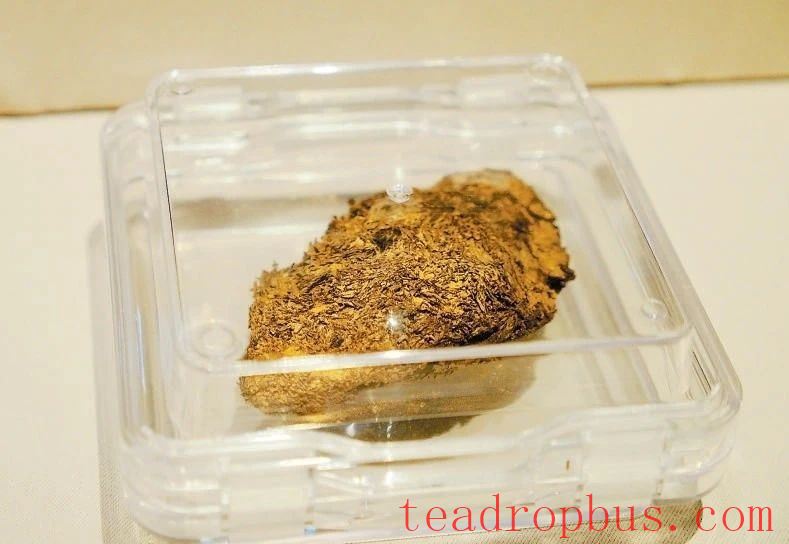
Tea remains (Western Han Dynasty) exhibited at the “Tea & World – Special Exhibition on Tea culture” held at the Palace Museum in Beijing on September 6, 2025.
During the Western Han Dynasty, the people of the Ba-Shu region had already begun cooking and drinking tea, as well as selling it. In 59 BCE, during the reign of Emperor Xuan of Han, a scholar named Wang Bao wrote an extensive labor contract called “The Bond Servant,” which detailed the myriad tasks a servant was expected to perform. Unintentionally, this document became the oldest written record of Tea drinking in China. Two sentences from this document have been repeatedly cited by later generations: one is “prepare all the utensils for tea brewing,” and the other is “buy tea in Wu Yang,” indicating that there were specialized tea utensils and a tea market at that time, and that the people of Ba-Shu had already developed a custom of drinking tea more than two millennia ago.
Apart from the ancient people of Ba-Shu, religious practitioners were among the earliest tea drinkers. It is believed that the method of boiling tea leaves with water likely originated from the meditation practices of monks and Taoist priests, who consumed tea to stay alert and referred to it as the “elixir.” Religious institutions indeed possessed the financial resources and influence to transplant and cultivate this forest-dwelling plant, promoting the custom of drinking tea. After Qin and Han unified the region, breaking down the isolation of Ba-Shu, the cultivation of tea and the custom of tea drinking spread from southwestern China to the eastern and southern parts of the country, eventually reaching the Yangtze River and Yellow River basins, Tibet, Mongolia, Central Asia, and other regions and countries.
“Its fragrant mist, white and yellow, seems ethereal. It harmonizes the spirit and inner being, dispels weariness and lethargy…” These lines come from the poem “On Tea (Chuan)” by Du Yu of the Jin Dynasty, the first known poem about tea in China. Although beautiful, if one were to travel back in time to taste the tea of that era, modern palates might find it quite unpalatable. At that time, the common practice was to boil tea leaves together with other foods, as described by the late Tang Dynasty poet Pi Rixiu: “They must boil the tea completely, much like cooking vegetables to drink.” This meant that the tea leaves were boiled until they were soft and murky, and the tea was consumed like a vegetable broth, leaves and all. Some even added various ingredients when boiling tea, so that the tea flavor was overwhelmed. According to Lu Yu's The Classic of Tea, “Some add ingredients like green onions, ginger, dates, orange peels, pepper, and mint, boiling them until the water boils over a hundred times, or they stir it to make it smooth, or boil off the foam. Such water is no better than ditch water, yet the custom persists.”
The long-term existence of this method of boiling tea was primarily due to limitations in tea processing technology. Just as stir-frying appeared only after the Chinese relied mainly on steaming, boiling, and raw consumption of food, the early methods of drinking tea involved either chewing it with other foods or boiling it with other foods or ingredients. Additionally, the practice of drinking soup, gruel, and porridge that emerged during the Shang and Zhou dynasties, although making the tea more palatable, masked its fragrant aroma. This “tea-eating” method accompanied people through a long period of tea-drinking development, continuing until the Sui and Tang dynasties. Perhaps because the taste itself was not particularly appealing, tea drinking had not yet formed a culture, let alone a thriving tea culture.
The “Golden Age” of Tea Culture
“Since Lu Yu's birth in the human world, people have learned to appreciate new tea” – this line from the poem “Trying New Tea in Rhyme” by Mei Yaochen of the Northern Song Dynasty praises the Tang Dynasty tea scholar Lu Yu. Born during the Kaiyuan period of the Tang Dynasty, Lu Yu has been hailed as the Sage and Immortal of Tea since the Tang and Song dynasties. People revere Lu Yu not because he initiated tea drinking, but because his work The Classic of Tea pioneered an aesthetic perspective that transformed tea drinking into the art of tea appreciation, fostering the subsequent popularity of tea culture and tea ceremony.
The Classic of Tea, completed in the middle of the Tang Dynasty, is the world's first monograph on tea. The book, consisting of over 7,000 characters, is divided into chapters covering the origin, tools, production, utensils, brewing, cooking, practices, and origins of tea. It treats the act of drinking tea with great seriousness, discussing everything from tea-producing regions, ancient tea customs, types of tea utensils, planting and processing of tea leaves, roasting, selecting water, observing the infusion, and brewing. While the term “tea ceremony” does not appear in the book, every sentence speaks to the essence of tea ceremony. For example, it presents the central idea that “the nature of tea is simple,” pursuing the qualities of “precious, fresh, fragrant, and intense” and “refined and lasting.” It recommends using Yue porcelain for tea bowls to highlight the color of the tea, charcoal for fuel, and mountain spring water for brewing. It also discusses the three stages of boiling water: the first stage, “like fish eyes, with a slight sound”; the second stage, “bubbles rising like a continuous stream of pearls”; and the third stage, “waves surging.” It is not an exaggeration to say that Lu Yu's The Classic of Tea led to the rise of Chinese Tea culture. In his book Memorabilia of the Fenshi Family, Feng Yan, a Tang Dynasty official during the Zhenyuan period, wrote, “Lu Hongjian of Chu (Lu Yu's courtesy name) wrote The Treatise on Tea, explaining the efficacy of tea, as well as methods for brewing and roasting tea, and creating 24 tea-related implements… As a result, the tea ceremony became widespread, and no official or courtier failed to drink tea.”
The Tang Dynasty, where the “ceremony of tea” became widespread, can be considered the golden age of Chinese tea culture. Drinking tea also helped in meditation and maintaining clarity of mind, which further contributed to the popularity of