Boiling Tea was the most common way of Drinking Tea in China before the Tang Dynasty. According to Lu Yu's “The Classic of Tea,” boiling water can be divided into three stages: “When it first boils, the bubbles are like fish eyes with a slight sound, this is the first boil; when the edges are like surging fountains, this is the second boil; when the waves surge and the water roils, this is the third boil. Water beyond the third boil is too old to drink.” At that time, there were tea cakes, but they were not Pu'er tea cakes. People mainly drank Green Tea, so naturally, after the third boil, the water would be too old and tasteless.
The greatest characteristic of Pu'er tea is its ability to withstand multiple infusions and become even more flavorful over time. Today, we're brewing an aged green cake tea, which is a blend from the ancient tea trees of more than twenty ancient tea mountains in the Pu'er region. Before 2007, there was less talk about pure single-origin ancient tree teas. Instead, tea makers, inspired by the different aromas, flavors, and mouthfeel of various ancient tree teas, often blended leaves from several, or even dozens, of different trees. The resulting teas were unique and full of character. The more complex blends were harder to judge, leading to a period of confusion in the market and a subsequent decline in the popularity of Pu'er tea. This eventually gave rise to a new wave of interest in pure single-origin ancient tree teas.
This particular tea has spent one year in a humid environment, so its storage flavor is relatively mild. For four people, we used 10 grams of tea. Using this tea as an example, I'll describe three methods of brewing. First, we steeped the tea. We placed the initial infusion, which awakens the tea, in a decanter and did not discard it; during each subsequent infusion, we left some of the tea liquor in separate decanters. Around the fifteenth infusion, we started boiling the tea using an electric ceramic stove.

One: Single Infusion Boiling Method
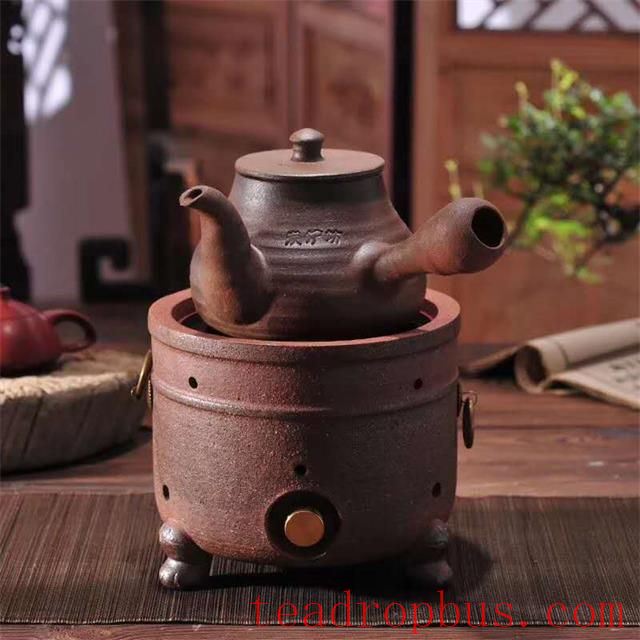
We poured the initial infusion into a warm side-handle Teapot, covered it, and set the temperature between 100-120 degrees Celsius for slow boiling. When the tea water boils and steam escapes from the spout, we let it continue boiling for about five minutes until the storage flavor dissipates completely and a rich aged and glutinous aroma emerges. Then we opened the lid but did not immediately pour out the tea. We observed the tea liquor bubbling like fish eyes and enjoyed the heartwarming aroma before tasting its sweet and clean flavor.
Two: Mixed Infusion Boiling Method
We mixed several previous infusions together and boiled them in the teapot. Again, we covered the pot and boiled it for around five to six minutes. Compared to the first infusion, the tea had a richer mouthfeel and an even stronger glutinous aroma, with an added note of cooked aroma.
Three: Direct Tea Boiling Method
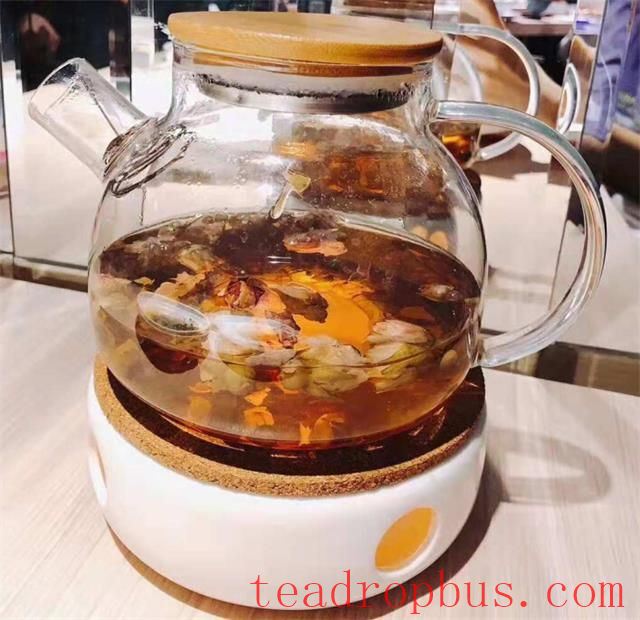
Pu'er tea is not afraid of over-boiled water. In fact, older teas become even more potent and aromatic when boiled. Typically, I boil the tea for ten minutes. Once I open the lid, I see a thick, rolling tea liquor, indicating that the unique pectins and sugars from the aged Pu'er have been released. After one or two cups, my cheeks tingle with saliva, and the sweetness lingers on my tongue. This method allows for brewing four to five pots of tea. Pu'er tea becomes even more flavorful when boiled, so give it a try.