Based on comprehensive opinions from seasoned Pu-erh tea producers:
The standard plucking for Pu-erh tea cakes is one bud and two leaves, so there is no strict distinction between new and old leaves. However, if the leaves are older, they tend to appear pale yellow and are generally used as 'yellow flakes.' It is easy to distinguish them by the color of the leaves.
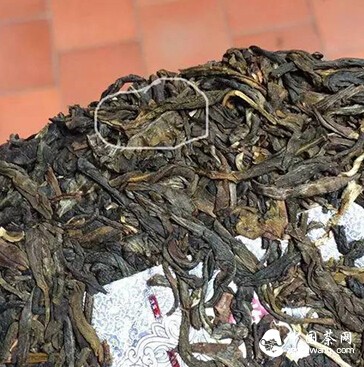
There is also a type of Pu-erh tea called 'Golden Needle White Lotus,' which is made entirely from buds. Its appearance is easily recognizable—thin, needle-like buds.
The yellow leaves in the tea cake shown above are commonly known as 'yellow flakes.' These are usually picked out during the tea cake production process to avoid affecting the visual appeal. They may be coarse, old leaves or leaves that were not rolled into strips during the kneading process.
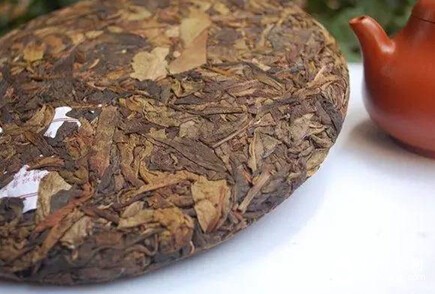
Background knowledge: Pu-erh tea old yellow flakes
So-called 'yellow flakes' refer to old leaves from aged tea trees. Since most old leaves turn yellow over time, they are named 'yellow flakes.' In fact, they refer to the parts that are not rolled into strips during the raw material screening process due to loose and coarse texture. Old yellow flakes are known for their rich, mellow taste and lasting infusibility, owing to their thick leaf tissue.
The formation of old yellow flakes can occur in two ways: first, as the third leaf beyond the standard one-bud-one-leaf or one-bud-two-leaf plucking (generally not including the fourth leaf); second, as leaves that were not sufficiently rolled during the kneading process, resulting in a looser strip. In both cases, the kill-green process may cause the leaves to turn yellow or a darker green.