Huangshan Maofeng Tea is one of China's top ten famous teas with a long history, originally created by Xie Zheng'an in 1875. Organic Huangshan Maofeng tea is produced in pollution-free areas according to organic agricultural production systems and methods. During processing, packaging, storage, transportation, and sales, it remains free from chemical contamination and is certified by organic food certification agencies. Now let's examine the planting techniques for organic Huangshan Maofeng tea.
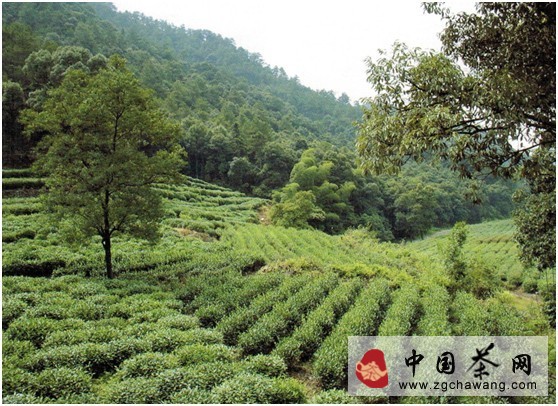
1. Environmental Selection
Production areas should be far from cities and industrial zones. The air must meet national Class I air quality standards, irrigation water must meet national Class I surface water quality standards, and heavy metal content (copper, lead, cadmium, arsenic, mercury, chromium) in the soil must be below standards specified in national organic tea processing regulations. Production, processing, and storage facilities must maintain cleanliness and prohibit the use of chemical medications.
2. Garden Site Selection
Seeds and seedlings must come from organic agricultural production systems, and varieties obtained through genetic engineering are not permitted. Huangshan Maofeng tea gardens should have excellent ecological environments with well-planned green belts around them. There should be isolation belts between organic tea and non-organic agricultural land. Garden soil should be deep, fertile, with good permeability, organic matter content >1.5%, pH value between 4.5-6.5, loose effective soil layer, and strong biological activity. No toilets, manure pits, or livestock pens are allowed within 100 meters of the tea garden.
3. Soil Management
1) For 1-3 year old young tea gardens, reasonable intercropping with green manure between rows should be implemented to fertilize and improve the soil.
2) Before the rainy season and after applying base fertilizer in autumn and winter, cover the soil with pollution-free straw and mountain greens to reduce water, soil, and fertilizer loss, retain moisture during summer droughts, and provide insulation during winter frost.
3) For tea gardens with fertile soil, no weeds, and high coverage, minimal or no tillage should be practiced. Utilizing organisms (such as earthworms) to improve soil structure and fertility is encouraged.
4) Strictly prohibit the use of chemical herbicides, synergists, and soil conditioners.
4. Fertilization Techniques
1) Organic tea gardens are permitted to use organic fertilizers free from heavy metals, pesticides, and other harmful chemical contaminants, along with properly processed organic fertilizers, certain natural minerals (such as mineral saltpeter), natural humates (such as peat), organic liquid fertilizers produced purely through biological technology, bacterial fertilizers, and specialized organic tea fertilizers.
2) Prohibit the application of artificially synthesized chemical fertilizers, compound fertilizers, mixed fertilizers, rare earth element fertilizers, growth hormones, artificially synthesized multi-purpose foliar nutrients, urban and rural garbage, and factory waste residues in organic tea gardens.
3) Pruned tea branches and leaves each year should be returned to the soil—either directly buried as fertilizer or used as soil cover between rows.
4) Organic tea gardens should apply both base and topdressing fertilizers. Base fertilizers include organic fertilizers composted for 1-6 months and fully decomposed, including pollution-free various cake fertilizers, green manure, crop residues, peat, and specialized organic tea fertilizers. Topdressing fertilizers include human and animal manure that has undergone high-temperature composting and harmless treatment, specialized organic tea fertilizers, and biological organic liquid fertilizers.