Da Hong Pao Commercial Value
1. High-end Tea
Historically, Wuyi tea was a tribute tea for历代帝王. It has won national oolong tea gold awards for many consecutive years and the first China International Tea Expo gold award. The State Council and the Ministry of Culture officially announced the first batch of national intangible cultural heritage, with Da Hong Pao's production technique listed among them. The craftsmanship of Da Hong Pao is the only tea-making technique among the manual skills, and Da Hong Pao is the king of tea, hailed as the 'National Treasure'.
2. Ecological Tea
Wuyi Mountain's superior natural conditions regarding soil, climate, and humidity create a unique environment. Combined with the production technique rated as 'Intangible Cultural Heritage', the grown Da Hong Pao possesses exceptional innate qualities, is uniquely advantaged, has outstanding quality, distinctive characteristics, a rich aroma, a sweet and refreshing aftertaste, and a pronounced 'rock rhyme'. The ground tea gardens are managed according to national green organic standards, and the rock tea on the cliffs grows in a semi-primitive state.
3. Branded Tea
The brand status of Da Hong Pao is determined by historical accumulation, cultural heritage, and excellent quality. Coupled with the promotion of Wuyi Mountain tourist routes over the years, most tourists visiting Wuyi Mountain have seen the Da Hong Pao in Jiulong Ke, heard its legendary tales, and tasted famous brands like Fulimen Da Hong Pao. Consequently, the fame of Wuyi Mountain Da Hong Pao has spread far and wide.
4. Health Tea
Wuyi Rock Tea has long been used as an optimal beverage for health preservation and healthcare. Legend says Shennong used it to counteract 72 poisons, and it became famous for curing difficult and complicated illnesses for a county magistrate, a scholar candidate, an empress, etc. The high longevity of Peng Zu is also attributed to the efficacy of tea. Current scientific research confirms that Wuyi Rock Tea is rich in trace elements like potassium, zinc, and selenium, and can separate mixed nutrients like oxalic acid, tannic acid, and quercetin, which are greatly beneficial to the human body.
5. Precious Tea
At the 7th China Wuyi Mountain Da Hong Pao Cultural Festival and 'Da Hong Pao' Premium Auction held in the World Dual Heritage Site Wuyi Mountain, 20 grams of 'Da Hong Pao' tea leaves were auctioned for an astonishing high price of 208,000 RMB.
6. Collectible Tea
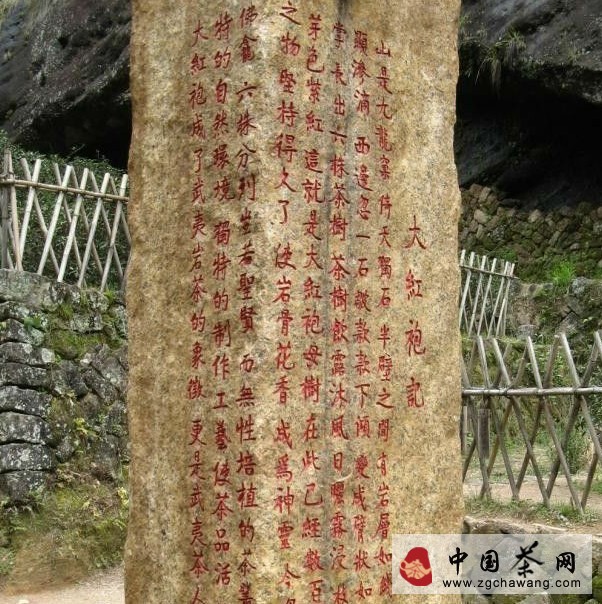
The last harvest of 20 grams of tea leaves from the 350-year-old mother tree Da Hong Pao in Fujian's Wuyi Mountain was formally presented by Wuyi Mountain to the National Museum of China for collection. The ceremony 'The Ancestor of Oolong, the Pinnacle of National Tea - Wuyi Mountain's Out-of-print Mother Tree Da Hong Pao Donated to the National Museum' was held in the Duangong Hall outside the Forbidden City. This was the first time the museum collected modern tea. (October 10, 2007)
Historical Review
The Swedish botanist Carl Linnaeus, the world's pioneer in plant nomenclature, listed the 'Bohea variety' as the representative of Chinese tea plants in the 1762 edition of his book 'Species Plantarum'. Around 1840, Western scientists still called the gallic acid mixture isolated from tea leaves 'Bohea acid'.
★ The status and profound influence of Qing Dynasty Wuyi Rock Tea in world tea history.
★ Mr. Wu Juenong, the contemporary Tea Sage, once said: 'By the Song Dynasty, Wuyi tea seemed to have embarked on a new path of development.'
★ The Yuan Dynasty followed the Song system. To supervise tribute tea production, the court specifically established the 'Imperial Tea Garden' by the Fourth Bend Stream in Wuyi Mountain, creating the official roasting bureau. The buildings of the Imperial Tea Garden were extremely majestic and magnificent, designed and constructed entirely according to imperial specifications. It included the Renfeng Gate, Baifa Hall, Qingshen Hall, Sijing Hall, Beifang Hall, Yanjia Pavilion, Yiji Pavilion, Fuguang Pavilion, Biyun Bridge, and Tongxian Jin. This represents the most glorious page in Chinese tea history.
Mr. Zhengyan believes: Da Hong Pao should be considered an oolong tea, more precisely a representative of Wuyi tea. Primarily, it has exceptional ecological conditions, and furthermore, exquisite processing techniques; these two aspects constitute the special status of Da Hong Pao.