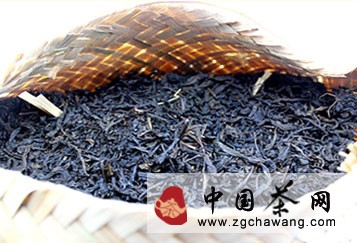
Tianjian, Gongjian, and Shengjian are called the 'Three Jians,' also known as Xiangjian, generally packaged as loose tea in bamboo baskets. The raw materials for the Three Jians teas are relatively tender and were used as imperial tributes in the past. Tianjian tea is mainly made from first-grade raw materials, with a small amount of second-grade tea added to enhance the blend. Gongjian tea primarily uses second-grade tea, blended with a small amount of first-grade downgrade tea and third-grade upgrade tea. Shengjian is made from Heicha (dark tea) material, which is coarser and older, mostly in flake form and containing many stems.
Tianjian: Tea picked after the Grain Rain season, sifted through an 82 or 84-bamboo-strip medium rain sieve, and pressed into large packages.
Gongjian: Divided into Touhuang and Erhuang varieties. Touhuang is sifted through a 64-bamboo-strip medium rain sieve, and Erhuang through a 52-bamboo-strip rain sieve, then pressed into large packages. At that time, Tianjian and Gongjian were used as tribute items.
Shengjian: There are distinctions between Yuanzhuang Shengjian (also known as Shang Shengjian) and Kunzhuang Tianjian (also known as Xia Shengjian). It is not sifted but only winnowed with a tray to remove large yellow leaves, then pressed into packages, mostly supplied to the Shanxi region.
Kunjian: Has broad leaves, which are artificially steamed, bundled, and baked to form strip shapes. Yellow leaves are removed, resulting in a dark, oily color, and it can be used for blending with Shengjian.
During the Qianlong period of the Qing Dynasty (18th century), Shanxi Quwo tea merchants purchased relatively tender raw Heicha (i.e., Shanxi引) in Anhua and processed it locally into loose tea, divided into seven types: 'Yajian, Baimaojian, Tianjian, Gongjian, Xiangjian, Shengjian, Kunjian.'
Yajian: Made from the most tender buds and leaves picked before Grain Rain, sifted through a 106-bamboo-strip small rain sieve, and packed into 1-catty baskets of Heicha, with 60 baskets packed into a bamboo set box (Yajian and Baimaojian are collectively called set box teas). Western merchants often used these as valuable gifts when returning home.
Baimaojian: A type of Yajian, picked before Grain Rain. Named for the white tips on the buds and unopened leaves resembling sparrow tongues, it is called Baimaojian. Ancient tea shops often displayed the couplet: 'Sparrow tongue untouched by March rain, Dragon bud first to herald a branch of spring.'
Yajian and Baimaojian are typically one bud and one leaf picked during Grain Rain, with visible white hairs, representing the highest grade of Heicha. After slight sorting, winnowing, and re-roasting by tea merchants, each catty is packed into a small basket. Merchants carried these back personally at the end of tea purchases as prestigious gifts for officials, wealthy merchants, and relatives. However, due to limited quantities, they did not become market commodities.
Xiangjian: Also known as Menshi Gong. Sifted through a 44-bamboo-strip sieve.
From Tianjian downward, the teas gradually become coarser in quality, all being commercial teas. Xiangjian and Kunjian, due to their large, open leaves, required steaming, placing in cloth bags, and repeatedly rolling and pressing by two people using their feet to turn the flaky leaves into coarse strips or folded shapes after sifting. Because the manufacturing process was labor-intensive and costly, while selling prices in consumption areas were low, production of these two teas ceased during the Republican period. After the late Qing Dynasty, production mainly focused on Tianjian, Gongjian, and Shengjian. In 1972, they were renamed 'Xiangjian No. 1, No. 2, No. 3.' Yiyang Tea Factory also produced 'Xiangjian No. 1, No. 2, No. 3' from 1978 to 1980. The original names were restored in 1983 and remain in use today.