 Raw tea and ripe tea are classifications of Pu-erh tea, unrelated to teas like Biluochun or Tieguanyin. Pu-erh tea has unique processing steps, generally involving fixation, rolling, drying, and piling. Freshly picked tea leaves become raw Pu-erh maoqing after fixation, rolling, and drying. Maoqing has a strong, sharp, and somewhat unruly character. Depending on subsequent processing, maoqing is divided into raw tea and ripe tea.
Scientific evidence indicates that bitterness in tea soup comes from caffeine and theophylline in the leaves; astringency comes from phenolic substances, sometimes showing strong收敛性; smoothness and thickness come from the pectin exudates in the leaves; a comfortable taste comes from the rich amino acids in the leaves.
Previously, all Yunnan Pu-erh was raw tea, with no ripe tea. In the 1970s, Yunnan began developing ripe tea to compete in the international tea market. It is well known that Pu-erh improves with age because it requires a slow post-fermentation process. Raw tea generally needs at least 5 years of storage before drinking, and the longer, the better. Many people also drink fresh raw tea immediately, which is a matter of personal preference. Ripe tea has already undergone fermentation, so it can be drunk without long storage. However, connoisseurs may still age ripe tea for several years before drinking.
I. Characteristics of Raw Tea:
Raw tea is made from large-leaf tea varietal fresh leaves through processes like fixation, rolling, sun-drying, and steam-pressing. Its appearance is dark green, with a pure and lasting aroma.
Process: After leaf picking, through fixation, rolling, and drying of maoqing, it becomes raw loose tea. After compression, it becomes compressed raw tea.
Leaf Color and Aroma: The leaves are primarily green to dark green, with some parts turning yellowish-red. Usually, newly made tea cakes have a subtle taste; if subjected to high temperature, they have a baked sweet aroma.
Taste: The taste is strong and highly stimulating. If subjected to high temperature, it is fresh, fragrant, sweet but thin, slightly astringent. Similar to Taiwanese green tea.
Liquor Color: Primarily yellow-green, green, or amber.
Wet Leaves: Newly made tea products are mainly green or yellow-green. High activity, relatively tough and elastic.
II. Characteristics of Ripe Tea:
Ripe tea is made from large-leaf sun-dried raw tea through post-fermentation processing. Its appearance is reddish-brown, with a unique aged aroma.
Process: After leaf picking, through fixation, rolling, and drying of maoqing, it becomes raw loose tea. The raw loose tea undergoes artificial accelerated post-ripening fermentation and the洒水渥堆 (wet piling) process, becoming ripe loose tea (Pu-erh loose tea). After compression, it becomes compressed ripe tea.
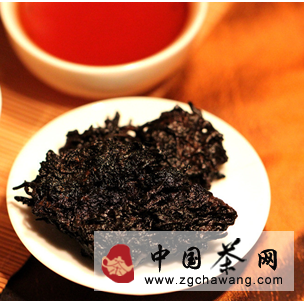
Leaf Color and Aroma: The leaves are black or reddish-brown, with some bud tea being dark golden. Has a strong 'wo dui' (pile fermentation) smell. Lighter fermentation may have a longan-like taste, heavier fermentation may have a damp straw mat smell.
Taste: Thick, sweet, almost no bitterness or astringency, long-lasting infusion.
Liquor Color: Lighter fermentation is mostly deep red, heavier fermentation is primarily black.
Wet Leaves: Due to洒水渥堆, lighter fermentation results in reddish-brown leaves that are not soft and tough. Heavier fermentation results in mostly dark brown or black leaves, harder and more brittle. 100-year-old raw tea is still raw tea, and ripe tea is ripe tea. It's just that raw tea undergoes some ripening over time and environmental changes.
We know that raw Pu-erh tea is essentially sun-dried maoqing from Yunnan large-leaf varietals. Because large-leaf tea material is relatively robust, and during maoqing processing, the internal tea substance is not much altered, the taste is comparatively bitter, astringent, and strong. Therefore, it needs storage for natural aging. Slowly, the tea character收敛, turning mellow, smooth, and sweet, with a mild nature. So, raw Pu-erh tea is meant for storage and natural fermentation (storage is also a processing method). Ripe tea is Pu-erh that has already undergone artificial fermentation.
Regarding the price of raw and ripe tea, at the same grade, ripe tea is more expensive; as for which tastes better, it depends on personal preference. Just as some people prefer black tea and others prefer green tea, both raw and ripe tea have their enthusiasts.