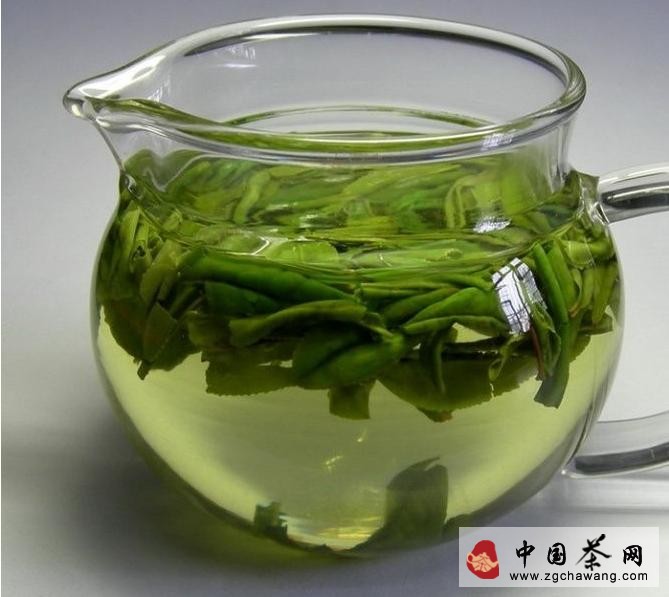
Liu'an Guapian tea production is highest in Liu'an City, accounting for over 80% of the total output; the best quality comes from areas such as Qishan, Huangshi, and Lichong in Jinzhai County, Huangchaojian and Hongshi in Yu'an District. "Qishan Mingpian" (also known as Qishan Yunwu Guapian or Jinzhai Mingpian) is the finest grade of Liu'an Guapian. The Qitoushan area was originally part of Liu'an, hence the name Liu'an Guapian. In 1954, when the Xianghongdian Reservoir was built, the areas of Qishan, Xianghongdian, and Xianhualing were placed under the jurisdiction of Jinzhai County. The tea production area is situated on the northern slopes of the Dabie Mountains, part of the Huai River system, with altitudes generally between 100-600 meters. Due to fluvial erosion, the topography features various landscapes including deep mountains, basins, low hills, and rolling terrain. The inner mountainous region has more forest land and less arable land, with tea gardens often on slopes exceeding 25 degrees. The outer mountainous region connects with hills, featuring rounded peaks and gentle slopes, and has more cultivated land. The climate exhibits four distinct seasons, noticeable monsoons, generally mild temperatures but significant local variations, moderate yet unevenly distributed rainfall, ample sunlight, and a relatively long frost-free period.
Temperature
At altitudes of 100-300 meters, the annual average temperature is 15°C; above 300 meters, it is below 14°C. The average temperature in July is 28.2°C, and in January it is 2.1°C. Spring and autumn are cool and mild, with average temperatures of 15.4°C in April and 16.7°C in October. The average annual frost-free period is 210-220 days, with the first frost typically around November 5th and the last frost around March 29th. The period with temperatures steadily above 10°C begins around April 15th and ends between November 4th and 9th. The accumulated temperature ≥0°C is 5085-5500°C; the accumulated temperature ≥10°C is 4384-4750°C.
Sunlight
The annual total solar radiation is 506.18 kJ/cm². The solar radiation during the period with daily average temperature ≥0°C is 369.69 kJ/cm², accounting for 73% of the annual total. Annual sunshine hours range from 2000 to 2230 hours, with an annual sunshine percentage around 50%, indicating relatively abundant solar energy resources.
Precipitation
The average annual precipitation is between 1200-1400 mm. According to statistics from a 25-year average, spring accounts for 28.9% of the annual precipitation, summer 41.1%, autumn 19.4%, and winter 10.6%. The average number of annual precipitation days is 125.6. The perennial relative humidity is 80%, with an aridity index below 0.8, classifying it as a humid zone.
Soil
The soil types are relatively complex. In the mid-mountain area (inner mountainous region), yellow-brown soils dominate, including common yellow-brown earth and mountain yellow-brown earth. The parent material is mostly granite, gneiss, and hornblende schist. The soil is deep, often over 1.5 meters, with high organic matter content, good soil fertility and permeability, and a pH of 4.8-5.5. In the outer hilly and mound areas (outer mountainous region), the soil is primarily yellow-brown earth formed from the weathering of Xiashu parent material. Although the soil layer is thick, the plow layer is shallow, the texture is heavy, and there is often an impermeable clay pan in the subsoil, resulting in poorer fertility and permeability, with a pH of 5-6.5. Additionally, a small portion of land along riverbanks and valleys consists of alluvial soils, such as sandy loam (black sandy soil). These soils are deep, highly fertile, and have good permeability, typically supporting high-yield tea garden areas.