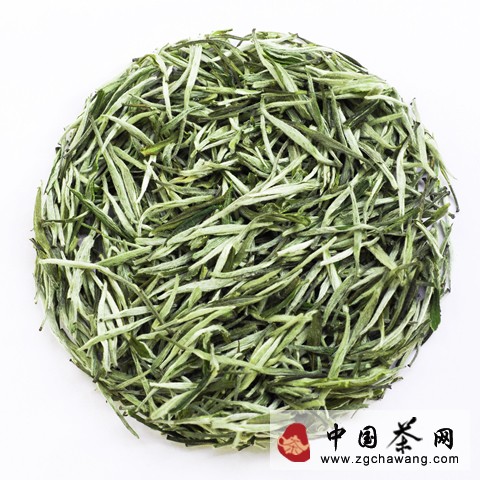
Junshan Silver Needle is produced on Qingluo Island in the misty Dongting Lake. It features a bright green color, high and refreshing aroma, mellow and sweet taste, and orange-yellow liquor, making it a treasure among Chinese yellow teas.
It is a premium green tea produced on Junshan Island in Dongting Lake, Yueyang, Hunan. The finished tea consists of sturdy, uniform bud shoots with a golden-yellow interior and a complete outer layer of white pekoe, tightly wrapped. The bud shoots resemble silver needles, hence the name. Junshan tea has a long history, being produced and renowned since the Tang Dynasty. When Princess Wencheng married into Tibet, she selected Junshan tea to bring with her. By the Later Liang Dynasty, it was already listed as a tribute tea, a tradition continued through successive dynasties.
Characteristics: Made entirely from bud shoots, the tea is covered with fine hairs and has a bright color; the aroma is high and refreshing, the liquor is orange-yellow, and the taste is sweet and mellow. Its flavor remains unchanged even after prolonged storage. When brewed, one can see the silver needles standing upright in the bright apricot-yellow liquor. After several dances, they gather together at the bottom of the cup. The picking and processing requirements are very high. For example, tea leaves can only be harvested within 7–10 days around the Qingming Festival, and there are nine conditions under which they cannot be picked: rainy days, frosty or windy days, insect damage, thinness, curvature, hollowness, open buds, purple buds, and不合尺寸 (not meeting size standards).
Junshan, also known as Dongting Mountain, is an island in Dongting Lake, Yueyang County, Hunan. The island has fertile soil, mostly sandy, with an average annual temperature of 16–17°C and an annual rainfall of about 1340 mm. The relative humidity is high, around 80% from March to September, making the climate very humid. In spring and summer, lake water evaporates, creating mist that blankets the island. The island is covered with trees, providing a natural environment suitable for tea growth, and tea gardens are spread across the mountainous areas.