Do you know the benefits of monk fruit? Nowadays, many white-collar workers choose to brew monk fruit into tea because it offers many benefits to the human body. Moreover, its advantages are particularly suitable for helping improve the health of office workers. Below, China Eat Network tells you about the benefits of monk fruit.
1. Benefits of Monk Fruit
1. Beautifying and Nourishing the Skin: Monk fruit has the effect and function of clearing free radicals, thus it can be used for beauty. Consuming it as monk fruit brown rice porridge is particularly effective for beautifying and nourishing the skin.
2. Relieving Coughs and Treating Throat Issues: Monk fruit can be used for coughs, expectoration of thick yellow phlegm, whooping cough, acute and chronic tonsillitis, and acute and chronic pharyngitis. It is the best health product for singers and teachers.
3. Preventing Scurvy and Anti-Cancer Effects: Because monk fruit is rich in vitamin C, consuming it can prevent scurvy and cancer. Research has found that the trace element selenium selectively kills and inhibits cancer cells without significantly affecting normal liver cells. Clearly, selenium supplementation can be an effective measure for people to prevent cancer. The human body's ability to store selenium is weak, so it is necessary to frequently consume foods high in selenium to obtain enough.
4. Lowering Blood Lipids: Modern medical research proves that monk fruit is a fruit that prevents and treats hyperlipidemia. Monk fruit contains a large amount of unsaturated fatty acids, which can lower blood lipids and reduce fat deposition in blood vessels, having certain efficacy in preventing hyperlipidemia and atherosclerosis.
5. Weight Loss: Monk fruit has a sweet taste that can satisfy cravings, is low in calories, so it is very suitable for weight loss and also beautifies the skin. Moreover, monk fruit contains a large amount of crude fiber, which can reduce hunger and create a feeling of fullness, making it a good choice for those losing weight.
6. Nourishing the Kidneys: Traditional Chinese medicine believes that monk fruit nourishes yin and yang, tonifies the kidneys, and promotes longevity, and can prevent acute renal failure.
7. Anti-Aging: Monk fruit is rich in protein and vitamin C, which have anti-aging effects. Traditional Chinese medicine believes that monk fruit can prolong life, and modern medicine also believes that monk fruit has a certain effect in delaying aging.
8. Clearing Internal Heat: Traditional Chinese medicine believes that symptoms caused by stomach fire usually manifest as swollen and painful gums, bad breath, preference for cold drinks, red tongue with yellow coating, etc. Treatment focuses on clearing stomach fire, and options include Sterculia lychnophora, monk fruit, moutan bark, and rehmannia root. Monk fruit clears stomach heat and cools the blood, suitable for removing internal heat caused by stomach fire.
9. Lowering Blood Sugar: Modern medical research has found that monk fruit is rich in mogrosides, which are 300 times sweeter than sucrose, have blood sugar-lowering effects, and can be used to assist in treating diabetes.
10. Preventing Respiratory Infections: Scientific research shows that monk fruit can also prevent respiratory infections.
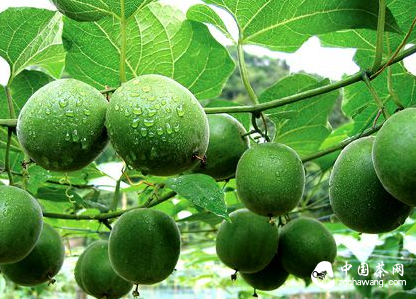
Monk fruit is the fruit of the perennial perennial root herbaceous vine plant of the Cucurbitaceae family, also known as Han fruit, La Han fruit, green peel fruit, Luo Huangzi, false bitter melon, etc. Monk fruit can be eaten fresh but is often dried for preservation, making it a unique dried fruit. Monk fruit resembles a chicken egg; the skin of the ripe fresh fruit is green, turning reddish-brown with a luster after charcoal drying, retaining a little fuzz. The dried fruit has thin and brittle skin, the fruit surface is yellowish-white, soft and spongy.
Monk fruit is rich in nutritional value. The dried fruit contains about 30% sugar, about 10% protein, and 100 mg of vitamin C per 100 grams of fruit. Its kernels contain up to 40% oil, mainly oleic acid and linoleic acid, accounting for about 70%. It is a precious medicinal material, a high-grade refreshing beverage, and a seasoning delicacy.
Traditional Chinese medicine believes that monk fruit is sweet, sour, and cool in nature. It has the effects of clearing heat and cooling blood, promoting fluid production and relieving cough, lubricating intestines and detoxifying, tenderizing skin and beautifying complexion, moistening lungs and resolving phlegm, etc. It can be used for prolonging life, maintaining a youthful appearance, and treating symptoms such as phlegm-heat cough, sore throat, constipation, thirst and irritability. It also has the effect of preventing respiratory infections and fighting cancer.
Modern medical research has found that mogroside V is 250-350 times sweeter than sucrose, and VI is 125 times sweeter. As a sweetener added to various foods, it is an extremely ideal health product for patients with diabetes, hypertension, chronic bronchitis, etc.
Monk fruit is rich in vitamin C, which has anti-aging, anti-cancer, and skin-beautifying effects; it has blood lipid-lowering and weight loss effects, can assist in treating hyperlipidemia, and improves the image of obese individuals. In daily life, this fruit can be used as a light tonic soup ingredient and seasoning. Adding half a fruit to meat and meat soup as seasoning gives a naturally fresh, sweet, and lasting flavor.
2. Contraindications of Monk Fruit
1. The most common side effect of monk fruit is that it is too sweet and can harm the spleen and stomach. Monk fruit dried in the sun can be used as a tea substitute, but not long-term. If it is oven-dried, drinking too much can cause internal heat. It is best to drink less or combine it with other heat-clearing and cooling materials for wind-heat cough. It is contraindicated for those with nocturnal emissions and frequent urination. Drinking it short-term is harmless, but long-term consumption can lead to a decline in gastrointestinal function, causing a chain of pathological reactions. However, for people with extremely sensitive and cold constitutions, we firmly disagree with you drinking monk fruit water. We recommend that you first consult a Chinese medicine practitioner or nutritionist to adjust your constitution through dietary methods.
2. Generally speaking, the side effects of monk fruit are minimal, and only a very small number of people cannot drink monk fruit water. For example, for people with cold constitutions, we do not recommend drinking monk fruit water. If pharyngitis is really uncomfortable, you can try drinking a small amount of monk fruit water, as long as it does not cause an excessive physical reaction, so that pharyngitis can slowly recover.