Previously, I had more contact with Ziya, which is relatively more abundant compared to Zijuan. A few days ago, when a friend asked me to help him find Zijuan, I realized that Zijuan is very scarce in the market. If it were plentiful, it would actually be suspicious, but it can still be found, though the price is very high, with a minimum of over 400 per cake.
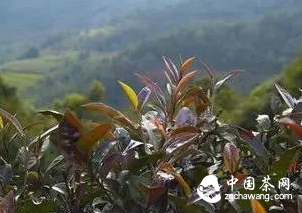
Comparing Zijuan and Ziya Pu'er tea together makes it easier to distinguish these two varieties. Beginners, lacking exposure, might mistakenly assume Zijuan and Ziya Pu'er tea are the same.
The biggest difference between Ziya Pu'er tea and Zijuan tea is simply this: Ziya is a natural genetic mutation caused by climate and seasonal changes. Zijuan, on the other hand, is artificially bred and domesticated.
Traditional Ziya refers to the mutated buds of ancient large-leaf arbor trees due to season and origin. Very few trees in a tea forest produce Ziya, and even on an ancient tree, Ziya buds are not plentiful. Among the large-leaf species in Simao, because some ethnic minorities use tea seeds for propagation, mutations occur in the tea trees, giving rise to Pu'er Ziya tea.
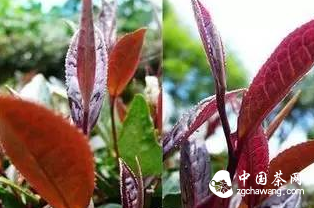
This tea was often cut down by farmers in the past because its color was different. Purple buds, leaves, and stems affect the production and appearance of green tea, so the development of Ziya tea was constrained.
Precisely because Ziya tea comes from ancient arbor trees, i.e., old tree tea, the picking cost is relatively high, and the yield is extremely scarce. Scarcity increases value, therefore, in the eyes of many tea professionals, it is a top choice for collection.
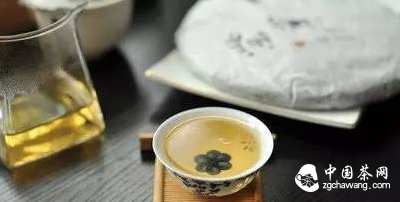
The formation and accumulation of purple buds and leaves are closely related to the growth state of the tea tree and environmental conditions. Stronger natural conditions like intense light can increase anthocyanin content, causing the tea buds and leaves to appear purplish-red. Among the original mutant species, there is a type with purple buds, typically where the first three leaves are purple, after which the mature leaves revert to dark green.
Zijuan originates from the Yunnan large-leaf population. In 1985, a mutant individual plant was discovered among 600,000 plants of the Yunnan large-leaf population tea garden at the Yunnan Academy of Agricultural Sciences Tea Research Institute. This tea tree had purple buds, leaves, and stems. The roasted green tea processed from its fresh leaves had purple dry tea and purple soup color, with a pure aroma and strong taste. Experts began using it as base material in 1986, employing single-plant selection over multiple generations to cultivate a new tea variety. Because this tea tree's tender shoots have purple buds, leaves, and stems, and the processed roasted green tea has both purple dry leaves and tea soup, it was specifically named "Zijuan".
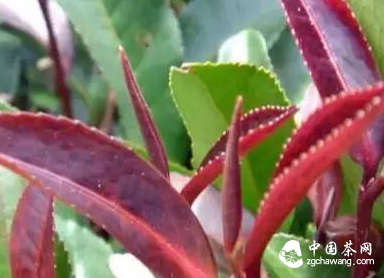
The main characteristics of the Zijuan variety are: relatively high bitterness and astringency. Its tender shoots' buds, leaves, and stems are all purple; the dry leaves of the green tea are purplish-black, and the soup color is purple. The "Zijuan" plant is relatively tall, small arbor type, large leaf category, mid-budding variety. Tree posture semi-open, branching location high, branching density medium, leaf color green, leaf shape willow-leaf shaped, tender shoots' buds, leaves, and stems are all purple, buds and leaves relatively plump, many hairs, strong budding ability, medium sprouting density. "Zijuan" is suitable for planting in areas with altitudes of 1000---2000 meters, annual average temperature of 15 degrees Celsius, and absolute minimum temperature above -5 degrees Celsius, suitable for Yunnan large-leaf tea. It prefers warm, humid climates and fertile soil, suitable soil pH between 4.5----5.5.
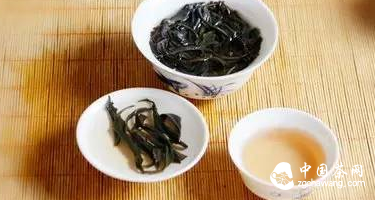
The Zijuan tea tree's spring bud germination period is in late February, with the peak period for one bud and three leaves from late March to early April. It has strong budding ability, medium sprouting density, purple buds and leaves, relatively plump, many hairs, and strong tenderness retention. The weight of 100 buds with one bud and three leaves is 115 grams. The roasted green tea processed from Zijuan tea tree fresh leaves has tightly rolled, slender strips, purplish-black color, and a special medicinal aroma, with purple soup color. In 1991, the Yunnan Institute of Materia Medica conducted multiple blood pressure-lowering experiments on domestic cats weighing 2.5----3.5kg. The results showed that Zijuan roasted green tea lowered blood pressure by 35.53%, superior to Yunnan large-leaf roasted green tea (29.04%). Currently, the Yunnan Tea Research Institute, based on developing Zijuan blood pressure-lowering health tea, is increasing the propagation of the Zijuan tea tree variety and expects to develop and utilize it in areas such as weight loss and blood sugar reduction.
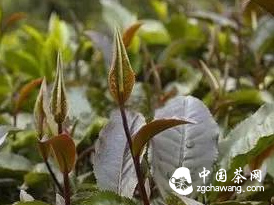
Among the original group mutant species, there is a type with purple buds, typically where the first three leaves are purple, after which the mature leaves revert to dark green. Local farmers in the Menghai area call this Ziya. Ziya tea is named based on the color characteristics of the tender bud and leaf raw material. It is the finished or semi-finished product processed from tea leaves picked from tea trees whose tender buds and leaves are purple.
Ziya Pu'er tea was a tribute item in ancient times, a mutant variety of tea tree. This product uses tea trees aged between 500----
 400 years. The tea tree variety is unique and scarce in number. It is harvested only once a year and refined using traditional techniques. Modern research has proven that Ziya tea contains rare blood-purifying factors. It not only has the traditional health benefits of Pu'er tea but also emphasizes the effects of softening blood vessels and purifying the blood. Ziya tea also has a very good blood pressure-lowering effect, with a reduction of 35.53%. After drinking this tea, blood pressure remains stable for up to 20 hours. The anthocyanins contained in Ziya tea have good effects for weight loss, anti-aging, and radiation protection. Its soup is clear and bright, with a honey-like aroma that delights the senses.
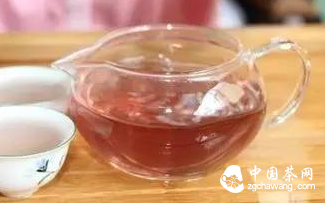
Ziya tea contains much higher anthocyanin content than normal buds and leaves. Anthocyanins are a component of tea polyphenols. Their formation and accumulation are closely related to the growth state of the tea tree and environmental conditions. Stronger natural conditions like intense light can increase their content, causing the tea buds and leaves to appear purplish-red. Purple tea contains higher levels of ester-type catechins than ordinary tea trees, so the sun-dried raw tea produced has a stronger bitter and astringent taste, brownish-green soup color, and indigo-blue leaf bottom. Although the taste is more bitter and astringent, scientific research shows that the anthocyanins contained in Ziya tea are very beneficial to human physiological health. Anthocyanins are water-soluble plant pigments belonging to the flavonoid class of compounds.
In the United States, anthocyanins are also used in health products for their health functions such as weight loss, anti-aging, and radiation protection, making them a good health beverage for people who work in front of computers for long periods.
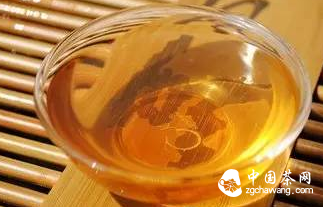
Zijuan is an improved variety with a pronounced aroma, but a slightly lighter taste and obvious bitterness. There is a gap compared to the original Ziya, but many people mistakenly think it is Ziya. The tea family are plants prone to genetic mutation; as long as seedlings are grown from seeds, they are usually prone to variation. Among the original group mutant species, there is a type with purple buds, typically where the first three leaves are purple, after which the mature leaves revert to dark green, called Ziya by farmers in the Menghai area.
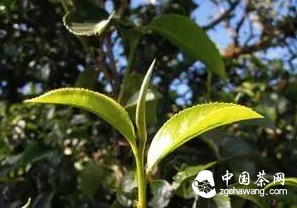
The biggest difference between Zijuan and Ziya lies in the leaf shape and veins. Zijuan is a small to medium leaf variety, with dark green, thick leaves and prominent veins, similar to cultivated wild tea. Additionally, Zijuan raw tea soup is purple, with a thin texture and obvious bitterness; Ziya raw tea soup is golden yellow, with a thick texture, full-bodied taste, and sufficient aftertaste. Its tea quality lies between cultivated wild tea and wild-growing tea.