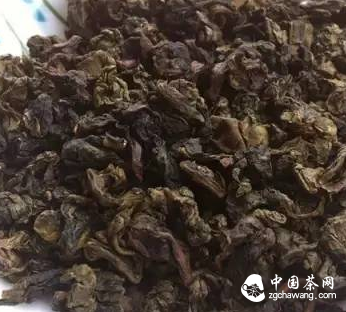
Baking, in the context of tea farmers' tea-making process, refers to the stage where tea leaves, after several rounds of rolling and heat-based baking, gradually tighten in shape and slowly lose moisture, followed by drying. This process utilizes the intensity of the roasting fire to improve the tea's aroma and taste, remove raw grassy odors, reduce astringency, and make the tea soup fragrant, sweet, and smooth.
1. Understanding Baking Before Understanding Charcoal Roasting
Baking, in the context of tea farmers' tea-making process, refers to the stage where tea leaves, after several rounds of rolling and heat-based baking, gradually tighten in shape and slowly lose moisture, followed by drying. This process utilizes the intensity of the roasting fire to improve the tea's aroma and taste, remove raw grassy odors, reduce astringency, and make the tea soup fragrant, sweet, and smooth. Regarding roasting intensity, tea leaves can be categorized into light fire, medium fire, and heavy fire. Light-fire tea is commonly called raw tea, medium-fire tea is called semi-raw or semi-ripe tea, and heavy-fire tea is called ripe tea. The so-called roasting intensity refers to the number of baking sessions and the duration of baking during processing. After consumers purchase tea, if they wish to alter the tea soup's flavor or for storage purposes, they generally need to roast the tea at least once more, which is the latter-stage baking of the tea leaves.
Currently, there are several methods for baking tea, such as using tea roasting machines, electric roasting baskets, etc. Charcoal roasting is a particularly noteworthy baking technique. Its operation involves processes like starting the fire, burning, covering with ash, temperature control, etc. It is not only time-consuming and labor-intensive but also requires expertise and experience, making it an extremely difficult-to-control tea baking method. Moreover, if the operation fails, it can degrade the tea quality, resulting in a smoky or burnt taste in the finished product. However, the advantage of charcoal roasting in achieving unique flavors and allowing tea to be stored for longer periods still attracts many enthusiasts.
2. Tea Roasters Explain the Secrets of Charcoal Roasting
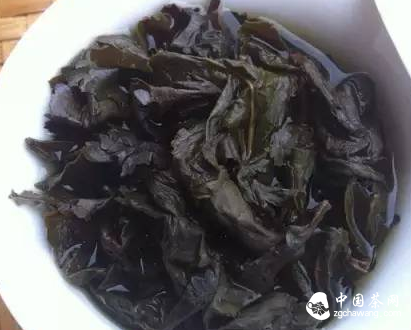
Charcoal-roasted tea attracts countless tea lovers, primarily due to its unique tea aroma and long storage potential. Its tea aromas include fresh fragrance, ripe fruit fragrance, and rich tea fragrance. If stored for a longer time, it develops the aroma of early steamed tofu (a bean fragrance), and reaching an even higher level, it can acquire a ginseng-like scent, which requires at least thirty years or more of history. The formation of these tea aromas relies entirely on the skill of the tea roaster. So, what should be paid attention to during baking? Liang Xiangtian, curator of a certain tea museum, believes that "understanding the tea is an important step before roasting. Before roasting, one must have a considerable ability to judge and evaluate the overall structure of the tea." In other words, the selection of raw tea (maocha) is crucial; without good material, even the most skilled artisan cannot make something from nothing. Zhan Xunhua believes: "For raw tea selection, the most important thing is that during the withering process, the water must dissipate quickly. The person doing the roasting must have a deep understanding of water dissipation." The relationship between raw tea and roasting is like wood and paint; a good paint job can look beautiful, but if the wood inside is rotten, the flaws will soon become apparent. For poor-quality tea, the method to improve quality is roasting. Chen Deliang of Liangyou Mingcha believes that buying raw tea for roasting results in less loss of tea leaves and is easier to handle.
From the perspective of charcoal roasting techniques, each roaster's approach is not exactly the same. Here, we only compare based on the quantity of tea roasted, roasting time, and roasting technique.
Regarding the quantity of tea roasted, Li Zhaojie, head of a certain charcoal-roasted tea research center, stated that for charcoal roasting, a batch of about six to seven jin (3-3.5 kg) is just right, as it is easier to control. Charcoal roasting uses the heat energy generated by burning charcoal. This heat energy acts like needles with a piercing effect, capable of roasting the tea deeply, penetrating into the stems, and able to volatilize the raw grassy odors. Zhan Xunhua believes that charcoal roasting is generally better with three to five jin (1.5-2.5 kg), as the tea changes more uniformly. He describes charcoal roasting as small-batch baking, tailored to specific needs; roasting machines are for large quantities, mass production. Electric roasting cannot achieve the same precision and variety as charcoal roasting because the flavor differs between the top and bottom; perhaps the tea at the bottom is ready, but the top is not yet done.
Regarding roasting time, Li Zhaojie believes that light roasting takes about forty-five to fifty-five minutes, medium roasting about ninety minutes, and heavy roasting about two to three hours. Moreover, heavy roasting often requires repeating the process several times. Since everyone's roasting habits differ, roasting times can serve as a reference for those interested in roasting.
Regarding roasting techniques, if the aroma of Baozhong tea has altered, special attention is needed during roasting. To bring out its fresh fragrance, the temperature must not be too high. High temperature can turn the tea aroma into a burnt taste. If roasted properly, the tea soup should primarily be a light golden-yellow color, which is believed to enhance the quality of Baozhong tea. Additionally, when charcoal roasting tea leaves, to compensate for any oversights during the tea farmer's processing, one must smell its aroma, observe its color, and make adjustments during the roasting process.
3. Charcoal-roasted Tieguanyin is the Pinnacle of Tea
Charcoal-roasted Tieguanyin refers to Anxi authentic Tieguanyin roasted using charcoal. Charcoal-roasted Tieguanyin belongs to the traditional craftsmanship system. A high-quality charcoal-roasted Tieguanyin must possess two essential elements:
1. It requires high-grade Tieguanyin raw materials. The raw materials must be processed using the traditional medium-fermentation method. The currently popular lightly fermented Tieguanyin on the market does not meet the requirements;强行焙制会导致茶汤寡淡无味。 (Forcibly roasting it would result in a bland and tasteless tea soup.)
2. It requires highly skilled roasting personnel to operate. Generally, this requires over ten years of roasting experience and a high level of technical skill; those with poor technique can easily burn the tea.
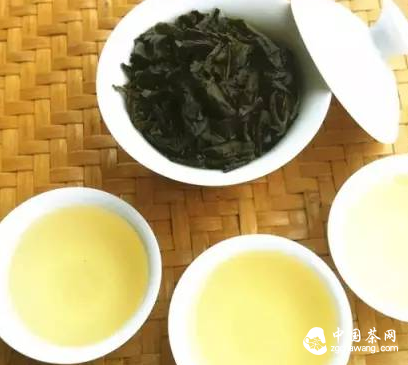
Charcoal-roasted Tieguanyin has a particularly unique sweet aftertaste and a distinctive口感 (mouthfeel). After tasting it, the throat feels exceptionally舒爽 (comfortable and refreshed),带有强烈的火香味 (with a strong roasted aroma). It is worth mentioning that after brewing, its tea soup color is a deep yellow, completely different from the clear, greenish soup commonly seen in fresh-fragrance type Tieguanyin.
Charcoal-roasted Tieguanyin is the best choice for today's consumers. Its bright amber-colored tea soup is even more captivating than grape red under灯光 (lighting); the汤色 (liquor color) is reddish-brown and bright, the香气 (aroma) is rich, and the滋味 (taste) is sweet, smooth, and promotes salivation; the茶性 (tea nature) is温和 (mild and cool). Charcoal-roasted Tieguanyin is considered the pinnacle among teas.