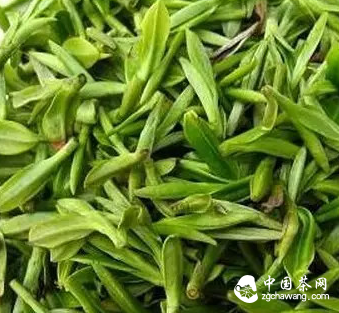
Tea plant's full scientific name is Camellia Sinensis (L.) O. Kuntze, a perennial evergreen woody plant.
In the botanical classification system, the tea plant belongs to the Angiosperm phylum, Dicotyledon class, Archichlamydeae subclass, Theales order, Theaceae family, and Camellia genus.
According to botanical research, the Angiosperm phylum to which the tea plant belongs originated in the Cretaceous strata dating back about 100 million years, while the Theales order plants appeared approximately 60 million years ago.
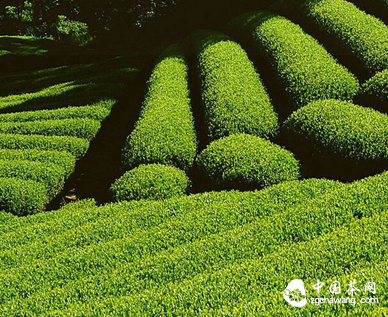
Origin:
Humans first discovered and utilized the tea plant by harvesting it from the wild for medicinal purposes. Based on records from the "Shennong Ben Cao Jing," the use of tea in China has a history of five to six thousand years.
As tea evolved from medicinal use to a beverage, wild tea plants could no longer meet demand. People began collecting tea seeds or digging up wild tea seedlings for cultivation and propagation. According to the "Huayang Guozhi · Bazhi" written by Chang Qu during the Eastern Jin Dynasty (317–420 AD), after King Wu of Zhou allied with tribes from present-day Sichuan and Yunnan to overthrow King Zhou in 1066 BC, tea produced in the Ba-Shu region was listed as a tribute. It also records "gardens with fragrant herbs and fine tea." This suggests that tea was already under artificial cultivation over 3,000 years ago.

The spread of the tea plant within China first moved from Sichuan to the political and cultural centers of Shaanxi and Gansu. However, due to natural constraints, large-scale cultivation was not feasible there. After the Qin and Han dynasties, with China's unification and increasing economic and cultural exchanges, tea spread from Sichuan to the middle and lower reaches of the Yangtze River. Favorable geographical and climatic conditions there gradually allowed this region to replace Ba-Shu as the center of tea production. By the Tang and Song dynasties, tea had become an indispensable daily commodity. Tea production areas extended across 14 provinces including Sichuan, Shaanxi, Hunan, Hubei, Fujian, Jiangsu, Zhejiang, Anhui, Henan, Guangdong, Guangxi, Yunnan, and Guizhou—almost matching modern tea regions, marking a peak period in history. Simultaneously, tea transformed from a localized small-scale agricultural product into a nationwide socio-economic and socio-cultural commodity. The ruling class established various systems to control tea production, trade, and taxation. From then on, tea production gradually popularized and developed as an industry.
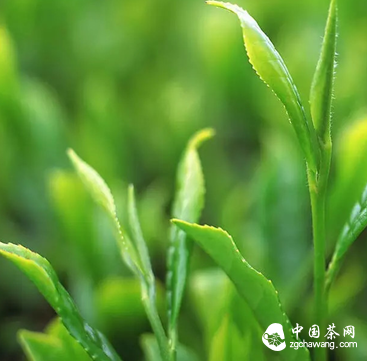
The tea plant's spread abroad first reached Korea and Japan. In the latter half of the 6th century, through exchanges among Buddhist monks, tea was introduced to the Korean Peninsula. Japan began cultivating tea in the mid-Tang Dynasty (805 AD) when the Japanese monk Saichō came to study Buddhism at Tiantai Mountain in Zhejiang, China, and brought tea seeds back to plant in Shiga Prefecture, Japan. This is the earliest recorded instance of Chinese tea seeds spreading abroad.
The tea plant originated in China. The discovery, cultivation, and utilization of tea underwent thousands of years of development in China before gradually spreading worldwide. Tea knowledge and culture, as a unique Chinese cultural element, have gained global popularity. Tea evolved from a folk beverage into an industry, a commodity, and a culture. The tea trade not only attracted merchants from around the world but also opened China's doors, serving as a stepping stone for exchange between China and the world.