Good Tea
What kind of Pu-erh tea is considered good tea? In 2004, experts proposed seven indicators for evaluating the quality of Pu-erh tea: "substance, form, color, aroma, taste, energy, and charm." Today, we will analyze the "substance" of Pu-erh tea.
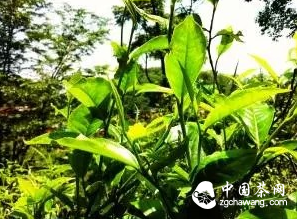
"Substance" refers to the quality of the raw materials, which is the primary fundamental element and material basis for any high-quality tea. Without this, other qualities of Pu-erh tea cannot be discussed. Due to differences in climate, soil, and vegetation, various production areas have their own distinct characteristics. For example, teas produced in Xishuangbanna, Lincang's Shuangjiang Mengku, and Simao's Lancang Jingmai are all considered top-grade Pu-erh teas, yet each has its own鲜明 features.
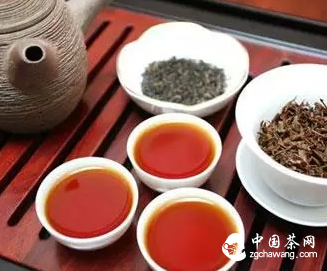
1. Production Area: The raw materials for high-quality Pu-erh tea must首先 come from Yunnan's large-leaf varietal. The main traditional production areas are Lincang City, Pu'er City, and Xishuangbanna Prefecture in Yunnan. Other areas like Dehong and Baoshan also produce some noteworthy good teas. Teas from these three major production areas各有特点, and preference for one over another depends entirely on personal taste.
2. Harvest Timing: Based on the picking time. There are spring tea, summer tea, and autumn tea (tea farmers often call autumn tea "Guhua tea"). Among these three, for terrace tea, spring tea is the best, followed by autumn tea. For old tree tea, spring and autumn teas各有千秋; spring tea excels in charm, while autumn tea is known for its充足 energy. Regardless of the tea tree type, summer tea is considered the lowest quality.
3. Tree Variety: There are distinctions between wild, transitional, and cultivated types; as well as old tree tea (or ancient tree tea, often called "big tree tea" by farmers), terrace tea (garden tea), and abandoned tea (wild mountain tea, feral tea). Additionally, there are some变异 or rare tree varieties, such as purple bud tea and vine tea.
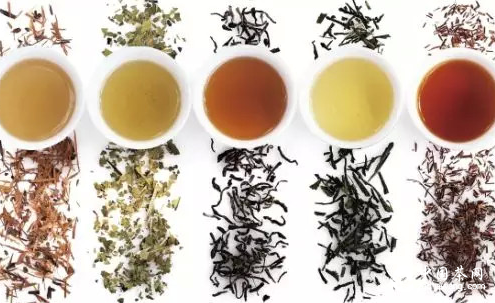
4. Processing Technique: Differentiation within the processing范畴
First Step: Distinguishing between raw tea (sheng cha) and ripe tea (shou cha). This is relatively simple to identify.
Second Step: Determining whether surface撒面 or surface treatment has been applied. Surface撒面 is done for aesthetic purposes, placing better-looking, intact strips on the surface while the interior consists of lower-quality tea. Tea that is consistent inside and out, without surface treatment, is considered superior.
Third Step: Whether blending has been used. This involves混合加工 tea leaves from different production areas with the same quality or from the same area but different grades.
Whether blending is good or not cannot be一概而论. For example, tea from some areas may have good taste but insufficient tea energy (qi). Blending with tea from Lincang can achieve a result that is mellow in口感 and rich in tea energy. This kind of blending is actually a form of skillful creation. In recent years, many award-winning tea products at various exhibitions, especially ripe teas, have achieved卓越的品质 through高明 blending. However,另一种 involves unscrupulous商人 blending low-quality, low-cost raw materials with some high-quality, high-cost ones and then selling them at the market price of the good原料. Currently, many teas on the market labeled as from某某古茶山 and produced in large batches often involve this latter type of blending.
5. Storage: Storage does not originally belong to the范畴 of "substance," but due to the special传播历史 of Pu-erh tea, distinctions between dry storage and wet storage have arisen. Wet storage tea has largely altered the true nature of Pu-erh tea in terms of quality. In a nutshell, wet storage tea excels in口感 but lacks vitality and spirit—and this applies only to good wet storage tea that has undergone proper退仓处理.
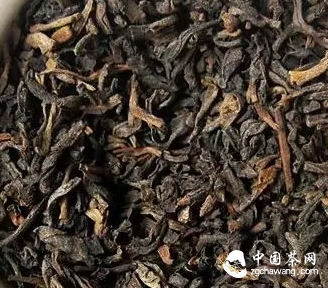
Therefore, considering all factors, dry storage is superior. Wet storage can serve as an alternative style but should not become the mainstream direction for Pu-erh tea. Looking to the future, it is foreseeable that wet storage Pu-erh tea will exit the historical stage. The terms "dry storage" and "wet storage" will become a thing of the past—because it is the existence of unnatural "wet storage" that gave rise to the emphasis on the originally natural and本不必强调 "dry storage."