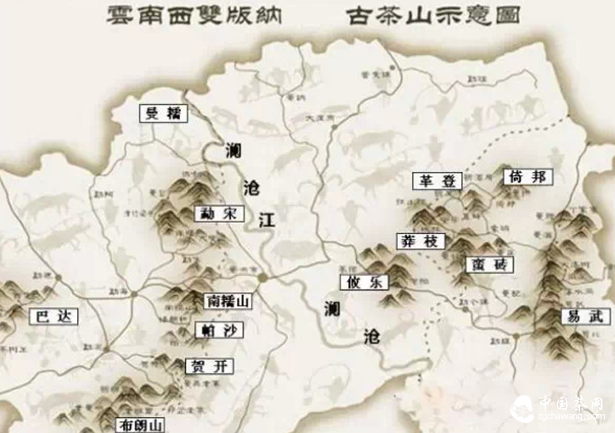
Speaking of the "Ancient" Six Great Tea Mountains, many probably haven't heard of them. So today, let's talk about what the "Ancient" Six Great Tea Mountains refer to; essentially, they refer to six tea mountains. The Six Great Tea Mountains are further divided into those Jiangwai (Outside the River) and Jiangnei (Inside the River). The Jiangwai Six Great Tea Mountains are: Nannuo, Nanqiao, Mengsong, Jingmai, Bulang, and Bada; geographically, they are located along the line from Menghai to Lancang. The Jiangwai Six Great Tea Mountains became famous because after 1939, the Republican government established the Fuhai Tea Factory in Menghai, which used raw materials from these nearby mountains.
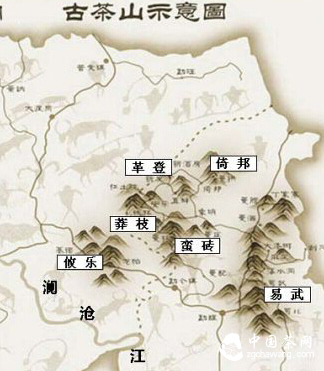
The so-called Jiangnei Six Great Tea Mountains are: Gedeng, Yibang, Mangzhi, Manzhuan, Mansha (Yiwu), and Youle (Jinuo); geographically, they are precisely along one route. Starting from Jinghong, passing through Youle -- Yiwu (Mansha), then Manzhuan - Gedeng - Mangzhi - Yibang; completing this route allows one to fully experience the varieties of the Ancient Six Great Tea Mountains.
Gedeng
Gedeng Mountain is located between Yibang Tea Mountain and Mangzhi Tea Mountain, covering an area of about 150 square kilometers. "Gedeng" is a Bulang language term meaning a very high place, indicating from the name that Bulang people once lived there. Gedeng Tea Mountain is the smallest in area among the six great tea mountains. Although small, its proximity to Kongming Mountain and the presence of a particularly large ancient tea tree give it a special status and proud reputation among the six. The name "Gedeng" no longer exists now; it has been changed to "Xinfa".
Yibang
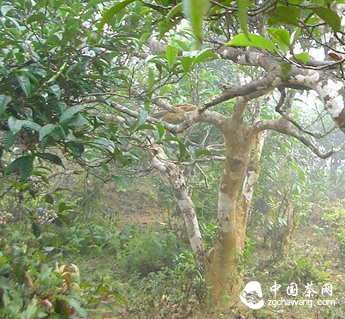
Yibang is one of the six ancient tea mountains of Yunnan Pu'er Tea, located on the east side of the river. "For red wine, we discuss chateaux; for Pu'er, we discuss mountain origins." Due to different geographical environments, Yunnan Pu'er tea has varying tastes and flavors. Since the historical Tea Horse Road, specific mountain origin names have been used to define the particular taste profile of Pu'er tea. The central town of Yibang Mountain is Yibang Street, also known as "Yibang." Pu'er tea originating from the Yibang production area is customarily called "Yibang" tea or "Yibang Mountain" tea.
Mangzhi
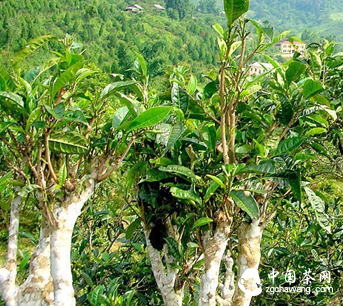
Mangzhi is located in Xiangming Township, Mengla County, Xishuangbanna Prefecture, Yunnan Province. Legend has it that it is the place where Zhuge Kongming buried copper ("Mang"), hence the name Mangzhi. The tea from Mangzhi Ancient Tea Mountain belongs to the arbor medium-small leaf variety. The tea soup is deep orange-yellow in color, initially quite bitter and astringent on the palate, with a strong sweet aftertaste, rapid saliva production, and a fresh, pleasant aroma.
Manzhuan
Manzhuan Mountain is located in the southern part of Xiangming Township, west of Yiwu. According to legend, Manzhuan got its name because Zhuge Liang buried iron bricks here in ancient times, hence it is also written as "Manzhuan." Manzhuan Tea Mountain is the best-preserved among the six ancient tea mountains. The name "Manzhuan" cannot be found on maps now because it has been renamed to Manzhuang Village Committee—Manzhuang Great Village.
Mansha (Yiwu)
Mansha Ancient Tea Mountain is located northeast of Yiwu Township, Mengla, close to the border with Laos. The Qianlong period of the Qing Dynasty was the glorious era of Mansha Ancient Tea Mountain, with tea trees covering the mountains and fields, producing over ten thousand dan annually. In fact, Mansha Ancient Tea Mountain includes Yiwu Tea Mountain and was the earliest distribution center for Pu'er tea, known as "Profit City" during the Tang Dynasty and the source of the Yunnan-Tibet Ancient Tea Horse Road.
Youle (Jinuo)
Youle Ancient Tea Mountain historically ranked first among the "Six Great Tea Mountains." Youle Ancient Tea Mountain is now under the jurisdiction of Jinuo Mountain Jinuo Ethnic Township, Jinghong City. It is one of the historically famous "Ancient Six Great Tea Mountains" of Pu'er tea and a central production area for Yunnan large-leaf tea, with a historical peak output exceeding 2000 dan. Tea planting in Youle Ancient Tea Mountain dates back to ancient times. Legend has it that the tea was left by Kongming, hence he is revered as the Tea Ancestor.
With the cultural history of Pu'er tea, more and more people are getting to know Pu'er, and the tea mountains have become a focal point today.