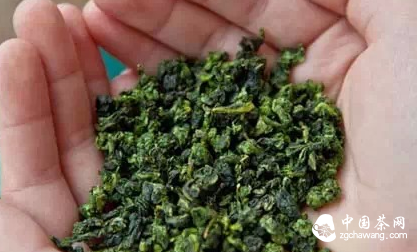
Anxi Tieguanyin spring tea, one of China's Top Ten Famous Teas, is now freshly available on the market. Due to its unique aroma, charm, and flavor, Anxi Tieguanyin has consistently ranked first in market share in recent years. However, many tea lovers still lack a deep understanding of it. How does one choose authentic Anxi Tieguanyin spring tea? Today, Brother Tie specially reminds all Tieguanyin fans to avoid these seven misconceptions when selecting Anxi Tieguanyin spring tea!
Misconception 1: Believing Spring Tea is Better the Earlier it is Harvested
Common perception, often influenced by green tea standards, holds that tea before the Grain Rain ("Yu Qian") or before Qingming ("Ming Qian") is superior. However, for Anxi Tieguanyin, earlier is not necessarily better. Tieguanyin is harvested not as buds but as fully unfolded leaves. Picking too early, before the leaf surface has fully expanded, results in smaller tea granules, a grassy aroma, a slightly astringent and weak taste, and poor infusion endurance.
Additionally, consumers are reminded that authentic Anxi Tieguanyin generally hits the market in late April. Be cautious of purchasing other oolong teas like "Huangjingui" or "Benshan Cha" passed off as Tieguanyin.
Misconception 2: Believing Fresher Tea is Always Better to Drink
New tea is not necessarily better the fresher it is. Improper consumption can easily upset the stomach. Because new tea has just been picked and has a short storage time, it contains relatively high levels of unoxidized polyphenols, aldehydes, and alcohols. These substances have little impact on healthy individuals, but for those with poor gastrointestinal function, especially those with chronic gastrointestinal inflammation, they can irritate the gastrointestinal mucosa. People with originally weak digestive systems are more prone to triggering stomach problems. Therefore, new tea should not be consumed in large quantities, and tea stored for less than half a month should be avoided altogether.
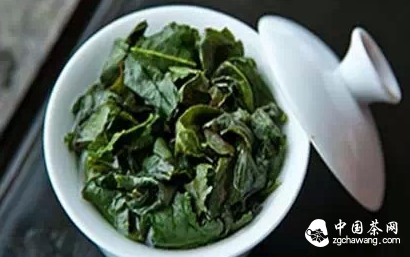
Misconception 3: Believing Darker Green Tea Granules Indicate Better Tieguanyin
Again, influenced by green tea drinking habits, some believe darker green tea granules signify better quality. Tieguanyin is a semi-fermented tea. After undergoing eight processes including plucking, sun-withering, indoor-withering, shaking/tumbling, fixation, rolling, wrap-rolling, and baking, the resulting tea granules are not entirely green nor entirely black, but a dark greenish-black. Since the tenderness varies from the leaf tip to the stem on a single tea leaf, the finished granules naturally show a gradient from green at the tip to dark at the base, with the stem area appearing greener again. Furthermore, there should ideally not be too many entirely yellow "yellow flakes" mixed in with the granules.
Misconception 4: Believing the Stronger the Aroma, the Better the Anxi Tieguanyin
When purchasing Tieguanyin, consumers are often misled by some tea merchants with incorrect concepts, many of whom use fragrance profiles to attract buyers, leading them to believe that a stronger aroma means better Tieguanyin. While aroma is indeed important for Tieguanyin, stronger is not always better. High-aroma Tieguanyin often comes from mountainous regions with frequent mist, diffused sunlight, strong ultraviolet rays, where the tea leaves accumulate more aromatic substances, resulting in thick, soft leaves with strong tenderness. Tea from such areas can generally produce excellent fragrance.
The best Tieguanyin, made from leaves grown in Anxi's mountainous regions using traditional techniques, is known as "Zheng Wei" (proper flavor) Tieguanyin. Its fragrance profiles include elegant scents like osmanthus and orchid. In recent years, due to the use of organic fertilizers like bean cake, some teas also develop aromas reminiscent of peanuts or coconut.
Misconception 5: Recognizing Only the Name 'Tieguanyin' and Not Its Origin
The quality of Tieguanyin tea is closely tied to its origin. Tieguanyin from different regions can vary significantly in quality. Even within Anxi, the taste of the same Tieguanyin cultivar can differ within a few kilometers. In recent years, due to Tieguanyin's fame, its cultivation has expanded from Anxi to surrounding counties and cities within Fujian Province, neighboring provinces like Guangdong and Jiangxi, and even distant regions like Guizhou, Yunnan, Yanling County in Hunan, and Enshi in Hubei, with yields increasing annually.
Misconception 6: Tieguanyin Blended with Ingredients Like Ginseng
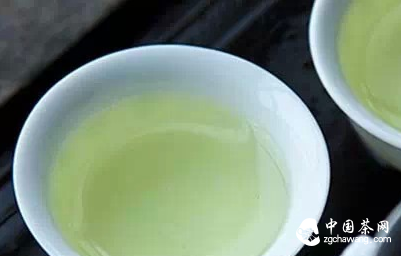
This point emphasizes drinking Tieguanyin for its freshness, aroma, and charm. Adding ingredients like licorice or ginseng to the tea only ruins its true flavor. This method of tea preparation is a disservice to Tieguanyin.
Misconception 7: Overemphasizing Fancy Names and Packaging
Some merchants, to guide and attract consumers, label their products as "Guanyin Wang (Tea King), High Mountain Tieguanyin, Golden Tieguanyin," or even names like "Blue Champion Guanyin Wang, Green Champion Guanyin Wang, Five Mansion Red Champion." "Guanyin Wang" is a title won in tea competition, and the quantity is necessarily very limited. It cannot be further graded into levels like Grade 1, Grade 2, or different colored 'champions' (Green, Blue, Red). "High Mountain Tieguanyin" typically refers to tea grown above 1000 meters, a term mostly associated with Taiwanese high mountain tea.
The current grading standard for Anxi Tieguanyin only includes Special Grade, Grade 1, Grade 2, Grade 3, and Grade 4. The yield of Special Grade Tieguanyin is inevitably very small; there cannot be that much available. Other fancy names are merely marketing packaging by merchants. On the other hand, consumers are also reminded to pay attention to the price when purchasing Tieguanyin. An unusually low price likely indicates it is not authentic Anxi Tieguanyin.
Finally, it's important to note that Tieguanyin can be broadly categorized into two main types based on processing techniques: Qing Xiang (Light Fragrance) and Nong Xiang (Heavy Fragrance/Roasted). Consumers should understand that "Nong Xiang" Tieguanyin, in its place of origin Anxi, refers to tea that has undergone charcoal roasting or electric baking, commonly called "ripe tea," not simply tea with a strong aroma as consumers might interpret. The most suitable tea is the one that fits your personal preference. Consumers are advised to make rational purchases of Anxi Tieguanyin.