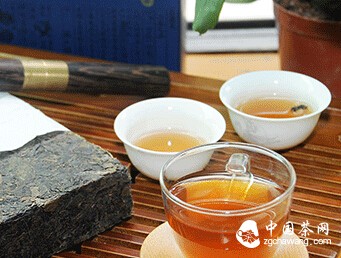
First, let's discuss some background. Among Anhua Dark Tea, brick tea comes in three forms: Fu Brick Tea, Black Brick Tea, and Flower Brick Tea.
Between Black Brick Tea and Flower Brick Tea of similar quality, Flower Brick Tea commands a higher price due to its decorative edge production technique. The standard tea leaf raw material grade for these two types is Grade 3-4. Some cheaper products (such as those for border sales or for making milk tea) actually use raw materials around Grade 5. Some teas may look good on the outside, but the inside is actually tea dust or scraps, very broken. There's a saying that crushing makes it easier to press, but now原生茶 (unbroken tea) can also be pressed just fine. Actually, think about the price, weight, and after deducting manufacturer and distributor profits, calculate how much it's worth per jin. You'll understand that such tea matches its price. Some don't even cover the processing costs. For instance, the pressing labor cost for some 300g, 400g, 800g tea products is 4-6 yuan per piece, depending on volume. Why is the price so low? Isn't that a loss? No. These teas are generally made by large manufacturers. First, they save on raw material costs. Second, the state assigns production tasks, and manufacturers producing these teas receive financial subsidies.
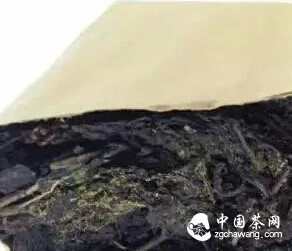
Fu Brick Tea has many grades. Most old teas on the market now are from the "Special Fu Brick" or "Refined Fu Brick" series, commonly packaged in kraft paper. This is because brick tea was historically mainly sold to border regions, where Tibetan people drink it daily due to their dietary habits—without dark tea, they experience indigestion, gastrointestinal issues, and frequent blood lipid problems. This is also why the state assigns annual production tasks to major manufacturers. Since 2005, when Yiyang Tea Factory developed the first batch of "极品" (Supreme Grade) and "一品" (First Grade) products for the domestic market, various manufacturers have successively produced many high-quality teas for domestic customers, leading to diversification in grades.
First, let's talk about the true raw material grades for Anhua Dark Tea:
Grade 1 material: One bud, one leaf. Such tea is mostly hand-picked by local farmers to make本地 green tea. This tea is not only drinkable; in areas like Hunan's Yiyang, Taojiang, Yuanjiang, and Anhua, people directly eat it—drinking the infusion along with the leaves. Such tea now costs at least 80-100+ yuan per jin. During the first Dark Tea Culture Festival held in Yiyang in 2008, some manufacturers used Grade 1 material to make Tianjian loose tea, but its price was as high as several thousand yuan per jin. Anhua本地 Grade 1 material dark tea products are often high-end, top-tier products with small quantities.
Grade 2 material: The standard material for good quality Hua Juan (Flower Roll) tea. In 2010, the purchase price for Grade 2 Anhua本地 fresh leaves was between 50-80 yuan (depending on the tea's origin fame and quality). After processing such fresh leaves into raw dark tea (hei mao cha), 500g yields only about 400g. Due to the high price, very few Hua Juan teas are made purely from本地 material unless custom-ordered by clients.
Grade 3-4 material: The most widely used. During picking, sickles are used (typically for harvesting Grade 4 fresh leaves or wild tea) or directly plucked by hand. Sickle-harvested leaves come with coarse stems, while hand-plucked leaves have only fine stems, no coarse ones. This material is best for Hua Juan tea to blend with外地 material.
For brick tea, due to the traditional prevalence of crushing techniques, about 90% use外地 material, blended with本地 tea stems. Because外地 material is tender and differs from Anhua's large-leaf variety, it's hard to distinguish after crushing. The biggest difference is the stronger tea taste—the stronger the taste, the more外地 material is blended. Anhua本地 material tea has a very mild taste; one mainly drinks it for the thickness and smoothness of its soup and its unique tea aroma.
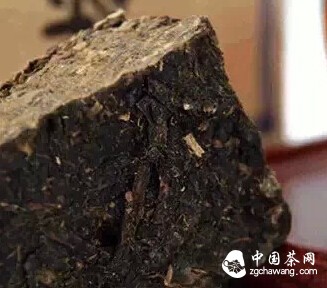
Of course, blending is scientific. After all, Anhua's raw material output is limited, and demand is high. Proper blending can produce excellent tea products. Only reasonable blending allows for sustainable development.
Here, let me tell you that the most commonly used blending materials are from Taoyuan, Fujian, Hubei, and some factories even blend Yunnan Pu'er material to make the soup color more red and appealing. Some tea products even use Biluochun raw material.
Mentioning these points is just to help everyone跳出 a misconception: when comparing tea products at similar price points, don't overemphasize grade. A Grade 1 material product isn't necessarily better than Grade 2 or 3. As long as you like it, that's what matters.
Tea is, after all, a beverage. If it suits your taste, that's enough. There's no need to刻意 pursue raw material grades excessively. Otherwise, what you're drinking isn't tea anymore, and you lose the pleasure and meaning of drinking tea.