Tea Polyphenols, the Soul of Tea

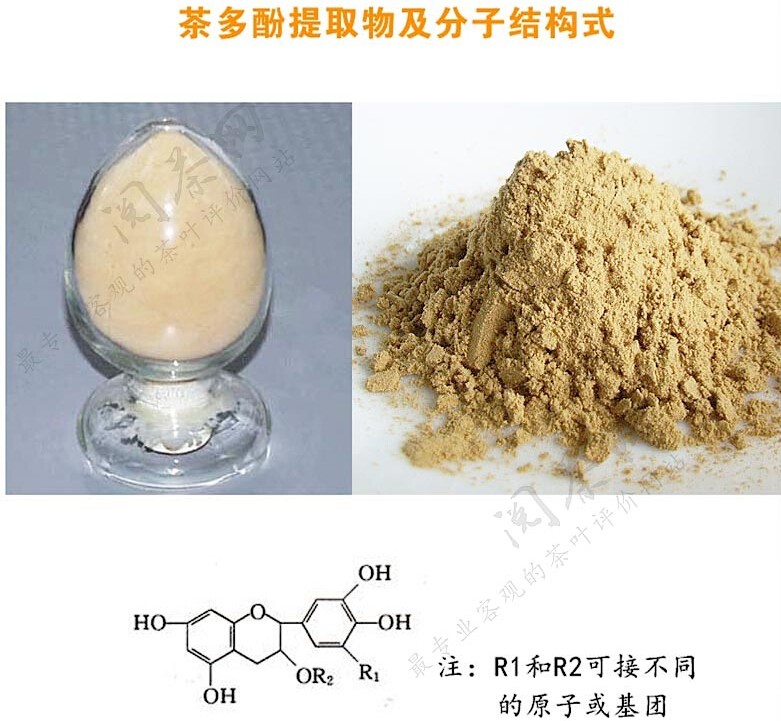
This seems to be both a perceptual and rational question. Perceptual, because it relates to our taste, influenced by both physiological and psychological factors, with significant individual differences; and rational, because it concerns a tangible category of chemical substances objectively present in tea leaves. Fundamentally, it's about the characteristics of a class of chemical compounds.
We will attempt to answer the following basic questions about tea polyphenols one by one, to give everyone a fundamental understanding.
1. What exactly are they?
Firstly, this is the general term for the most important group of substances in tea. They are the reason tea is called tea, the source of the refreshing sweetness and full-bodied taste we experience when drinking tea, and the primary compounds behind its remarkable health benefits.
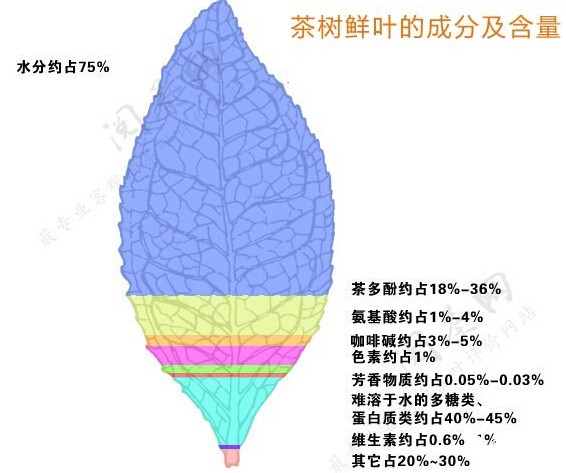
This group of substances constitutes 18% to 38% of the total dry matter of tea leaves. In other words, about 100g to 200g of this substance is present in one pound of dry tea. More importantly, these substances can rapidly dissolve in hot water, allowing us to fully absorb and utilize them when we brew and drink tea, thereby imparting specific health benefits to our bodies.
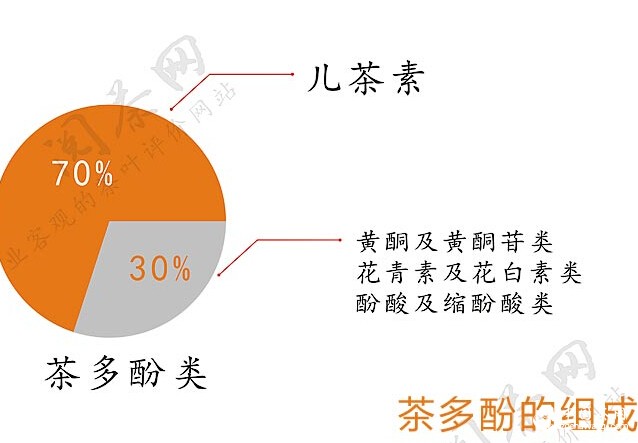
Further subdividing tea polyphenols, they can be simply categorized into four major classes: catechins, flavonoids and flavonoid glycosides, anthocyanins and leucoanthocyanins, and phenolic acids and condensed phenolic acids. Among these, catechins are the most important, accounting for about 70% of the total tea polyphenol content. Therefore, when discussing tea polyphenols, we can often focus primarily on catechins.
2. How do tea polyphenols differ among various tea types?
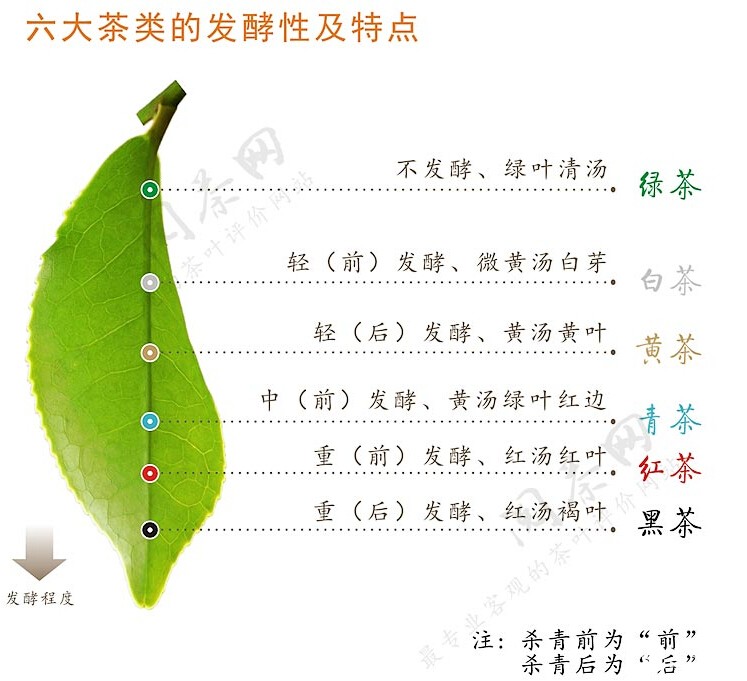
We know there are six basic tea categories: white, green, yellow, oolong, red, and dark tea. For different tea types, due to variations in processing techniques and degrees of fermentation, their flavor profiles differ greatly, and the intensity of their taste varies significantly. This is largely related to the content of tea polyphenols.
Let's assume we take the same batch of fresh tea leaves from a specific tea plant variety and process them according to the methods for the six major tea types, producing six different teas. The tea polyphenol content in these six teas can be roughly ranked as follows: green tea > white tea, yellow tea > oolong tea > black tea, dark tea. Correspondingly, the taste progresses from strong to mild, from intense to weak. As the degree of fermentation increases, more tea polyphenols are oxidized, their content decreases, resulting in a weaker, less astringent taste.
Fermentation is the process of transforming tea polyphenols. Naturally, we might ask: what do tea polyphenols turn into after being oxidized and reduced? Depending on the degree of fermentation, tea polyphenols are converted into three major substances: theaflavins (TF, bright yellow), thearubigins (TR, deep red), and theabrownins (TB, dark brown). These three substances not only contribute to flavor but are also the main components responsible for the color of tea liquor. It is precisely due to the varying extent of this transformation that our tea liquor exhibits a color transition from yellow to red, and from bright to dark.

3. How does the content of tea polyphenols vary under different conditions?
Appreciating tea requires some practical knowledge. Understanding the following points about tea polyphenols, the most important substance in tea, will greatly aid your tea tasting:
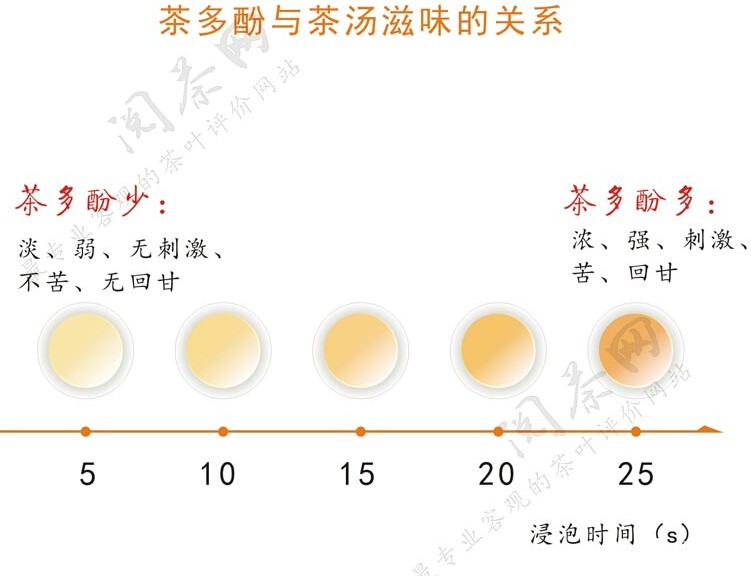
(1) Corresponding to tea taste: The strength, stimulation, astringency, bitterness, and sweet aftertaste of tea are all influenced by this group of substances. A stronger, more stimulating, more astringent, more bitter tea with a better sweet aftertaste indicates a higher concentration of tea polyphenols in the liquor.
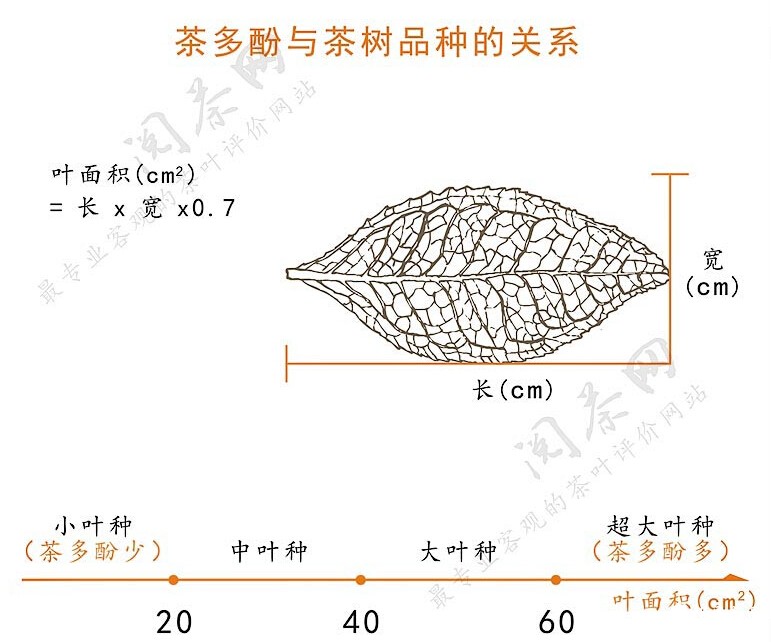
(2) Corresponding to tea plant varieties: Regarding tea varieties, large-leaf varieties generally contain relatively more tea polyphenols, while small-leaf varieties contain relatively less. For example, raw Pu-erh made from Yunnan large-leaf varieties has a stronger, more stimulating taste than Rizhao green tea from Shandong made from small-leaf varieties.
(3) Corresponding to geographical environment: Tea grown in southern tea-producing regions generally contains relatively more tea polyphenols than tea grown in northern regions. This is related to environmental factors like light intensity and temperature. Generally, areas with higher temperatures and stronger sunlight produce tea with higher polyphenol content.
(4) Corresponding to altitude: Typically, tea grown at altitudes above 500 meters contains more tea polyphenols compared to tea grown at lower altitudes.

4. What benefits do tea polyphenols offer us?
Tea has excellent health benefits. Many say tea is a natural, healthy beverage for the 21st century. Based on research, the health benefits of tea polyphenols can be summarized as shown in the figure below (from Wan Xiaochun's "Tea Biochemistry," p322, China Agriculture Press):

(1) Antioxidant effects. This is mainly because tea polyphenols can provide abundant H+ ions, which can eliminate excess free radicals in the human body, acting as a free radical scavenger.
(2) Positive effects on cardiovascular diseases. Specifically, they can regulate human lipid metabolism, have anticoagulant and fibrinolytic effects, and help prevent cardiovascular and cerebrovascular diseases.
(3) Anti-allergic and immunomodulatory effects. They can enhance the human immune system and improve disease resistance.
(4) Anti-cancer, anti-tumor, and anti-mutagenic effects, primarily achieved through antioxidant activity, regulation of gene expression, and inhibition of tumor transformation and proliferation.
(5) Antibacterial, antiviral, and bactericidal effects.
(6) Anti-inflammatory, detoxifying, and anti-allergic effects.
(7) Protective effects against radiation damage.
Summary: The benefits of drinking tea lie in the health effects of various chemical substances, including tea polyphenols, and in the stimulation these substances provide, leading to pleasurable psychological experiences. Therefore, it is recommended to drink tea regularly and, if possible, pursue high-quality tea (be careful not to overdo it, haha~~).