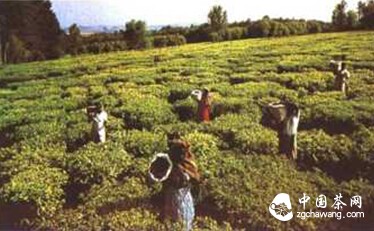
Organic tea products are a relatively recent development, spanning only about 7 to 10 years. The cultivation rules for organic tea are extremely complex and strictly controlled. All fertilizers, insecticides, and herbicides must be absolutely free of chemical substances, relying entirely on materials such as manure, compost, natural organic matter, plants and trees that provide necessary nutrients, ground cover, etc. The purpose of organic plantations is to ensure long-term soil fertility and stable productivity, protect the ecological environment, and create a certain form of organic micro-system for producing tea that is completely free of chemicals and economically viable.
The above does not indicate that all non-organic teas contain chemicals. The production of organic tea is mainly to meet the needs of consumers who are concerned about the Earth's environment and its sustainable development—a number that is continuously growing—and also to satisfy consumers who appreciate and savor the high quality and excellent taste of organic teas now produced in India, Africa, and Sri Lanka.
In 1990, the UK's Organic Farmers and Growers Association awarded certification to the Makalbari... plantation in Darjeeling, highly praising the unique quality of its tea. Molooto is another Darjeeling tea plantation that has been cultivating organic tea since 1986. The Ronglo plantation in Tanzania has been growing organic tea since 1989, and its tea has been served at Buckingham Palace. The Reedwood Estate in Sri Lanka has also begun producing organic tea.