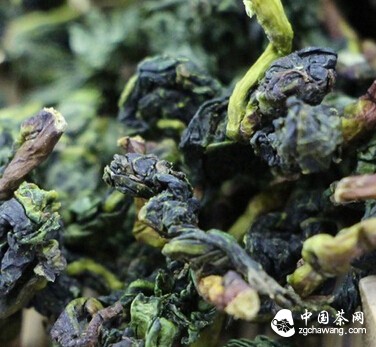
What is 'Mao Cha' (Raw Tea)?
When discussing tea, we often hear the term 'Mao Cha' (Raw Tea), or terms like red raw tea, green raw tea. Sometimes, tea friends might say, 'I brought back some Pu'er raw tea from Yunnan, shall we try it?' and so on. So, what exactly is 'Mao Cha'?
I. Definition of Mao Cha
Mao Cha, as the name suggests, mainly refers to the rough, unrefined product after the initial processing of fresh leaves, which still requires further processing. In tea manufacturing science, any tea product that needs further fine processing is generally called 'Mao Cha', and the resulting processed product is called 'Refined Tea' or 'Finished Tea'. Since the appearance and internal quality of raw tea often do not meet the commercial requirements for tea, it is necessary to reprocess these raw teas. Generally, the reprocessing and refining of green tea are relatively simple, requiring only some shaping and removal of broken pieces. However, for some export teas, such as Qimen Gongfu Black Tea and Chunmee (Eyebrow Tea), which have strict grading requirements, more meticulous processing is needed.
II. Characteristics of Mao Cha
1. Form
In terms of appearance, raw tea generally contains varying degrees of substandard tea and non-tea impurities. Substandard tea includes fish leaves, old leaves, tea stems, yellow flakes, tea seeds, and leaves damaged by pests. Non-tea impurities are things accidentally mixed in during picking or processing, such as leaves from other crops, husks, or even sand. Dietary hygiene standards require the absence of non-tea impurities; for medium and high-grade teas, substandard tea materials must also be completely removed.
Generally, the appearance requirements vary for different types of tea. For example, black tea should be tight and straight (except for broken black tea), Gunpowder tea should be round and smooth, while Longjing should be flat, etc. The form of raw tea is generally complex and irregular; the strips can be tight, loose, or deformed, etc., requiring certain treatments during processing to meet appearance standards. For instance, to meet international market grading needs and transportation requirements historically, Qimen Black Tea production required 13 refining processes. Not only did processes like rolling and cutting help form its characteristic appearance of tight, slender, even strips, glossy black color, and prominent golden tips, but grading and drying processes also contributed to its internal quality characteristics of mellow thickness and rich, fragrant aroma.
2. Properties
The properties of raw tea form the foundation of the finished tea's quality, but raw tea also requires reasonable technical measures based on its characteristics to achieve the goal of improving the finished tea's quality. The properties of raw tea mainly refer to its specific gravity, hygroscopicity, adsorption capacity, dispersibility, self-grading, viscosity, and thermal conductivity.
Specific gravity means that after proper processing, tender raw materials generally yield heavier, solid strips, while coarse, old leaves yield the opposite. During processing, winnowing technology is used to separate good from bad based on different specific gravities. Winnowing, also known as airflow separation, as shown in the diagram below, is a method that uses air as the medium to separate materials by weight. In tea refining, winnowing is a common technique to separate teas of different specific gravities.
After primary processing, raw tea generally absorbs moisture vapor from the air, a property called hygroscopicity. After absorbing moisture, it not only significantly affects quality but can also create favorable conditions for microbial growth, leading to mold. Re-drying is necessary to maintain excellent quality. For example, during the refining of Qimen Black Tea, a re-firing process is required at temperatures generally between 80-85°C, aiming to release aroma and ensure moisture content meets standards.
Raw tea also has adsorption capacity, allowing it to absorb surrounding gases. For instance, in the processing of Jasmine Tea, this property is utilized through scenting techniques to produce jasmine tea. Utilizing the viscosity of tea leaves, they can be pressed into various shaped compressed teas. For example, during the refining of Pu'er raw tea, after grading, processes like steaming, pressing, and compressing are typically used to produce raw Pu'er tea (Sheng Cha), which is a classic production example utilizing the viscosity of tea leaves.
Additionally, raw tea has characteristics like dispersibility and thermal conductivity. Dispersibility refers to the varying degree of scattering due to different shapes and weights of tea leaves; production often uses differences in resistance and dispersibility to uniformly categorize shapes.
Thermal conductivity refers to the varying ability of tea to conduct heat. Raw tea is generally loose and porous; in its raw state, it is filled with moisture and has strong thermal conductivity. After drying, these pores are filled with air, reducing thermal conductivity. The drying process utilizes the thermal conductivity of raw tea to quickly remove excess moisture.
What is 'Refined Tea'?
Refined Tea, as the name implies, is tea made by further fine processing based on the primary raw tea. After a series of refining processes, the comprehensive quality of the raw tea is improved. Market-sold tea basically all needs to undergo a refining process.
I. Purpose of Refining
The tea refining process is complex and varies depending on the tea type, origin, season, grade, and other factors. It requires considering different technical measures for the raw tea to harmonize the tea's appearance and internal quality, ultimately achieving the goal of improving tea quality and fully realizing the highest economic value of the raw tea.
In summary, tea refining generally has four purposes: First, to eliminate inferior tea strips, remove substandard materials and impurities, improve purity, and promote uniform shape. Second, to organize various irregular shapes, allowing different teas to form distinct styles meeting standards. Third, to classify quality grades, sort and blend, ensuring pure quality and clear distinction between good and bad. Fourth, to remove excess moisture, achieve appropriate dryness, enhance internal quality, tighten leaf texture, and ensure durable storage.
II. Refining Processing Techniques
Refining processing techniques and purposes are complementary. Moreover, the techniques adopted vary depending on the tea type, but overall, processing techniques can be broadly categorized into screening and cutting, winnowing, sorting, blending, and drying. Simultaneously, modern tea companies increasingly emphasize achieving continuity and automation in refining processes through linked equipment, thereby further improving product quality and manufacturing efficiency.
1. Screening and Cutting
Screening and cutting for material separation can be divided into sieving and cutting, with the main purpose being to shape the appearance and create different styles. Sieving mainly includes rotary sieving and vibrating sieving. Rotary sieving involves tea leaves making circular motions on the sieve surface to separate them by length and size; vibrating sieving involves tea leaves shaking back and forth on the sieve surface to separate them by length/roundness and thickness. Cutting is mainly necessary because some raw tea strips are too thick, curved, etc., to pass through sieve holes and need further processing to become finer. Most tea types do not require further cutting or rolling, but some export teas like Qimen Black Tea need further processing to become finer, such as breaking and snapping, which also explains why Qimen Black Tea appears relatively fine and broken visually.
Taking Qimen as an example, traditional Qimen refining can be divided into: initial vibrating, sieving, bag beating, rough vibrating, rough sifting, fine vibrating, fine sifting, foot trimming, winnowing, floating sifting, shaking sifting, hand sorting, blending, re-firing, even piling, boxing, and initial vibrating. Among these, initial vibrating, sieving, bag beating, rough vibrating, rough sifting, fine vibrating, fine sifting, and foot trimming belong to the screening and cutting step, aiming to shape and grade. For example, rough vibrating separates thickness according to specifications, and rough sifting separates length according to requirements. Currently, the use of tea screening machinery in production is becoming more common, such as drum rotary screens, flat rotary screens, rotary vibration screens, and tea cutters.
2. Winnowing
Although screening and cutting can address shaping issues, they have difficulty handling the weight differences among various tea styles, requiring winnowing methods to assist. During winnowing, teas with heavier 'body' (more substance) fall closer, generally indicating tender raw materials, rich chemical content, soft leaf texture, good plasticity, resulting in tighter finished tea strips and generally better quality. Conversely, teas with lighter 'body' have poorer quality. Winnowing is also a primary operation for finalizing each tea style. For example, winnowing in Qimen refining separates weight and removes light teas. Common winnowing machines currently include suction-type and blowing-type.
3. Sorting
Due to relatively rough picking and primary processing, not all substandard tea and non-tea impurities can be removed through the previous refining steps. The main purpose of sorting is to remove coarse, old, deformed tea strips and non-tea impurities through mechanical or manual methods, achieving uniform shape. For example, in Qimen refining, floating sifting compensates for winnowing's shortcomings by removing light yellow flakes; shaking sifting compensates for winnowing's shortcomings by removing light teas. Additionally, there is hand sorting to ensure uniform tea quality.
With continuous advancements in tea technology, tea sorting methods are shifting from traditional manual labor to modern equipment. For example, tea color sorters can utilize color differences between tea stems, yellow flakes, and standard products, using high-definition CCD optical sensors for precise selection. Tea electrostatic stalk sorters use differences in moisture content between tea leaves and stems; through the action of electric field forces, stems and leaves experience different attraction forces, creating an angular difference, then separation mechanisms achieve sorting, mainly used to remove tea stems and yellow flakes from tea leaves. In some large production enterprises, such machinery is becoming increasingly common in tea making. For instance, Xiangyuan Yiwu Factory has introduced these two types of machinery, which are significant for improving tea refining efficiency and enhancing and ensuring product quality.
4. Blending
Blending is one of the main technical measures for adjusting tea quality and stabilizing product quality. It is divided into raw material blending and semi-finished material blending. Raw material blending occurs before raw tea processing, combining different varieties, origins, seasons, and grades. Semi-finished material blending occurs during refining, rationally combining semi-finished products of different grades and sieve sizes to form the finished tea. This is a highly technical task, aiming to have various teas complement each other, balance appearance and internal quality, and achieve the goal of improving quality. In Qimen production, this process is called blending or 'Guan Dui' (official piling). Xiangyuan Qimen's production consultant and intangible cultural heritage technician, the elder Min Xuanwen, is a master of Qimen 'Guan Dui'.
5. Re-drying
Re-drying plays an important role in forming the internal quality of finished tea. Chinese tea masters have always valued using firing skill in tea making. The role of re-drying is not only to evaporate moisture but, more importantly, to adjust the color, aroma, and taste of the tea during this process. For example, the 'La Lao Huo' (pulling old fire) process for Liu'an Guapian and the 'Hui Guo' (shining pot) process for Chunmee can adjust the tea's appearance and color, while the drying (re-firing process) of Qimen Black Tea can transform grassy notes in the raw black tea into honey or sweet floral aromas.
In summary, the refining process is reprocessing based on primary processing. It not only shapes the tea's appearance but also further enhances its quality. Therefore, compared to raw tea, refined tea achieves improvement in comprehensive quality from appearance to internal quality.