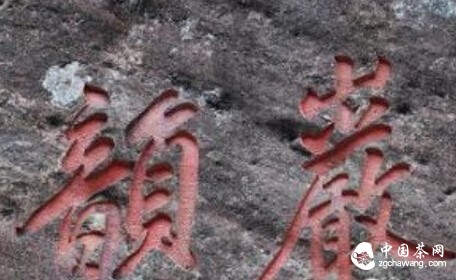
Wuyi Rock Tea has a sweet, mellow taste and a rich, fragrant aroma, with different varieties exhibiting distinct throat-feel characteristics. The unique "Rock Rhythm" of Wuyi Rock Tea is a specialized term used to measure the quality level of the tea. In the sensory standards of the "Geographical Indication Protected Product for Wuyi Rock Tea," officially approved and confirmed by the state in June 2002, the prominence of the "Rock Rhythm" became one of the important criteria for judging the quality of Wuyi Rock Tea.
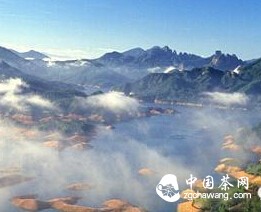
1. "Rock Rhythm" is Related to Climate and Soil
The Wuyi tea region has a mild climate, warm in winter and cool in summer, with an average annual temperature between 18-18.5°C. It has a long frost-free period, abundant rainfall (about 2000mm annually), constant mist and clouds in the mountains, an average relative humidity around 80%, and relatively short sunlight exposure. There is neither wind damage nor frost damage.
The geology of the Wuyi Mountain soil belongs to the Wuyi Formation of the Cretaceous period. The lower layer is quartz porphyry, and the middle layer is composed of conglomerate, red sandstone, limestone, tuff, and volcanic breccia. The parent rock for most tea garden soil is volcanic breccia. The soil profile is not fully developed, retaining the reddish-brown color of the parent rock. After weathering and erosion, the surface layer becomes brown and loose, over 1 meter thick, with a pH value between 4.5 and 5.2.
According to soil surveys of Wuyi Mountain by the Provincial Tea Research Institute, the authentic rock tea producing areas—Huiyuan Pit, Niulan Pit, Dakengkou, Liuxiangjian, and Wuyuanjian, collectively known as the "Three Pits and Two Streams"—have steep cliffs and valleys that provide good shading, fine seepage streams at the valley bottom, short summer sunlight, and protection from cold winds in winter, resulting in smaller annual and daily temperature variations. The soil in authentic rock tea gardens contains a high amount of gravel, reaching 24-29%, with a porosity of 50%. The soil has good permeability and texture, high potassium and manganese content, and moderate acidity, which contributes to the pronounced rock rhythm in the made tea. Semi-rock tea producing areas, such as Qingshiyan and Bishiyan, mainly have thick-layer rocky red soil. The soil layer is relatively thin, with high aluminum content, very little potassium, higher acidity, and a heavier, stickier texture. The tea produced here shows a faint rock rhythm. The area around Matouyan mainly has yellow soil, while areas like Shizikou and along the Nine Bend Stream have alluvial soil. The soil here is high in calcium and fertile, and the tea produced lacks a distinct rock rhythm.
2. "Rock Rhythm" is Related to Tree Age
Based on years of processing fresh leaves picked from areas like the "Three Pits and Two Streams," tea farmers have found that young tea plants, especially Shui Xian (Narcissus) variety, can easily develop fragrance, but the rhythm is not obvious. Tea plants with shorter tree ages have some rock rhythm, while old tea plants over 20 years old produce tea that is not only highly fragrant but also has a very pronounced rock rhythm.
3. "Rock Rhythm" is Related to the Tenderness of Fresh Leaves
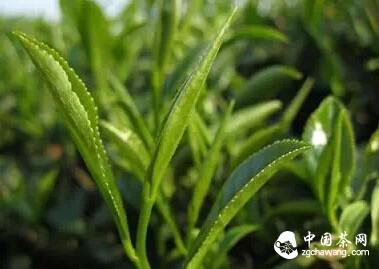
Fully opened mature leaves have thicker epidermal cells and a fully differentiated cuticle. The wax covering the cuticle contains high-carbon fatty acids and high-carbon monohydric alcohols, which are components that form the aroma of Wuyi Rock Tea. More mature fresh leaves have higher contents of carotenoids, starch, sugars, and ether extracts, which are beneficial for the formation of the "Rock Rhythm" in Oolong tea.
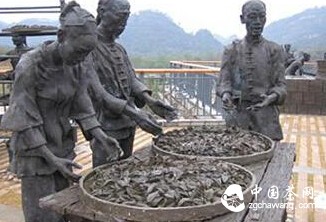
4. "Rock Rhythm" is Related to Processing Techniques
Wuyi Rock Tea has a unique processing technology. During the shaking and withering ("zuo qing") stage, methods like "two sunnings and two coolings" are adopted, combining heavy and light techniques while adjusting based on the condition of the leaves. The double roasting and double rolling, removal of grassy odor and enhancement of fragrance, focusing on shaping the strips, initial baking, and re-baking to mature the aroma—all contribute to achieving a complete color and taste. This is one of the important means for forming the "Rock Rhythm."
5. "Rock Rhythm" is Related to Wuyi Farming Methods
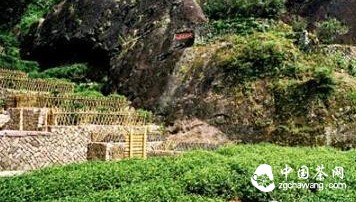
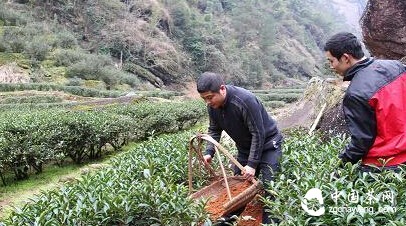
Due to the complex and intricate terrain of the Wuyi tea region, most rock tea gardens are built in secluded valleys, deep pits, rock crevices, mountain hollows, and some gentle slopes. They use stone-retained terraces filled with soil. In addition, for perilous rock crevices, stone bases are built and filled with imported soil, using the soil itself as fertilizer. Among the "Wuyi Farming Methods," the more prominent ones are the "Deep Plowing and Pulling Method" and the "Imported Soil Method." When digging and deep turning the soil in August and September, the effective nutrients near the roots are pulled towards the rows. Exposing the roots to sunlight helps eliminate pests and diseases and promotes soil maturation. The imported soil contains a large amount of trace elements such as Fe, Cu, Mg, Zn, Mo, Cl, etc., which are important substances for forming the rock rhythm.
6. "Rock Rhythm" is Related to Fertilization
In the Wuyi tea region, organic fertilizers are primarily used, and chemical fertilizers are not applied. Summer and winter green manure crops are planted to improve soil fertility. Covering the tea gardens with grass in winter increases soil organic matter, providing conditions for creating the "Rock Rhythm."
On a material level, the rock rhythm is an aura of nature; on a spiritual level, it reflects the Chinese pursuit of the ideal life state of harmony between heaven and humanity. For the tea drinker, the task is to comprehend that aura of nature within the rock tea, achieving communication between the soul and nature, and between the soul and oneself. It requires not only the senses but, more importantly, the soul to appreciate.
Mr. Zhao Puchu, during his visit to Wuyi Mountain, said that the best feeling in Wuyi Mountain was in front of the small waterfall at Yulin Pavilion. Sitting in the pavilion, holding a cup of clear tea, listening to the mountain breeze, was immensely delightful.
Su Shi wrote a poem: "Steep ridges, fine rain, slanting wind bring morning chill; Faint mist, sparse willows grace the sunny shore clear. Into the Huai River, the clear Luo waters gradually stretch far and near; Snow-like foam, milk-like flowers float in the noon cup here. With tender smartweed, bamboo shoots of spring we try our plate; The finest flavor in the human world is a serene pleasure." It describes him going on an outing with friends, drinking wine with a milky foam in the slanting wind and fine rain, tasting wild vegetables and new bamboo shoots in the spring mountain wilderness, and feeling that "the finest flavor in the human world is a serene pleasure." This "serene pleasure" speaks of a love for a peaceful and simple life, a state of being, something many modern people have lost and are searching for. Quietly find a place, preferably with some scenery, savor a cup of rock tea, and contemplate with your heart. It will surely cleanse the soul more than a noisy banquet, and the rock rhythm will then be in your mouth and in your heart.