Tea leaves' chemical components are the material basis for the color, aroma, and taste of tea, and most of them can dissolve in water during the brewing process, forming the color, aroma, and flavor of the tea liquor. When brewing tea, the water temperature, steeping time, and the amount of tea leaves should be adjusted according to the characteristics of different tea types, so that the aroma, color, and taste of the tea can be fully expressed. In summary, there are four main elements to brewing a good pot of tea: the first is the tea-to-water ratio, the second is the water temperature, the third is the steeping time, and the fourth is the number of infusions.
Tea-to-Water Ratio
The rate at which various substances in tea leaves dissolve in boiling water is related to the tenderness of the leaves and the processing method. Amino acids give a fresh, brisk taste, so their content in tea leaves directly affects the briskness of the tea liquor. The reason high-quality green teas taste fresh, brisk, and sweet is mainly due to their high amino acid content and low polyphenol content. Summer teas have low amino acid content and high polyphenol content, so they taste bitter and astringent. Hence the saying, "Spring tea is fresh, summer tea is bitter."
The amount of tea leaves should vary according to different tea sets and tea grades. Generally speaking, too much water and too little tea results in a weak taste; too much tea and too little water makes the tea liquor bitter and unpleasant. Therefore, fine and tender tea leaves require a larger amount; coarser leaves can be used in smaller amounts, following the principles of "fine tea, generous use" and "refined tea, sparing use."
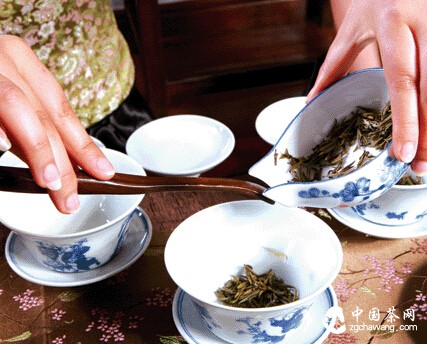
For ordinary black and green teas (including jasmine tea), roughly 1 gram of tea per 50–60 ml of water can be used. For a 200 ml cup (or pot), about 3 grams of tea leaves can be added, filling the cup to about 70–80% full, resulting in a cup of tea with a suitable strength. If drinking Yunnan Pu'er tea, 5–8 grams of tea leaves are needed.
Oolong tea is traditionally brewed strong, emphasizing flavor and aroma, so the tea-to-water ratio is determined by the tea pot's volume, with the amount of tea being about 1/3 to 1/2 of the pot's capacity. In the Chaoshan region of Guangdong, the amount of tea can reach 1/2 to 2/3 of the pot's volume.
The tea-to-water ratio is also related to the age and gender of the drinker. Generally, middle-aged and elderly people prefer stronger tea than younger people, and men prefer stronger tea than women. If the drinker is a seasoned tea enthusiast or a manual laborer, the amount of tea can be increased appropriately; if the drinker is new to tea or a white-collar worker, a smaller amount of tea can be used.
Generally, tea should not be brewed too strong, as strong tea can harm the stomach, especially for those with a weak spleen and stomach. Tea contains tannic acid; if too strong and too much, it can constrict the digestive mucosa, hinder stomach absorption, cause constipation and yellowing of teeth. Moreover, very strong or very weak tea liquor makes it difficult to appreciate the tender aroma of the tea. The ancient saying "rather weak than strong" has some truth to it.
Water Temperature
According to measurements, using 60°C water to brew tea leaves, compared with 100°C water under the same time and amount, the extraction of tea solids is only 45%–65% of the latter. This means that higher water temperature extracts tea solids more quickly; lower water temperature slows down the extraction. "Slow tea brewing with cold water" refers to this phenomenon.
The water temperature for brewing tea is generally best when the water has just boiled and cooled slightly to about 85°C. Boiling water can destroy vitamin C and other components, while caffeine and polyphenols are extracted too quickly, making the tea taste bitter and astringent. If the water temperature is too low, the leaves float without sinking, and the effective components are not extracted, resulting in a weak, tasteless, and aroma-less tea liquor.
The water temperature for brewing is also related to the age, compactness, and size of the tea leaves. Generally, coarser, denser, and whole-leaf teas extract more slowly than fine, loose, and broken-leaf teas, so higher water temperatures are needed. Water temperature also depends on the type and variety of tea.
Specifically, for high-quality delicate teas, especially high-end green teas, the water temperature for warming the cup is 95°C, and the brewing temperature is 80°C–85°C. Only in this way can the tea liquor be clear and not cloudy, the aroma pure and not dull, the taste fresh and not overcooked, and the leaves bright and not dark, making the tea pleasant to drink and visually appealing. If the water temperature is too high, the liquor color will turn yellow; the buds will be "cooked" and unable to stand upright, losing their visual appeal; vitamins will be destroyed, reducing nutritional value; caffeine and polyphenols will be extracted too quickly, giving a bitter and astringent taste—this is what tea experts call "scalding the tea." Conversely, if the water temperature is too low, the permeability is low, causing the leaves to float on the surface, making it difficult to extract the effective components, resulting in a weak flavor and reducing the tea's benefits. For ordinary black, green, and jasmine teas, with moderately aged leaves, water at about 90°C can be used.
For brewing Oolong tea, Pu'er tea, and Tuo tea, which are not made from fine leaves and are used in larger quantities, freshly boiled water at 100°C is necessary. Especially for Oolong tea, to maintain and increase the water temperature, the tea set should be heated with boiling water before brewing, and the pot should be rinsed with boiling water after brewing to increase the temperature and fully release the tea's aroma.
As for the compressed teas preferred by ethnic minorities in border areas, the tea must first be broken into small pieces, then boiled in a pot or kettle before serving.
To determine the water temperature, you can use a thermometer and timer initially; once you have experience, you can judge by feel. Of course, all water for brewing tea should be boiled and then allowed to cool naturally to achieve the desired temperature.
Steeping Time
The steeping time varies greatly depending on the type of tea, water temperature, amount of tea, and drinking habits.
For example, when brewing ordinary black and green teas in a cup, use about 3 grams of dry tea with 150–200 ml of boiling water. It is advisable to cover the cup to prevent the aroma from escaping, with a steeping time of 3–5 minutes. If the time is too short, the liquor color is pale; if too long, the tea becomes bitter and astringent, and the aroma is easily lost. However, freshly picked green tea can be brewed without a lid, making the liquor color more vibrant. Also, with a larger amount of tea, the steeping time should be shorter; conversely, it should be longer. For high-quality tea, the steeping time should be shorter; for lower quality, it should be longer.
The taste of tea gradually intensifies with time. According to measurements, when using boiling water, caffeine, vitamins, and amino acids are extracted first, peaking at about 3 minutes. Drinking the tea at this point gives a fresh, brisk, and smooth taste but lacks the stimulating flavor some drinkers prefer. As time goes on, the extraction of polyphenols gradually increases. Therefore, to get a cup of fresh, brisk, and sweet tea liquor, for ordinary black and green teas, the first infusion is best consumed after about 3 minutes. If you want another infusion, add more boiling water when about one-third of the tea liquor remains in the cup, and so on.
For Oolong tea and jasmine tea, which emphasize aroma, the cup should be covered to prevent the aroma from escaping, and the steeping time should be short, usually 2–3 minutes. Since a larger amount of tea is used for Oolong tea, the first infusion can be poured into the cup after 1 minute. Starting from the second infusion, each subsequent infusion should be about 15 seconds longer than the previous one to maintain a consistent concentration.
White tea requires water at about 70°C. Generally, after 4–5 minutes, the leaves floating on the surface begin to sink slowly. At this point, the drinker should focus on appreciation—observing the shape of the tea and its sinking and floating movements, deriving pleasure from the different tea forms and colors. It usually takes about 10 minutes before the tea can be tasted. Otherwise, not only is the artistic enjoyment of tea tasting lost, but the tea also tastes weak and bland. This is because white tea is not rolled during processing, so the cells remain intact, making it difficult to extract the tea solids, requiring a longer steeping time, and it can only be brewed once more.
Additionally, steeping time is also related to the tenderness and form of the tea leaves. Generally, finer and looser leaves require a shorter steeping time; coarser and more compact leaves require a longer time. Ultimately, the steeping time should be adjusted to suit the drinker's taste preferences.
Number of Infusions
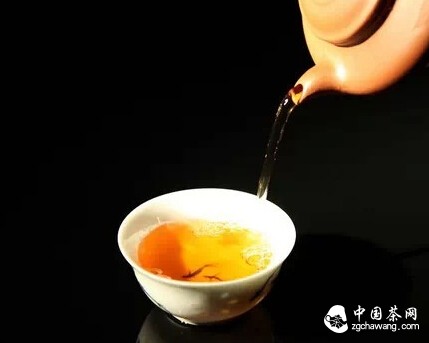
According to measurements, the extraction rates of various effective components in tea leaves differ. Amino acids and vitamin C are the most easily extracted, followed by caffeine, polyphenols, and soluble sugars. Generally, during the first infusion, 50%–55% of the soluble substances are extracted; during the second infusion, about 30%; during the third, about 10%; and during the fourth, only 2%–3%, almost like plain water. Therefore, it is usually recommended to brew tea three times.
For broken black tea and broken green tea, which are fine and well-rolled, their internal components are easily extracted by boiling water, so they are typically brewed only once, with the leaves filtered out. Instant tea is also brewed once. Gongfu black tea can be brewed 2–3 times. Strip-shaped green teas like eyebrow tea and jasmine tea can usually be brewed only 2–3 times. White tea and yellow tea can generally be brewed only once, at most twice.
When drinking Oolong tea from a small Yixing clay pot, with a large amount of tea (about half a pot), it can be brewed continuously 4–6 times or even more.