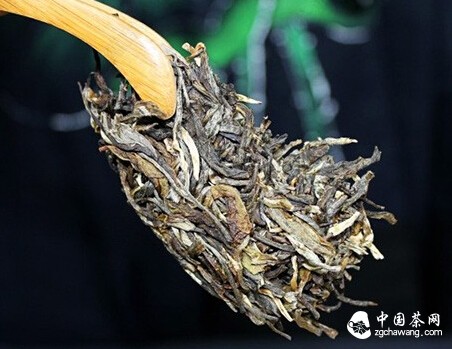
[Prying Tools]
Prying tools are usually divided into two categories: tea knives and tea cones.
Tea knives are usually made from bamboo, animal bones, stainless steel, and some special metals. When loosening brick, cake, or tuo teas that are not tightly compressed or made from coarser tea materials, using a tea knife is not only easy but also better preserves the integrity of the leaves, reducing the amount of broken fragments, making it the most suitable choice.
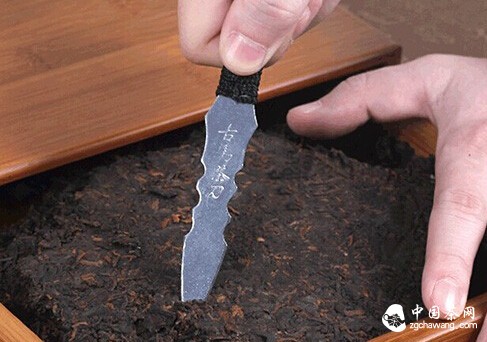
A tea knife should be chosen with a thin blade and a pointed tip. A blade that is too thick will not easily penetrate the tea cake. Also, be careful not to choose a knife that is too sharp or has an edge, as it can easily injure your hands.
Many people are accustomed to calling the tool for prying tea a "tea needle," but the proper term is "tea cone." A tea needle is a tool among the six gentlemen of the tea ceremony, slender like a needle, generally used to unclog the spout of a teapot to prevent tea residue from blocking smooth water flow.
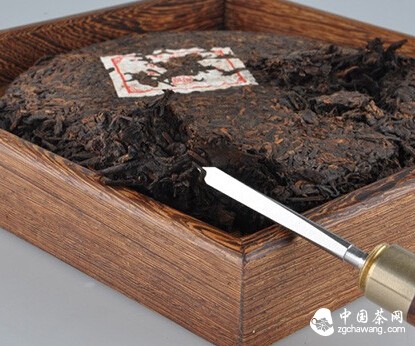
A tea cone has a sharp tip and is used to loosen tightly compressed tea. Due to its conical shape, it is called a "tea cone." The cone body is mostly made of metal, while the handle varies in design. The structure consists of a handle, a cone shaft, and a sharp tip.
[Precautions for Prying Tea]
1. Do not use excessive force, as the tea knife may slip and accidentally injure yourself.
2. The left hand holding the tea cake should try to maintain a parallel or small angle with the insertion angle of the tea knife. This can avoid accidental injury due to improper force when prying the tea.
3. When loosening the tea, peel the tea layer by layer from the cake. This helps maintain the integrity of the leaves.
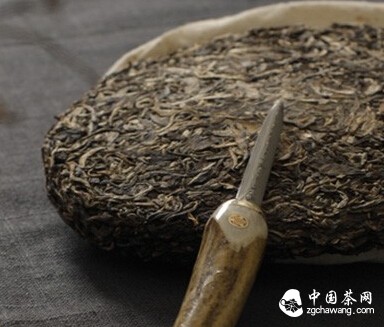
4. Do not be greedy. People who want to dig out a gold nugget in one go will never be able to move the earth. When prying tea, one must have the patience and care of doing needlework.
5. Always be ready to "pull out the needle and start over." Because the tea leaves are tightly clustered together in the tea cake or brick, if you are not careful, the tea cone may puncture or damage the integrity of the tea leaf strands, resulting in all broken tea. If it feels wrong, pull it out.
6. Beginners must adhere to the principle of "the needle tip always points outward" to avoid injuring themselves.
[Prying Different Teas]
1. Cake Tea
Except for tea cakes that are very tightly compressed, which require a tea cone, others can be loosened with a tea knife.
First, insert the tea knife from the edge of the tea cake, apply a little force to loosen the tea, and then push the tea knife further into the cake. This prevents the tea cake from being broken into too many fragments. Note that the insertion angle should be parallel to the cake surface and as close to the surface as possible. After loosening, pull out the tea knife and insert it again from an adjacent spot to gently pry the tea loose.
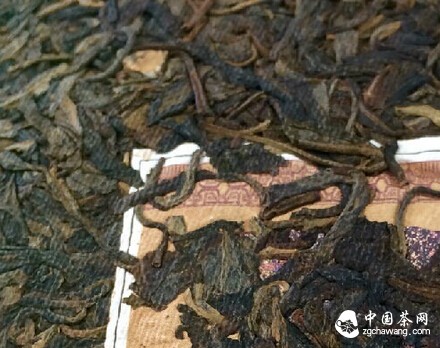
2. Brick Tea
Tea bricks are the easiest type of compressed tea to pry. The method is similar to prying tea cakes. Use a tea knife to find a gap on the side edge, insert the knife, and then pry the tea loose.
For very tightly compressed tea bricks, you can also use a tea cone to gradually peel from the surface. The side of a brick tea is easy to find a breakthrough point for prying. For tightly compressed brick tea, or to pursue the integrity of the tea strands, you can use a tea cone to gradually peel from the surface.
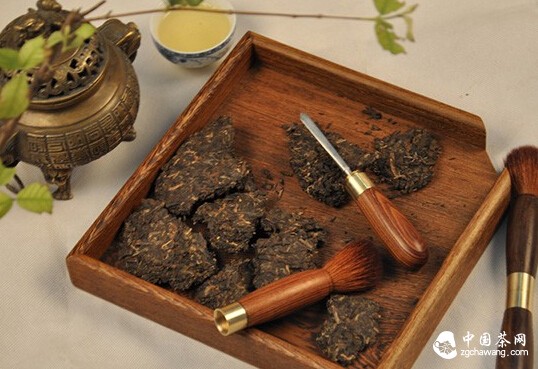
3. Tuo Tea
Tuo tea is the most tightly compressed among the three types of compressed teas and generally uses the finest tea materials, making it the most difficult to pry. It is generally recommended to use a tea cone for prying tuo tea. It is advisable to start from the outer curved surface of the tuo tea. Many people start from the inner concave part, which can easily break the tea.
First, insert the tea cone from the outer curved surface at a small angle, gently loosen the tea, then pull out the cone and insert it from the opposite direction to pry the tea loose. This helps better maintain the integrity of the tea strands.