China is a land of etiquette, where etiquette refers to the respectful rites and ceremonies. 'Li' is the thought and essence, while 'Yi' is the external expression. 'Li originates from custom, and custom becomes ritual' — etiquette has no fixed form, but in interpersonal interactions, it gradually develops into agreed-upon ways to show self-discipline and respect for others.
Tea is naturally tranquil and gentle, and drinking tea also emphasizes a certain atmosphere. While tea drinking does not advocate excessive formality, maintaining basic harmonious etiquette is still important, ultimately allowing for mutual enjoyment. Basic etiquette makes tea drinking easier and more pleasant, allowing us to experience physical and mental enjoyment while drinking tea.
I. Li (Ritual Propriety): Basic Principles
The foundational principle of etiquette is 'Li', which is the spiritual essence of our actions. Many times, even if we do not know specific rules of etiquette, as long as we harbor a heart of respect and tolerance, we will not disrupt the atmosphere of tea. The etiquette of tea affairs can be roughly summarized into four points:
1. Observance and Self-discipline
Observance and self-discipline require people to self-regulate and exercise self-restraint, and not to be arrogantly self-important. Every participant should consciously abide by certain rules.
2. Respect for Others and Tolerance
In tea activities, one should be strict with oneself and lenient towards others, showing more tolerance and never failing to show respect to others.
3. Equality and Conformity
When serving tea, one should maintain an ordinary heart, treat all individuals equally, and give the same courtesy to everyone. It is also appropriate to follow local customs and be consistent with the habits of the majority.
4. Sincerity and Moderation
When serving tea, one must treat others with sincerity, act appropriately and modestly, without being obsequious or supercilious.
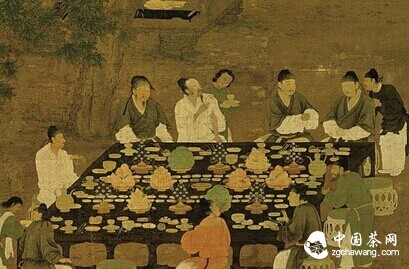
II. Yi (Ritual Form): External Expressions
Based on the spiritual connotation of 'Li', the external form of 'Yi' is formed. Tea drinking should be quiet. Try to use smiles, eye contact, gestures, and postures to communicate. Generally, large-magnitude ritual actions are not used; instead, subtle, gentle, modest, and sincere ritual actions are employed, with restraint rather than overtness.
1. Basic Etiquette Before Drinking Tea
Seating Arrangement
Seating arrangements are not strictly observed nowadays, and the tea ceremony advocates that 'the host follows the guest's convenience' and 'no distinction between high and low'. However, in occasions where it is necessary, respect between host and guest is shown. Facing the host, the host's left side is the 'seat of honor'. It rotates clockwise, from honored to humble, until the host's right side. In some places, sitting directly opposite the host ('head-to-head') is considered taboo, as it can be somewhat awkward. If sitting 'head-to-head' is unavoidable, a child might be asked to sit there, or if there are many people, a host who understands 'Li' will certainly show a tolerant attitude, and for a person who understands 'Li', this will not be a problem.
Attire
The nature of tea is tranquil and gentle. Therefore, tea tasting etiquette requires neat and tidy attire. Women should avoid heavy makeup and excessively revealing clothing; men should also avoid exaggerated and eccentric styles, such as long hair or beggar-like clothing. Imagine drinking tea with someone dressed bizarrely — it would inevitably divert attention and prevent one from fully experiencing the true essence of the tea.
Furthermore, light makeup for women shows respect for others, but when tasting tea, try to avoid applying strongly scented cosmetics as they can affect the tea's aroma. At the same time, if convenient, it is good to wash your hands before drinking tea and try to avoid long fingernails, as this also shows respect for the tea. In short, when tasting tea, attire should be neat and appropriate.
Appearance
Additionally, basic postures such as sitting and standing have certain regulations for professionals, but for ordinary tea drinking, they need not be scrutinized. However, avoid indecent behaviors such as picking ears or spitting. Basic decency, neither humble nor pushy, and an ordinary heart are sufficient.
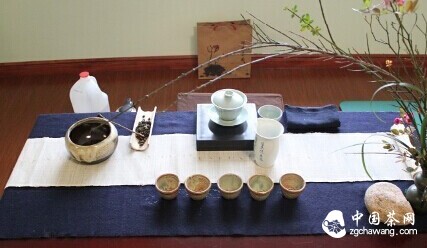
2. Basic Etiquette While Drinking Tea
The Finger-Tapping (Kou Zhi Li) and Open Palm (Shen Zhang Li) Gestures
When the host pours tea for us, the host usually uses the 'open palm gesture' to the guest. The guest's reciprocal gesture is the 'finger-tapping gesture' or the 'open palm gesture', both expressing gratitude.
The finger-tapping gesture is common and, according to legend, originated when Emperor Qianlong, traveling incognito, once poured tea for Ji Xiaolan, Fu Heng, and others. The startled ministers, in a hurry, Ji Xiaolan 'curled his fingers and tapped the table' to simulate kowtowing, thus forming a gesture of respect. The posture for the finger-tapping gesture is: Place the tip of your thumb on the second knuckle of your index finger, straighten your bent index and middle fingers, and gently tap the surface of the tea table in front of you three times with the second segments of your index and middle fingers.
The open palm gesture signifies 'please' and 'thank you', and can be used by both host and guest. When facing each other, both extend their right palms in return. When sitting side by side, the person on the right extends their right palm, and the person on the left extends their left palm. The posture for the open palm gesture is: Extend your hand diagonally towards the side of the item being offered, with your four fingers naturally together, your thumb slightly apart, and your palm slightly concave. Use your wrist with restrained force, without appearing frivolous. When performing the open palm gesture, you should nod slightly, smile, and complete the action in one smooth motion.
Avoid 'Downing in One Gulp' or 'Showing the Bottom of the Cup'
Tea is fundamentally a beverage for taste and spirit. When tasting tea, unless very thirsty, avoid downing it in one gulp. Otherwise, tea would become merely a 'stupid object for quenching thirst'.
Avoid Smoking and Drinking Alcohol as Much as Possible
Avoid smoking while drinking tea. If you really must, it might be acceptable to ask the host and other guests for permission after the fifth infusion. Lighting up a cigarette as soon as you sit down could be considered somewhat disrespectful. It might be better to sit down, first savor the tea, and find pleasure in it. Furthermore, in formal tea gatherings, it is best to avoid attending after drinking alcohol. The tea ceremony is an art for cultivating one's spirit, emphasizing a specific atmosphere, and the smell of alcohol will inevitably disrupt the harmonious ambiance.
Avoid Spitting Out Tea
Even if you do not like the first sip from the first infusion, do not spit it out in front of the host, unless the tea has gone bad. Otherwise, this is a grave discourtesy and can even carry a hint of provocation.
Additionally, conversation should be natural and graceful, avoiding loud noises.
Finally, after finishing the tea, if the tea was good, it is a good idea to compliment the host's tea or tea room. This is also a way to acknowledge the host's warm hospitality.
Chinese people have always treated others with courtesy when drinking tea, welcoming guests with tea. Tea etiquette emphasizes naturalness and should not be rigidly confined to set forms. Elegance does not lie in pursuing these specific forms, but when starting to learn about tea, it is beneficial to first follow the agreed-upon methods. Only after mastering the basic methods can one elevate to the stage of 'Dao' (the Way).