Identify Pu'er Tea by Aroma: In-depth Analysis of 29 Aromas of Pu'er Tea
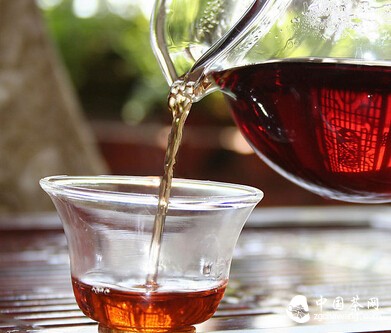
Pu'er tea has its own distinct aromas. Most people only recognize scents by comparing them to familiar references, such as a certain fruity or floral fragrance. Among these, some aromas are part of Pu'er tea's charm and essence. The quality, purity, and persistence of the fragrance largely determine the value of Pu'er tea. So what aromas does Pu'er tea have? How are these aromas formed? Hurry up and bookmark this article!
▶ Clear Fragrance
This is one of the most commonly used aroma descriptors for Pu'er tea (raw tea) and sun-dried green tea. It implies a fresh, subtle, and elegant scent, completely different from rich and strong fragrances. It gives a feeling of simplicity and refinement, like the air of deep forests or vast grasslands—not an overwhelming fragrance, but naturally harmonious and comfortable.
The main aroma compounds for the clear fragrance of tea leaves are green leaf alcohol and some simple aliphatic molecules. In the initial stage of fixation (shaqing), as the leaf temperature rises, cis-3-hexenol (green leaf alcohol) largely volatilizes and transforms into trans-3-hexenol. Combined with some simple aliphatic molecules produced by high-temperature degradation, they form the characteristic clear fragrance.
▶ Tips Fragrance (Hao Xiang)
This aroma appears when the Pu'er tea grade is very high. As the name suggests, it is the fragrance expressed by the "tips" (tender leaf buds). It is the opposite of "coarse." The unique fragrance of these small, unopened buds is particularly fresh and lovely.
▶ Fresh and Crisp Floral Aroma
Floral aromas are very common in Pu'er tea (raw tea) and appear in many forms. Many teas with a fresh floral character leave a deep impression. This type of floral scent can be like lily of the valley or lilies—it can be pungent, penetrating, and refreshing. But it is purely an olfactory enjoyment, unlike fruity or honey-like scents that make your mouth water. The "fresh floral aroma" can also be called the "high-pitched floral aroma."
The compound that contributes most to the fresh floral aroma of raw tea is linalool, a high-boiling point aroma substance. After the low-boiling point aroma substances (represented by green leaf alcohol) are volatilized during fixation, the floral scent of lilies or lily of the valley emerges.
▶ Sweet and Mellow Floral Aroma
These aromas, like jasmine or gardenia, are pleasant to smell and often make people unconsciously take a deep breath, feeling more invigorated. This type of aroma is very common in raw tea. β-ionone, jasmone, and some ionone derivatives contribute to this aroma type. These aroma substances are basically generated during processing, have different boiling points, and different contents and proportions produce different effects, contributing to the diversity of Pu'er tea's aroma characteristics.
▶ Gentle Floral Aroma
This type of aroma is represented by rose fragrance. Some raw teas that have been stored for several years may exhibit this aroma type. Unlike the fresh or sweet floral scents that easily stimulate the sense of smell, this gentle floral aroma in Pu'er tea (raw tea) feels mild and is quite rare in Pu'er tea, making it unique. The so-called "orchid fragrance" can also be classified under this type, but orchid fragrance is deeper and softer than rose fragrance, almost to the point of being barely perceptible.
The key aroma compound related to rose fragrance is geraniol, which has a rose-like scent and is an important aroma substance in tea. Higher-grade teas may have a slightly higher content. However, generally speaking, the geraniol content in Yunnan large-leaf varieties is lower than in medium and small-leaf varieties, so Pu'er teas that can exhibit a rose fragrance are extremely rare.
▶ Sugar Aroma (Tang Xiang)
Sugar aroma is also quite common in Pu'er tea, with rock sugar fragrance (Bingtang Xiang) being the most prominent. It is often accompanied by a strong, lingering sweetness (Huigan) and a cool throat sensation, making it a marker of excellent tea quality. Other types, like sugarcane aroma, also have their own style. The composition of sugar aroma partly overlaps with honey and sweet fragrances, and partly comes from the aroma of sugars themselves. Soluble sugars are high in Pu'er tea, generally accounting for 4-7% of the dry weight.
However, the sugar aroma mentioned here refers to a positive aroma type that affirms the quality of Pu'er tea and does not include the caramel aroma described below.
▶ Caramel Aroma (Jiaotang Xiang)
This aroma often appears when Pu'er tea processing is not done properly. The much-talked-about chocolate aroma also falls into this category. This aroma gives a feeling like the sweet smell of baked bread, biscuits, or other baked goods. It is considered positive in the food industry. However, in Pu'er tea, it has the opposite effect, as it indicates that the tea leaves have undergone high-temperature roasting or pan-firing. This leads to a decrease in tea activity and kills a large number of substances closely related to later transformation, such as residual enzymes. This severely damages the characteristic quality that Pu'er tea should have. Therefore, from a long-term perspective, teas with this caramel aroma are not suitable for long-term storage.
▶ Fruity Aroma
This aroma is widespread in Pu'er tea. It can be like apples, lemons, sweet peaches, watermelons, etc. The reasons for its formation vary. Sometimes it is due to the manifestation of inherent fruity aroma compounds, and sometimes it is the result of a mixture of several aromas. Therefore, although common, it is elusive. For example, an apple-like aroma is often found in new teas where the green odor is dissipating, while a watermelon-like aroma is occasionally seen in raw teas that have been stored for a long time. However, most teas with fruity aromas are encountered sporadically, like a mirage, making them difficult to pin down.
Related aroma compounds include some ionone derivatives, some lactones with strong sweet and fruity aromas, some terpene esters with lemon-like freshness, and linalool oxides produced during processing and storage.
▶ Green Plum Aroma (Meizi Xiang)
Raw tea that has been stored for a certain period often develops a green plum aroma. It is a classic and highly regarded aroma type in Pu'er tea (raw tea). The most representative green plum aroma has a cooling sensation and a slight sourness, just like the scent of green plums, and is widely praised.
Why is the green plum aroma so beloved? The main reason is a psychological effect, namely the contrast effect. When a little bit of a different aroma is added to a single aroma type, both scents become more prominent. The contrast effect is very typical in the green plum aroma.
Some teas develop an unpleasant sourness due to improper fermentation or storage, which is often incorrectly attributed to the green plum aroma. However, the difference between the two is significant. The green plum aroma is natural, comfortable, and harmonious with the tea, while an unpleasant sour smell feels突兀 (abrupt/out of place). Tea with a green plum aroma has a pure taste, while tea with an unpleasant sourness also has a sour taste in the liquor.
▶ Dried Fruit Aroma (Ganguo Xiang)
This aroma is relatively rare in Pu'er tea. It can be like bitter almonds, pine nuts, or betel nuts. Pu'er teas with a dried fruit aroma are often raw teas that have been stored for a considerable number of years and have a high degree of aging, as well as some ripe teas.
Directly related aroma compounds include benzaldehyde (bitter almond aroma), theaspirone, and 2-ethoxythiazole (dried fruit aroma).
▶ Honey Aroma (Mi Xiang)
Honey aroma is relatively common in Pu'er tea (raw tea). Tea from many regions can exhibit a honey aroma over a long period during storage. This aroma is long-lasting and pleasant, easy to describe and understand, and therefore memorable. Pu'er tea with a honey aroma also tends to have good quality. Sometimes, drinking a tea with a pure honey aroma can leave a lingering aftertaste in the mouth for the whole day. The combination of honey and floral aromas forms a striking feature of most Pu'er teas (raw tea) in the early stages of aging.
The main aroma compound forming the honey aroma is benzyl phenylacetate. This substance has a high boiling point, so it dissipates slowly and can exist for a long time. Additionally, benzyl alcohol has a faint honey-like sweetness and also contributes to the honey aroma.
▶ Aged Aroma (Chen Xiang)
Aged aroma is common in Pu'er tea (ripe tea) and in Pu'er tea (raw tea) that has undergone long-term storage and reached a very high degree of transformation, nearly similar to ripe tea. Aged aroma is the core aroma type of Pu'er tea (ripe tea). A pure aged aroma is the representative aroma of Pu'er tea (ripe tea). Other aroma types are discussed on the basis of the aged aroma; without it, a ripe tea is not considered qualified.
The aged aroma smells similar to the deep,沉稳 (calm/steady) scent emitted by old wooden furniture, but it is more vibrant. Unlike the stale, sluggish odor of other teas left for too long, the aged aroma of Pu'er tea should be aged yet active, without any feeling of stuffiness. "Vitality/Activity" is a key tasting point for Pu'er tea and a core element that runs through the entire appreciation of Pu'er tea.
Aged aroma is a complex mixed aroma, a combination of aged flavor, woody aroma, medicinal aroma, and other types of odors. Many aroma compounds are involved. Among them, the compounds that contribute most to the aged aroma of Pu'er tea are 1,2-dimethoxybenzene, 1,2,3-trimethoxybenzene, 4-ethyl-1,2-dimethoxybenzene, 1,2,4-trimethoxybenzene, etc., all of which are substances generated during fermentation.
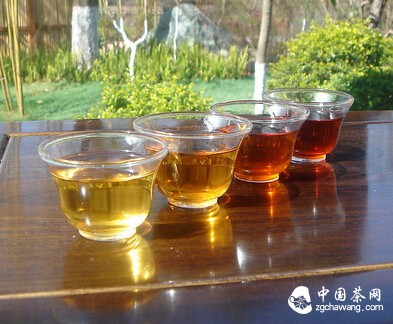
▶ Jujube Aroma (Zao Xiang)
This aroma smells like dried jujubes, with some sweet sugar notes and a hint of wood. It is typically a characteristic of ripe tea. The jujube aroma is a very classic style in Pu'er tea.
This type of aroma often appears in Pu'er tea made from relatively coarse and old leaves, as the total sugar content is higher in coarser leaves, allowing more soluble sugars to be generated during fermentation. When the sugar aroma reaches a certain level, it can mix with other aromas like woodiness to produce a scent similar to dried jujubes.
▶ Longan Aroma (Guiyuan Xiang)
This aroma smells like dried longan fruit. It usually appears in higher-grade Pu'er tea (ripe tea). Pu'er tea with a longan aroma often undergoes a heavier degree of fermentation during processing and is dried at a higher temperature.
In Pu'er tea, the longan aroma is somewhat similar to the jujube aroma but is often not as mellow.
▶ Camphor Aroma (Zhang Xiang)
Camphor aroma often appears in raw teas that have been stored for a long time. It smells like camphorwood, giving a feeling of calmness and naturalness. It is quite different from the smell of camphor balls (mothballs). Some moldy or deteriorated teas can have a pungent, pesticide-like camphorball odor. The aroma compounds associated with camphor aroma are mainly camphene and fenchone, both of which have a camphoraceous scent. They combine with floral and woody notes to create a pleasant camphor aroma.
▶ Woody Aroma (Mu Xiang)
Woody aroma is a very common aroma in Pu'er tea, especially prominent in ripe tea. Pu'er tea (ripe tea) processed using certain selective microbial inoculation techniques can have a very pronounced woody aroma. Unlike the high-pitched floral and honey aromas, the woody aroma gives a low and gentle feeling and is beneficial to Pu'er tea quality.
The compounds that contribute most to the woody aroma of Pu'er tea include α-ionone, β-ionone, α-cedrol, α-cedrene, β-guaiene, and dihydroactinidiolide.
▶ Moldy Odor (Mei Wei)
A bad smell produced by moldy tea leaves. It is pungent and unpleasant. It is usually found in improperly stored tea, such as tea that has deteriorated due to prolonged storage in high temperature and humidity conditions.
The main compound associated with moldy odor in Pu'er tea is 3,4-dimethoxytoluene.
▶ Ginseng Aroma (Shen Xiang)
An aroma similar to ginseng. It is commonly found in ripe teas that have been stored in high temperature and high humidity environments.
Some aroma components in Pu'er tea share similarities with those of ginseng. For example, palmitic acid (earthy notes) and farnesene (woody notes) can be found in the aroma components of ginseng. Besides these substances, the ginseng aroma characteristics in Pu'er tea also involve some woody and sweet notes.
▶ Smoky Odor (Yanxun Wei)
The smoky odor is not an inherent flavor of tea; it is acquired during processing or storage. It is a common off-odor in tea and does not have a positive effect on Pu'er tea quality.
Due to the characteristics of sun-dried green tea (Maocha) production, during the rainy season, the tea often needs to be moved indoors to dry to avoid rain, making it susceptible to smoke from rural homes. Therefore, summer and autumn teas are more likely to carry a smoky smell.
There are many compounds related to smoky odor, the most important being guaiacol and 4-methylguaiacol. These substances have high boiling points and dissipate slowly, so it is very difficult to eliminate the smoky smell through storage.
▶ Burnt/Smoky-Scorched Odor (Yanjiao Wei)
The burnt/scorched odor is a common unpleasant smell in Pu'er tea. It is caused by excessively high fixation temperatures, which burn parts of the leaves. Therefore, this odor usually appears only in very roughly processed Pu'er tea.
▶ Medicinal Aroma (Yao Xiang)
Medicinal aroma naturally smells like Chinese herbal medicine, like the scent you encounter in a herbal pharmacy. It is essentially the smell of plants that have been aged for a long time. Since tea is also a plant, it can develop a similar aroma after prolonged aging.
In the hot and humid climate of southern regions, tea ages faster, so the medicinal aroma may be felt after just a few years. In dry climates, however, it is difficult for the medicinal aroma to appear for a long time.
The related aroma compounds for medicinal aroma mainly include decanal (Chinese medicine scent), safranal, and various woody components.
▶ Sauerkraut Aroma (Suan Cai Qi)
In newly produced raw tea, a sour smell similar to sauerkraut sometimes appears. Many experienced tea makers from older factories, after the fixation process, pile up the tea and cover it for a while. With this step, the dried tea leaves will have a darker color, a mellower taste, and a different aroma. However, if the covering step is slightly overdone, a smell similar to sauerkraut can occur.
The related compounds for this smell are mainly low-grade fatty acids, which are volatile and dissipate easily. Therefore, this smell does not have a significant impact on the quality of Pu'er tea intended for long-term storage.
▶ Wild Mushroom Aroma (Ye Jun Xiang)
The wild mushroom aroma generally appears in Pu'er tea (raw tea). It is very appetizing and can easily arouse one's desire to drink tea. It is a very classic aroma and is often associated with high quality.
The aroma is mainly composed of a series of eight-carbon flavor compounds converted from linoleic acid, such as 1-octen-3-one and 1-octen-3-ol. These compounds have low boiling points and dissipate quickly, so teas stored for a long time are less likely to retain the wild mushroom aroma.
▶ Roasted/Baked Aroma (Hong Chao Xiang)
This aroma sometimes appears in improperly made Pu'er tea (raw tea) and is an aroma that should be avoided.
Both chestnut aroma and bean aroma fall within the category of roasted/baked aroma. Roasted aroma is formed through thermal chemical reactions. In many foods and other tea types, it is a positive aroma type. However, the quality characteristics of Pu'er tea determine that it should not undergo high temperatures. Therefore, the appearance of a roasted/baked aroma is considered a demerit in Pu'er tea quality evaluation.
The chemical components of roasted aroma are mainly some sulfur- and nitrogen-containing heterocyclic compounds, which can only be produced during high-temperature processing.
▶ Pile Odor (Dui Wei)
The term "pile odor" comes from describing the "fermentation pile" (wo dui) process. It describes a fermentation smell similar to a mixed unpleasant sensation of sour, rancid, moldy, and fishy notes.
It is common in newly produced ripe tea. The traditional ripe tea pile fermentation process is a long and complex change process. Several tons to tens of tons of tea leaves are piled together for fermentation, making absolute uniformity impossible. Therefore, some over-fermented or under-fermented leaves will produce some unpleasant smells. How to minimize these unpleasant smells at the end of processing is a test of the processor's skill.
If there is no serious under-fermentation or over-fermentation, depending on the concentration of the pile odor, these unfriendly smells can be naturally decomposed and dissipated through reasonable storage of varying lengths, eventually revealing the aged aroma.
▶ Steamed/Muffled Odor (Shui Men Qi)
This is commonly found in Pu'er tea (raw tea) made from rain-affected leaves or rolled leaves that have been piled up and not dried promptly.
It is similar to the smell produced when stir-frying vegetables with the lid on. If the processing environment is hot, humid, and airtight, this type of smell will occur.
▶ Raw Green Odor (Sheng Qing Qi)
Common in insufficiently fixed (shaqing) Pu'er tea (raw tea). It smells like grass. It is caused by the lack of necessary transformation of the internal compounds of the fresh leaves.
▶ Coarse Green Odor (Cu Qing Qi)
Common in Pu'er tea (raw tea) made from coarse, old leaves. It smells like grass. Because the fresh leaves are old and have low water content, the fixation process must use a "tender kill for old leaves" approach, i.e., short fixation time and low temperature. If the technique is not good enough, it becomes difficult to ensure the dissipation of related green odor compounds like green leaf alcohol, often resulting in a coarse green odor.
▶ Sun-Drying Odor (Ri Shai Wei)
Common in newly produced Pu'er tea (raw tea) with a short storage time. This smell is like the smell of a quilt dried in the sun on a clear day.
Light can promote the oxidation of esters and other substances, with ultraviolet light having a greater impact than visible light. Prolonged light exposure can cause photochemical reactions in tea chemicals. It can be speculated that a series of related aroma compounds produced by photochemical reactions together constitute the sun-drying odor, but its specific components remain to be studied.