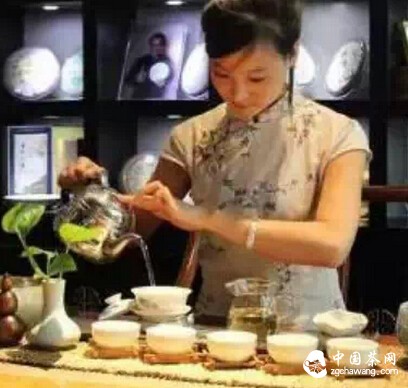
The method of pouring water and decanting tea is the most influential soft factor on tea quality, and it is also the only step in the tea brewing process that requires full manual control. Naturally, it is also the aspect where opinions most easily diverge.
The method of pouring water primarily involves five variables: the speed of pouring, the intensity of the water flow, the trajectory of the water line, the height of the water line, and the thickness of the water line.
The speed of pouring water
Mainly affects the water temperature during the steeping process, and also influences the intensity of the water flow. Besides being related to the strength of the tea liquor's flavor, it also affects the coordination between the mouthfeel and the aroma.
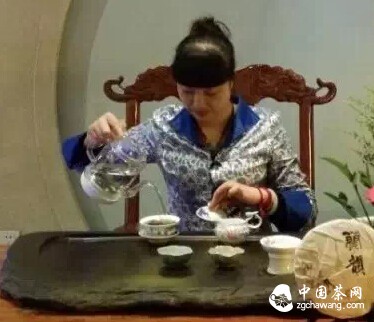
The intensity of the water flow:
Mainly affects the coordination between flavor, aroma, and mouthfeel. A strong water flow causes the tea leaves to swirl, resulting in a high degree of infusion and fusion between tea and water at a relatively high temperature upon first contact. It also increases friction with the air, making the aroma more pronounced, while the thickness and softness of the tea liquor decrease accordingly. A slow water flow, on the other hand, keeps the tea leaves relatively still. The tea leaves in contact with the water slowly release their contents, and during decanting, they fuse again at a lower temperature. This increases the thickness and softness of the tea liquor, enhances its layering, and simultaneously reduces the aroma.
The trajectory of the water line:
Mainly relates to the dynamic-to-static ratio of the tea leaves and water, as well as the uniformity of water contact with the tea leaves. When brewing tea, those who deliberately control the pouring method commonly use the following four approaches:
1. Spiral pouring: This water line allows the edges of the lid bowl and the tea leaves on the surface to come into direct contact with the poured water, increasing the degree of fusion between tea and water at the first moment of pouring.
2. Circular pouring: This water line allows the edges of the tea leaves to contact the water first, while the tea leaves in the center of the surface mainly rely on the rising water level to make contact. The degree of fusion between tea and water at the first moment of pouring is slightly less.
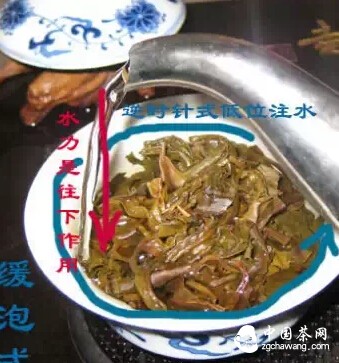
3. Single-point fixed pouring: This pouring method allows only one side of the tea leaves to contact the water. The degree of fusion between tea and water at the first moment of pouring is relatively low. If the fixed point is on the wall of the lid bowl, the fusion is slightly better than if it is between the lid bowl and the tea leaves.
4. Center-point fixed pouring: This is a relatively extreme pouring method, often combined with a thinner water line and slow, prolonged pouring. It allows only a small central portion of the tea leaves to come into direct contact with the water line, while the rest dissolve at an extremely slow pace. This results in the lowest degree of fusion between tea and water at the first moment of pouring, and the most pronounced layering in the tea liquor. Many teas that undergo fermentation may develop flavors that are overly concentrated and separate from the tea liquor.
The height of the water line:
The height of the water line primarily concerns two issues: first, the cooling effect of the water during the brewing process, and second, the variation in the dynamics between tea and water as the water line rises and falls during pouring. The rise and fall of the water line are often used as fine-tuning adjustments during brewing.
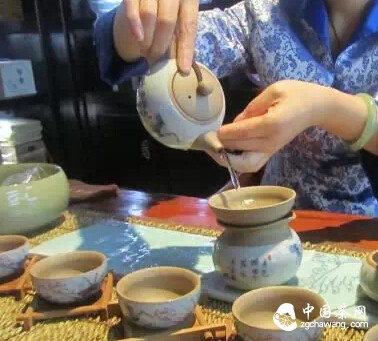
The thickness of the water line:
The thickness of the water line mainly affects the flow rate of the water during pouring. Besides being related to the dynamics of the water, it is also related to the time and speed of pouring. Similarly, the thickness of the water line is a commonly used fine-tuning tool for tea brewers.
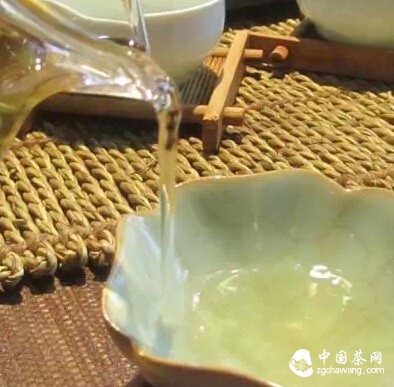
The method of decanting tea:
Slow decanting mainly serves to blend tea liquors that have had relatively low fusion during the initial static steeping. The slower and more uniform the decanting, the more layered the fusion becomes during the decanting process, and the lower the relative fusion temperature, resulting in a softer mouthfeel. Faster decanting, on the other hand, improves the degree of fusion and enhances the aroma. Compared to the method of pouring water, the impact of the decanting method is much smaller and serves as a fine-tuning adjustment during the brewing process.
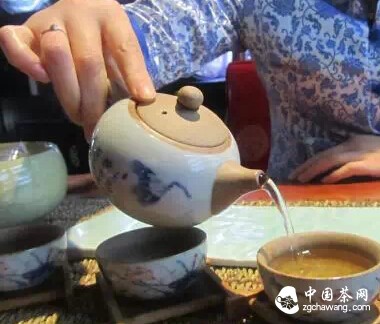
The interval time between infusions:
The interval time between infusions is often overlooked in the human-centered tea-tasting process, but it is actually of great significance, especially concerning several important issues.
1. The temperature of the tea leaves at the time of pouring water for each infusion. The temperature of the tea leaves is not only related to the overall temperature of the tea and water mixture in the vessel after pouring, but overly cold tea leaves lower the dissolution temperature of the tea liquor, resulting in a weaker aroma.
2. The temperature difference between the tea leaves and the water at the time of pouring. If the tea leaves are too cold and the water temperature is too high, the temperature gap becomes large, causing the dissolution temperatures of the substances in the tea leaves to be uneven. The dissolution rates of various substances cannot average out, leading to a decline in the proportional coordination of dissolved substances. This changes the ratio of flavor to aroma in the tea liquor, and these changes are closely related to the tea itself and the method of pouring.
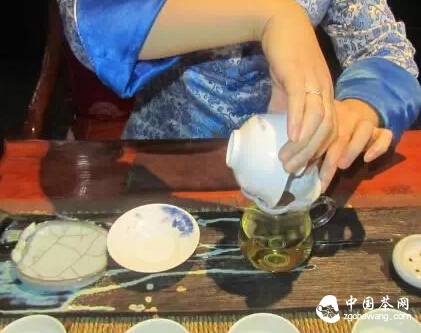
3. Residual tea liquor left in the leaves will be squeezed out as the tea leaves cool. After the previous infusion is decanted, the leaves remain moist, so dissolution continues. As the temperature drops, the contraction of the leaves squeezes out the dissolved tea liquor again. Excessive intervals allow this highly concentrated tea liquor to cool and mix with the water of the next infusion, increasing the tea's bitterness and astringency, which significantly affects the quality of the subsequent infusion.
Residual tea liquor after decanting:
Leaving residual tea liquor after decanting lowers the overall temperature of the next infusion, reducing the intensity of the aroma. Compared to a tea liquor of the same concentration, the bitterness and astringency are somewhat reduced, while the viscosity and thickness of the mouthfeel are enhanced. It also makes adjacent infusions feel more similar, resulting in a more stable tea taste. The practice of leaving residual tea liquor after decanting is known as the "leaf retention method" and is often used to brew teas with off-flavors or undesirable aromas.