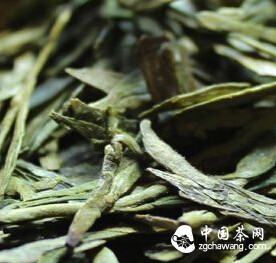
Longjing Tea is a famous Chinese green tea. It gets its name from the Longjing tea region in Hangzhou, Zhejiang. It has a history of over 1,200 years. Longjing tea has a tender green and glossy color, a fresh and elegant aroma, a refreshing and sweet taste, and delicate leaves in the cup. It is known for its four unique characteristics: "green color, rich fragrance, sweet taste, and beautiful shape." Longjing tea is named after Longjing (Dragon Well). Longjing is located at the northwest foot of Wengjia Mountain in the west of West Lake, in Longjing Tea Village. Depending on the production area, Longjing tea is divided into three types: West Lake Longjing, Qiantang Longjing, and Yuezhou Longjing. Except for the tea produced in the 168 square kilometers of West Lake production area, which is called West Lake Longjing, the tea produced in the other two areas is commonly called Zhejiang Longjing tea. The leaves are flat, tender, uniform in shape, and have a green-yellow color. They feel smooth to the touch. A bud with one or two leaves; the bud is longer than the leaf, generally less than 3 cm long. The buds and leaves are uniform and small, without stems or fragments. Longjing tea has a fragrant aroma, while fake Longjing tea often has a grassy smell, more stems, and a rough feel. Four methods for identification:
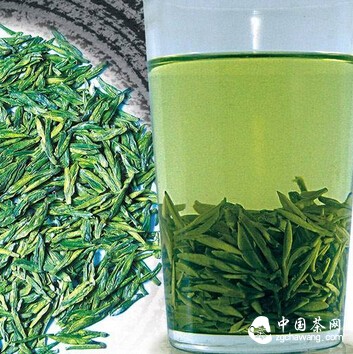
Method 1: Check the Green Color
At first glance, both authentic and fake tea appear green. However, if the tea is uniformly bright green, it is fake. The special-grade and high-grade new tea from our 168-square-kilometer region, especially the top-grade "Shifeng Longjing" of "West Lake Longjing," has a color that is a natural mix of emerald green and what local tea farmers call "unpolished rice color." The green and yellow merge naturally, like ink wash painting. Fake tea, even if it looks green with yellow, is created by applying excessive heat during pan-firing. The yellow appears dull and lifeless, like a sickly complexion, and sometimes there are signs of scorching.
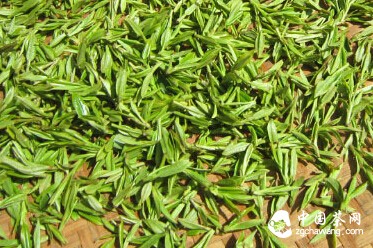
Method 2: Smell the Rich Aroma
Books often describe the aroma of West Lake Longjing tea as "fragrant like an orchid"—but this comparison is only half right. Compared to the subtle fragrance of Chinese orchids, West Lake Longjing has a stronger aroma. Local tea farmers describe it vividly as "(fried) broad bean fragrance," or "orchid bean" aroma. For authentic Longjing, especially special-grade and high-grade "Shifeng Longjing," place the tea in a cup. First, do not add water. Cover it and let it "steep" for a few minutes. Then lift the lid and smell. The unique fragrance of orchid beans rises, mixed with a hint of honey sweetness. When you add water, the rich aroma becomes even more intense. Fake tea also has a fragrance, but it is much lighter. Tea from Xinchang has a "chestnut" aroma, tea from Xiaoshan has a faint "earthy" smell, and tea from Shaoxing has a mixed aroma—none of them have the orchid bean fragrance. This becomes obvious after brewing and adding water two or three times.
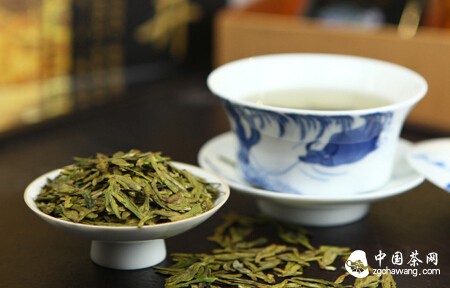
Method 3: Taste the Mellow Flavor
Drink the first brew slowly until one-third is left, then add water and drink until half—by this time, even a complete novice can tell the difference. Authentic tea has a "rich" and "mellow" taste. The orchid bean fragrance carries a subtle honey sweetness, and the palate feels a unique smoothness that local tea farmers call "slippery." This texture is similar to how Tsingtao Beer differs from other brands. The weight and texture on the palate are "heavier," and the "mellow" feeling is finer, like flour compared to starch. After swallowing, the sweet taste clearly lingers in the throat. Even after seven or eight minutes, the sweetness remains. This is described in books as "unwilling to rinse the mouth after three sips." Fake tea exposes itself immediately upon tasting. First, the aroma is noticeably lighter, like a dish missing salt. It lacks the sweet aftertaste and mellow texture. Various odd flavors appear—some have a faint well-water taste, others an earthy smell, and so on. Even the high-mountain teas from Xinchang and Zhuji, which are very similar to authentic tea, have a faint sweetness like cane sugar, but no honey sweetness.
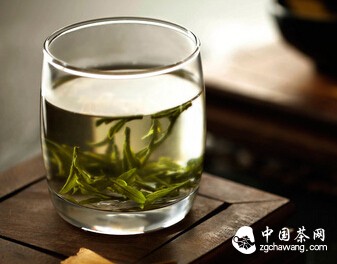
Method 4: Observe the Beautiful Shape
Fake tea is carefully imitated. Pre-Qingming tea also has the shape of lotus seeds. When brewed, they appear like "sparrow tongues," "bowl nails" standing upright, or "eagle claws" hanging upside down. But here is the weak point of fake tea. The imitation often has uniform length, and the crushed cores, flakes, and powder are cleanly removed. Authentic tea, because it is produced and sold directly by farmers, is often less refined in the final processing. The lengths may vary, and some cores, flakes, and powder may remain. Also, authentic tea generally looks "broader," more plump, while fake tea is often "slimmer," with a neat appearance.
In summary, checking the color is the "foundation," smelling the aroma is the "precondition," tasting the flavor is the "key," and observing the shape is for reference.