The earliest discoverer and user of tea is said to be Shennong. Legend has it that in 2737 BC, he accidentally drank water boiled with leaves from a wild tea tree and felt refreshed. Another version says he was poisoned while tasting herbs but was saved by chewing tea leaves. From then on, the Chinese gradually learned about the medicinal, edible, and beverage uses of tea.
By the Tang Dynasty, tea drinking had become popular among the people. Around 780 AD, Lu Yu compiled his observations and experiences into The Classic of Tea, the first book on tea. Before this, tea had various names, but Lu Yu standardized the character "茶" (tea), which was key to establishing it as the general term.
Black tea's exact origin is unknown. The earliest record of the term "black tea" appears in Duo Neng Bi Shi (c. 16th century). It is believed that black tea production began in the 17th century, starting with Fujian Lapsang Souchong. Based on its processing, Gongfu black tea evolved in Fujian in the mid-18th century, with more refined techniques.
The world's four famous teas are: Keemun Black Tea, Assam Black Tea, Darjeeling Black Tea, and Ceylon Highland Black Tea.
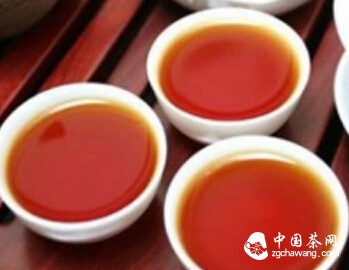
Keemun Black Tea, or simply Keemun, is produced in Qimen County, Anhui Province, China, at the foot of the Huangshan mountain range. Local tea varieties are high-yielding and high-quality, grown in fertile red-yellow soil with mild climate, ample rain, and moderate sunlight. The leaves are tender and rich in water-soluble substances, with the best quality harvested in August. Keemun has tightly twisted, uniform leaves, a lustrous dark color (known as "precious sheen"), a delicate fragrance with honey notes, and top grades contain an orchid aroma (called "Keemun fragrance"), long-lasting and rich. The infusion is bright red, with a sweet, mellow taste, and the leaves remain red and bright. It is best enjoyed plain to appreciate its lasting aroma, but it also holds up well with milk. Spring is the best season for Keemun, and it is suitable for afternoon or bedtime tea.
Assam Black Tea comes from the Assam Valley in northeastern India, at the foot of the Himalayas. The region has strong sunlight, requiring shade trees for the tea plants, and abundant rainfall promotes the vigorous growth of tropical Assam large-leaf varieties. The best quality is harvested from June to July, while autumn tea from October to November is more aromatic. Assam black tea has flat, thin leaves in deep brown color. Its infusion is deep red with a slight brown tint, with a faint malt and rose fragrance. It is a strong, robust tea, ideal for winter drinking.
Darjeeling Black Tea is grown on the Darjeeling plateau in northern West Bengal, India, at the foot of the Himalayas. The average annual temperature is around 15°C, with ample sunlight during the day but significant temperature differences between day and night. The valleys are often shrouded in mist, contributing to the tea's unique aroma. The best quality is the second flush (May-June), known as the "champagne of teas." Darjeeling commands a high price. The first flush (March-April) is often greenish, while the second flush is golden. Its infusion is orange-yellow, with a noble, elegant fragrance; top grades have a grape-like aroma and a delicate, smooth taste. Darjeeling is best drunk plain, but due to its larger leaves, it needs slightly longer steeping (about 5 minutes) to fully unfold. It is perfect for afternoon tea or after a rich, flavorful meal.
Ceylon Highland Black Tea, with Uva tea being the most famous, comes from the eastern side of the mountainous region, often shrouded in mist. The winter northeast monsoon brings rain (November to February), which is unfavorable for tea production, so the best quality is harvested from July to September. Dimbula and Nuwara Eliya teas from the western side, influenced by the summer southwest monsoon (May to August), are best harvested from January to March. Ceylon highland teas are usually processed into broken-leaf form, reddish-brown in color. Uva tea has a bright orange-red infusion, with top grades showing a golden ring on the surface, like a crown. It has a stimulating flavor with notes of mint and lily of the valley, a mellow taste, slight bitterness, but a sweet aftertaste. Dimbula tea has a bright red infusion, a refreshing and smooth taste with floral notes and less astringency. Nuwara Eliya tea is lighter in color, aroma, and taste, with an orange-yellow infusion, a clean fragrance, and a flavor closer to green tea.