To brew good tea, one should first master the amount of tea leaves. There is no uniform standard for the amount of tea leaves used each time, which mainly depends on the type of tea, the size of the tea set, and the drinking habits of consumers.
There are many types of tea, and different tea categories require different amounts.
For example, when brewing general black or green tea, the ratio of tea to water is roughly 1:50 to 60, meaning about 3 grams of dry tea per cup, with 150 to 200 milliliters of boiling water.
For Pu'er tea, put 5 to 10 grams per cup.
When using a teapot, adjust according to its capacity. Oolong tea requires the most tea, with each serving almost filling half or even more of the teapot's volume.
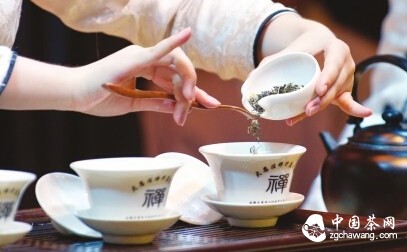
Generally speaking, the ratio of tea to water varies depending on the type of tea and the drinker's preferences.
Tender or high-grade tea can be used in smaller amounts, while coarse tea should be used in larger amounts. Oolong tea and Pu'er tea also require larger amounts.
For heavy tea drinkers, the ratio of black or green tea to water is generally 1:50 to 1:80, meaning if 3 grams of tea leaves are used, 150 to 240 milliliters of boiling water should be added. For ordinary tea drinkers, the ratio of tea to water can be 1:80 to 1:100.
For Oolong tea drinkers, the amount of tea leaves should be increased, with a tea-to-water ratio of 1:30.
For common white porcelain cups used at home, put 3 grams of tea leaves per cup and pour 250 milliliters of boiling water. For ordinary glass cups, put 2 grams of tea leaves per cup and pour 150 milliliters of boiling water.
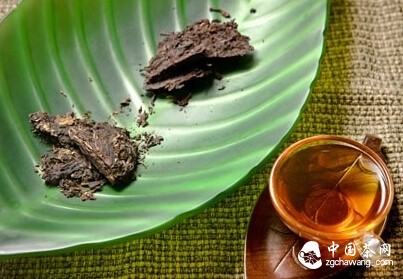
The amount of tea used is also closely related to the drinking habits of consumers. In minority areas such as Tibet, Xinjiang, Qinghai, and Inner Mongolia, people mainly eat meat and lack vegetables locally, so tea becomes a physiological necessity. They generally prefer strong tea and add sugar, milk, or salt to it, so the amount of tea leaves used each time is relatively large. In North China and Northeast China, people generally prefer jasmine tea, usually brewing it in larger teapots with relatively small amounts of tea leaves. Consumers in the middle and lower reaches of the Yangtze River mainly drink green tea or famous teas such as Longjing and Maofeng, usually using smaller porcelain cups or glass cups with small amounts each time. In Fujian, Guangdong, Taiwan, and other provinces, people prefer Gongfu tea. Although the tea sets are small, the amount of tea leaves used is relatively large.
The amount of tea leaves also relates to the age structure and tea drinking history of consumers. Middle-aged and elderly people often have a long history of drinking tea and prefer stronger tea, so they use more tea leaves. Younger people are often beginners in tea drinking and generally prefer lighter tea, so they use less tea leaves. In short, the key to determining the amount of tea leaves for brewing is to master the ratio of tea to water. More tea and less water results in a stronger flavor; less tea and more water results in a weaker flavor.