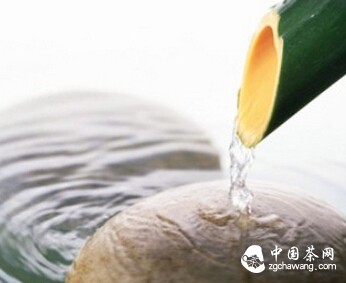
For brewing tea, the ancients believed that water should possess five major advantages: lively, clear, light, sweet, and cool. 'Lively' means the spring water flows without stagnation; 'clear' means transparent and free of impurities; 'light' means it has a low specific gravity; 'sweet' means it has a not-quite-sweet yet pleasing taste that lingers on the tongue; 'cool' means it is refreshingly cold.
As the saying goes: Water is the soul of tea (soup). Another saying goes: Water is the mother of tea. To obtain a good cup of tea, water is just as important as tea leaves. Obtaining good tea is not easy, and obtaining good water? The answer: It is even harder. The ancients understood this principle well. There are many writings on 'discussing water' in ancient texts, and many great masters and high officials were 'connoisseurs of water'. Examples include Su Dongpo, Wang Anshi, Li Deyu, and even Emperor Qianlong, all of whom were great experts at 'judging water'. Su Dongpo even famously said, 'When brewing tea, one first boils the water; only then does the tea's nature linger with flavor.' The best water for brewing tea is mountain spring water; well water and river water require proper 'treatment'. Rare types of refined water include 'heavenly water', i.e., snow water and rainwater (though rainwater today is largely unusable).
For brewing tea, the ancients believed water should have five major advantages: lively, clear, light, sweet, and cool. 'Lively' means spring water flowing without stagnation; 'clear' means transparent and free of impurities; 'light' means low specific gravity; 'sweet' means a not-quite-sweet yet pleasant taste with a lingering comfort on the tongue; 'cool' means refreshingly cold. It is very difficult for water to possess all five of these qualities naturally without artificial intervention. The ancients had various 'water treatment' methods, but they were cumbersome, involved many steps, required expensive tools, and were not easily achievable.
Speaking of spring water. China has five famous springs most praised by water connoisseurs and tea enthusiasts. They are: the Zhongling Spring on a rock crevice by Guo Pu's tomb on the islet of Jinshan (now connected to land) in the middle of the Yangtze River. Obtaining this spring water is difficult: first, one must go at an 'opportune time'—a moonlit night to draw it quietly; second, one must use special tools to take water from the middle layer of the spring, as the shallow or deep layers are not as good—only the middle layer possesses all 'five advantages'. The second famous spring is Huishan Spring in Wuxi; because of nearby tin mines (Wuxi once produced tin, now depleted), tin can purify water and optimize its source, making Huishan Spring the second. The third spring is Guanyin Spring at Huqiu in Suzhou. The fourth is Hupao Spring at Xishan in Hangzhou. The fifth is Baotu Spring at Daming Lake in Jinan. By the Qing Dynasty, Emperor Qianlong designated the Yuquan Spring at Xishan in Beijing as the number one spring. The water quality of these springs is excellent and flows year-round, but they are not easily accessible. Today's tea drinkers are spread across China and overseas. For those living near these five famous springs, it is fortunate. But consider: it is difficult even for people in Hebei to obtain water from West Lake's Hupao Spring, and even for residents of Jinan to get Baotu Spring water nearby is not easy—unless you live in Baotu Spring Park, which is unlikely. So Emperor Qianlong, being the Son of Heaven, designated a good spring at Xishan in his capital, Beijing—Yuquan—as the number one spring under heaven. As emperor, he could send people to transport water from the outskirts of Beijing within a day or two, but even high-ranking nobles could not necessarily drink Yuquan water. Emperor Qianlong judged Yuquan as number one because of its relatively light specific gravity and good quality. Knowing how rare famous springs were, he designated Yuquan as number one, perhaps as a way of making the best of what was available. Later, he became so accustomed to it that he could not do without Yuquan water for the rest of his life. As for the difficulty of drawing Zhongling Spring water, except for those fortunate 'exceptions' who live by the spring and love tea, few could enjoy that taste.
Now about 'heavenly water'. Before the Industrial Revolution, rainwater was drinkable. Today, except in remote mountain forests with few people, rainwater in towns and cities is no longer drinkable due to air pollution. Snow water is still usable, because water vapor in the air forms snowflakes at high altitudes, and unlike rainwater, snow does not directly absorb pollutants as it falls (though even today's snow water is not as clean as before and should be collected from unpolluted areas); its quality is still acceptable. However, collecting snow water also requires care: first, collect snow from the middle and later stages of a snowfall (the early snow brings down more impurities from the air; the middle and later stages are cleaner); second, collect snow that has fallen on higher ground and not been trampled, preferably from plants. The ancients thought snow water from plum blossoms, pine, or bamboo leaves was best. Snow cannot be used immediately; because winter is cold, snow water is very cold, and even after boiling, some coldness remains. The collected snow is allowed to melt, stored in a porcelain jar, and buried three feet underground until the summer solstice of the following year, when the jar is opened and the water is used. It then possesses all the 'five advantages' to a high degree, with the 'cool' quality being the strongest, making it ideal for relieving summer heat. If the snow was collected from plum blossoms, pine, or bamboo, the water also carries their fragrant charm, making it wonderfully delightful.