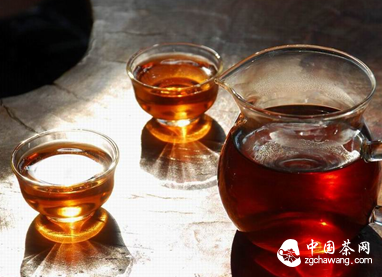
Different tea trees have different root depths, which leads to vastly different nutrient absorption and aromatic profiles. Terrace tea, due to insufficient nutrients and poor internal quality, relies on blending to enhance flavor, and its cultivation involves fertilization. It can only exhibit a light fragrance, which will disappear after 1-2 years of aging, gradually turning into an aged aroma. In contrast, ancient tree tea can absorb mineral components from deep soil layers, allowing it to express the unique characteristics of each mountain with optimal internal richness, such as the dense fragrance and delicate smoothness of Yiwu tea, or the fruity and dense aroma of Nannuo tea, combining strength and gentleness. When selecting based on aroma, one must choose a tea with a strong, long-lasting, and unique fragrance that is deep and stable. A stable aroma can be observed when the first infusion is poured out, by smelling the aroma in the fair cup—whether it is rich and sinks down. Terrace tea rarely produces this kind of aroma in the fair cup. The more stable and deep this aroma, the richer the internal quality and the older the tree.
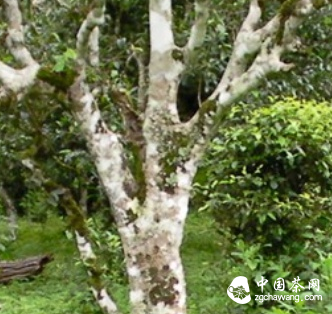
Many tea enthusiasts raise two questions: Why doesn't unfertilized, unblended, unpruned Yiwu terrace tea have a dense fragrance? Because it absorbs shallow-layer nutrients, and the unique mineral components in the soil structure are generally found in deeper layers. Another question: Why not blend ancient tree tea? Terrace tea has insufficient internal quality and is consumed by many either because people are not yet familiar with its quality or because of its low price, making it a mass-market product. Ancient tree tea, on the other hand, represents a higher level of taste, with scarce resources for a few connoisseurs to appreciate its rich content and regional characteristics. Does ancient tree tea need blending? Historically, blending emerged because terrace teas from different mountains all suffered from weak flavor and poor internal quality, but each mountain's flavor had complementary advantages. Therefore, teas from different mountains are blended in various proportions to enhance flavor and reduce raw material costs. However, no matter how you blend, you can only achieve a basic taste standard; it is impossible to blend the regional characteristics.
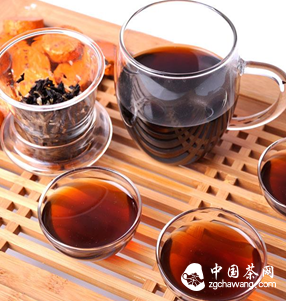
1. Sweetness:
This sweetness refers to the direct sensation on the tongue when the tea enters the mouth. It must not be confused with the returning sweetness (aftertaste). This sweetness is elegant and clear, often masked by the returning sweetness. Only after drinking tea for some time can one separate and appreciate these flavors. New tea drinkers find it hard to taste. Sweetness is also a key indicator for judging quality, though not the most critical, and requires gradual practice to master.
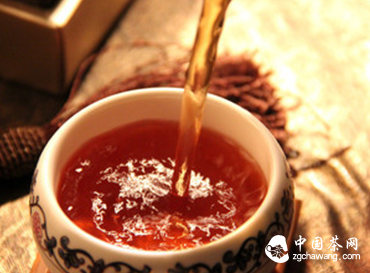
2. Tea Soup:
Tea soup is the second key factor in identifying internal richness.
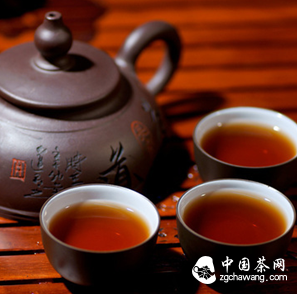
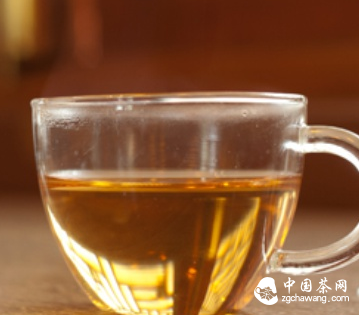
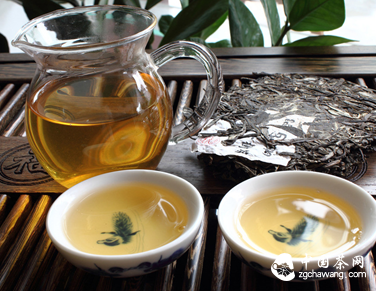
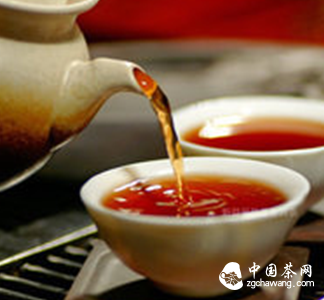
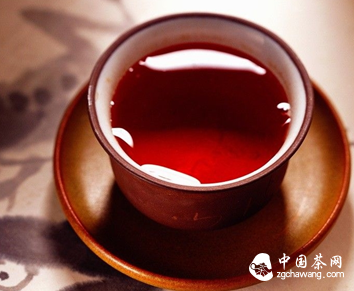
Terrace tea, due to insufficient internal quality, appears yellow-green, thin and watery, and can even give a scalding sensation when drunk—this can be carefully observed. Ancient tree tea, with its full internal quality, at the same temperature, feels significantly different in terms of scalding sensation—try it and you will learn a lot. The tea soup of ancient tree tea is usually honey-yellow, bright and clear, especially for early spring tea. Note: To judge the viscosity of the tea soup, do not sip a small amount. Instead, take a slightly larger sip, swirl it in your mouth for a moment, and then swallow. This helps you feel the viscosity, the thickness and fullness of the tea soup, and its smoothness.
3. Returning Sweetness and Salivation:
Returning sweetness and salivation are basic flavors of tea. Terrace tea shows these qualities relatively quickly but lacks durability, usually weakening after 6 infusions. Ancient tree tea exhibits these flavors more consistently, quickly, and with greater persistence.
4. Bitterness and Astringency:
Bitterness and astringency are also key factors in judging tea quality. They are inherent in all teas, but when they are pronounced, there are only two reasons: 1) The tea tree is young, absorbing fewer nutrients from the soil, so other flavors are weaker, making these inherent traits stand out; 2) The tea trees have been fertilized, especially with urea, which accelerates growth but quickly alters the soil structure, increasing alkalinity in the shallow soil where terrace tea roots reach, thereby increasing bitterness and astringency. Based on these two reasons, it can be concluded that bitterness and astringency are not tea energy (chaqi) nor do they mean the tea is strong and will become less stimulating with age. The saying "no bitterness, no astringency, no tea" is a misconception—bitterness and astringency are inherent traits, often considered flaws. At this point, here is a practical tip: Set aside a cup of tea soup and let it cool before drinking. Terrace tea, with insufficient internal quality, will yield only a very bitter and astringent taste when cooled. Ancient tree tea, when cooled, will also have increased bitterness and astringency, but its tea fragrance, returning sweetness, salivation, and sweetness will still be present, demonstrating its rich internal quality and stable nature. (Note: Some ancient tree teas taste better when cooled than when hot, while others are better hot.)
5. Throat Resonance:
Throat resonance is the third key factor in identifying good tea, and it is very important. Terrace tea rarely has it, and if it does, it disappears quickly. Throat resonance is a cool, comfortable sensation in the throat, making breathing feel especially smooth and pleasant. It can also cause a returning sweetness and lingering fragrance in the throat. When you breathe, this resonance flows back into your mouth, creating the illusion that your throat is also tasting sweetness and fragrance. Throat resonance occurs because rich internal tea qualities release flavors cumulatively in the throat after swallowing. Terrace tea, lacking internal quality, cannot accumulate enough for this release, so it cannot form throat resonance. Ancient tree tea can sustain this throat resonance for 20-30 minutes after drinking; the longer the resonance, the richer the internal quality. Based on these six flavor differences, you can definitely choose a Pu'er tea that brings you enjoyment. However, if you intend to store the tea for aging, you also need to examine two additional characteristics: persistence and stability.
6. Persistence:
Persistence can simply be understood as the tea's durability (number of infusions). However, when evaluating, you must use a precise 8-gram tea sample for raw tea, accurate weighing, and a standard brewing method. Use a porcelain gaiwan, a glass fair cup, and thick-walled porcelain tasting cups. As the saying goes, "To do a good job, one must first sharpen one's tools." Later, we will compile a standard brewing method suitable for tea drinkers nationwide, used primarily for evaluation, and recommend some utensils that best express the flavors. Now, let's start brewing. Use mineral water. After the first boil, maintain a small, steady boil (using an electromagnetic or light-wave stove can keep the water boiling continuously). Steep each infusion for 10 seconds. When pouring water, do not pour directly onto the tea leaves; instead, pour gently and evenly along the edge of the gaiwan, circling slowly. Then, after about 10 seconds, pour out the tea soup. This standard brewing method allows you to objectively assess the persistence of each of the six flavors across every infusion. If you notice any flavor weakening in a particular infusion, that indicates the tea's persistence has reached its limit. Terrace tea generally begins to weaken after 6 infusions. Ancient tree tea can last 8-10 infusions or more, with the best lasting over 12 infusions. Do not claim that your tea can withstand 20 infusions; after 20 infusions, you are merely tasting the sensation of returning sweetness and salivation. Moreover, non-standard brewing methods—such as using more tea leaves or stopping heating after boiling—can artificially extend the number of infusions. This is a trick often used by tea shops to impress customers. Persistence determines the tea's stability; the longer the persistence, the higher the stability.
7. Stability
Through the evaluation of persistence, one can determine the stability of the tea's character. The higher the stability, the richer the tea's internal quality, ensuring stable aging in the future. This disproves the common claim that cheap, strong new tea will become mellow after a few years of aging. If the tea lacks internal quality from the start, what substance will undergo aging? Therefore, we adhere to our tea-making philosophy: the foundation is to select tea with abundant internal quality. Only with rich internal quality can the tea character be stable, and only with stable character can it achieve good aging. Pu'er tea has vitality, much like a human life cycle: gestation, infancy, childhood, adolescence, adulthood, middle age, old age, and eventually passing away. Tea cannot be stored for hundreds of years; those so-called antiques have long since passed away. Besides our production, proper storage by you is also critical. This method has been validated through years of selecting and storing tea.
Historically, blending emerged because terrace teas from different mountains all suffered from weak flavor and poor internal quality, but each mountain's flavor had complementary advantages. Therefore, teas from different mountains are blended in various proportions to enhance flavor and reduce raw material costs. However, no matter how you blend, you can only achieve a basic taste standard; it is impossible to blend the regional characteristics.