A few years ago, Pu'er tea became extremely popular, and consumers came to know Pu'er tea, but they did not realize that Pu'er tea belongs to the category of dark tea, let alone the differences and similarities between Hunan dark tea and Pu'er tea. This year, Hunan dark tea is being promoted nationwide and has become increasingly popular. Many consumers are curious and puzzled: what are the differences and similarities between Hunan dark tea and Pu'er tea? Here, the author compiles the answers from dark tea experts for your convenience in understanding these two types of dark tea.
Zhang Liumei, a renowned female expert on Hunan border-sale tea, mentioned that what people commonly refer to as dark tea actually refers to Hunan Anhua dark tea. Dark tea is one of the six major tea categories, including Hunan dark tea, Yunnan Pu'er tea, Guangxi Liubao tea, and others.
Both belong to dark tea, but there are two essential differences between Hunan dark tea and Pu'er tea: one is a “stone,” and the other is a “golden flower.” The miraculous health benefits of Hunan dark tea originate from the mysterious golden flower, which in turn comes from a magical stone known as ice moraine rock.
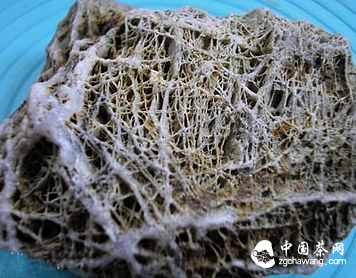
600 million years ago, global “icehouse climate” and “greenhouse climate” events occurred on Earth, forming rare ice moraine rock. Anhua is the region with the highest concentration of ice moraine rock in the world, accounting for about 85% of the Earth's total, and is scientifically called a “world wonder.” Ice moraine rock is known as the “longevity stone.” The ice moraine rock landform creates the unique climate and geographical environment of Anhua. Anhua is globally recognized as a mystical latitude zone for high-quality tea, with undulating peaks and abundant rainfall. The Yuntai Mountain wild large-leaf tea variety in Anhua is an extremely rare primitive and superior strain. Anhua Fuzhuan tea, made from Yuntai large-leaf raw material, can develop unique golden-yellow granules, which scientific research has identified as a probiotic microorganism named “Eurotium cristatum,” commonly known as “golden flower.” It has significant effects in lowering blood lipids, blood pressure, and regulating glucose metabolism. This characteristic is not found in other types of tea or dark teas from other regions. Only under Anhua's specific environment and through special processing can the highest quality and most effective “golden flower” naturally grow, illustrating the saying, “Oranges grown south of the Huai River are sweet, but north of it they become bitter oranges.”
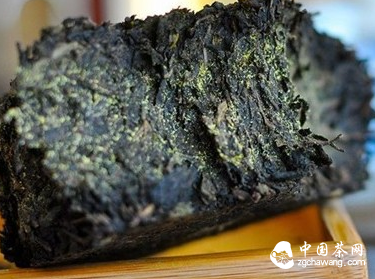
“One stone, one golden flower—these are the essential differences between Hunan dark tea and Pu'er tea,” explained Chief Engineer Zhang Liumei.
The reporter learned that there are several specific differences between Hunan dark tea and Pu'er tea:
Differences in origin: Yunnan is located on a high plateau with spring-like weather year-round; Hunan has abundant rainfall and distinct seasons.
Differences in raw materials: Yunnan dark tea uses large-leaf varieties with tender leaves and low stem content; Hunan dark tea mainly uses medium- and small-leaf varieties, though Yuntai large-leaf tea is also used, and the raw materials are generally coarser and older, with higher stem content.
Differences in processing: Yunnan Pu'er uses sun-dried green tea, and the raw tea is not pile-fermented; final products are often in cake form, with raw and ripe variants. Hunan dark tea uses dark raw tea, which undergoes pile fermentation; final products are mostly brick-shaped, and certain types like Qianliang tea are wrapped in bamboo strips, reed leaves, and palm leaves, while Fuzhuan tea features a flowering process.
Differences in flavor: Ripe Pu'er tea has an aged aroma and a sticky or smooth mouthfeel; Hunan dark tea has a fermented aroma with a sweet wine-like taste, and Fuzhuan tea has a fungal floral aroma, with a light but bold liquor.
“One stone—ice moraine rock—and one golden flower—Eurotium cristatum—distinguish Hunan dark tea from Pu'er tea, and also from all other dark teas in China,” said Professor Zhang.
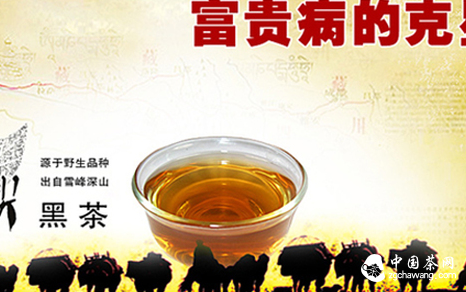
Hunan dark tea has remarkable effects in promoting digestion, reducing greasiness, and lowering the three highs (blood pressure, blood sugar, and blood lipids). For thousands of years, it has been revered as the “tea of life” for frontier herdsmen. Now, as Hunan dark tea enters the inland market, it is increasingly welcomed by urban populations, becoming a remedy for wealth-related diseases and enjoying a bright market outlook.