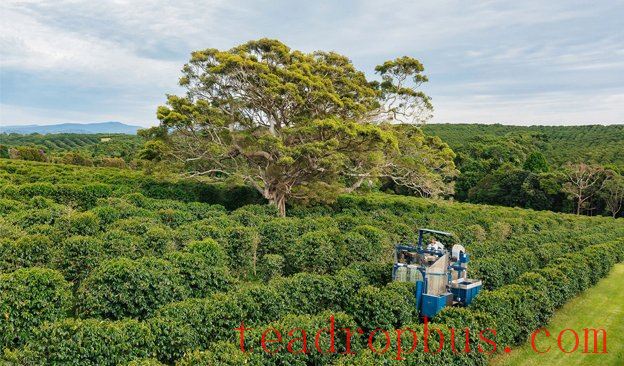
Australia aims to produce enough coffee to supply the insatiable demand of its domestic market. Photo credit: Zentveld's Coffee Farm, Australia
Australia has launched a five-year Australian coffee research program, marking the largest coordinated investment in the nation’s coffee research and development to date. The program, funded by AgriFutures Australia under the Department of Agriculture, aims to develop coffee varieties, a biosecurity plan and manual, and expand production. Its ultimate goal is to reduce Australia’s dependence on imported coffee.
Southern Cross University will lead the program in partnership with Plant Health Australia (PHA), the University of Queensland, and the Australian Grown Coffee Association. The program’s activities include improving productivity, testing new coffee varieties, strengthening biosecurity, and exploring opportunities for coffee production in new areas. Currently, less than 1% of the 2 billion cups of coffee consumed annually in Australia are produced domestically — an opportunity that AgriFutures Australia intends to capitalize on.
“This program builds on five years of successful variety selection trials and brings together leading expertise from across the country to address industry challenges related to sustainable intensification and biosecurity, ensuring that research delivers tangible benefits for growers,” said Professor Tobias Kretzschmar, Southern Cross University researcher and program lead.
Plant Health Australia
PHA is leading the program’s biosecurity component, which will focus on increasing industry understanding of established and exotic coffee pests and diseases and supporting preparedness across the sector. As part of the project, PHA will develop a new biosecurity plan and an on-farm biosecurity manual for the Australian coffee industry, alongside supporting fact sheets and extension resources. PHA will also engage directly with growers through industry events, activities, and field days.
According to PHA, while Australia remains free from many of the world’s major coffee pests and diseases, including coffee berry borer (Hypothenemus hampei) and coffee leaf rust (Hemileia vastatrix), imported coffee can present potential pathways for exotic pests and pathogens that could limit the industry’s continued growth.
Australia's strict biosecurity measures have successfully kept coffee leaf rust, coffee berry borer, and other pests out of the country. As a result, coffee grown in Australia does not require fungicide treatments for rust or pesticide applications for the borer. This absence of chemical use is reflected on the certification labels.
Domestic Coffee Production and Varieties
High-quality arabica coffee is grown commercially in the tropical tablelands of Far North Queensland, the cooler subtropical regions of south-east Queensland, and northern New South Wales, with the potential to expand into other suitable regions as knowledge, genetics, and production systems continue to improve. Australia's coffee industry comprises around 40 commercial growers, farming approximately 400 hectares, with capacity to produce around 800 tons of coffee each year.
The dominant varietal grown in Australia is Catuai, a hybrid of Mundo Novo and Caturra originally from Brazil via Costa Rica. A government program assessing coffee cultivation viability in Australia's tropics introduced red and yellow Catuai. According to local coffee farmer Jack Murat, researchers are working to expand the varietal base.
Producers are trialing hybrids including Marsellesa, NR25, Paraiso, and IPR107, evaluating cup quality, yield, and adaptability to Australian conditions. Some of this work is being conducted in partnership with Griffith University.
Australian coffee costs more than commodity-grade imported coffee. The industry remains primarily domestic, but specialty roasters in Japan, the UK, and parts of Europe have shown growing interest. As both quality and volume improve, export potential will continue to develop.