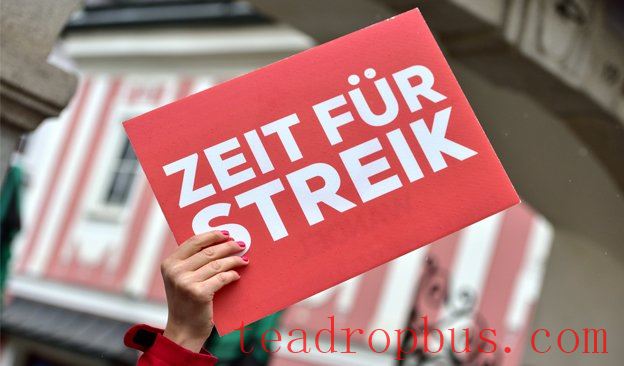
Strikes in major Northern European ports cause delays to coffee and tea supply chains.
Escalating labor disputes across Northern Europe are sending shockwaves through the continent’s beverage supply chains. Within mere weeks, back-to-back strikes, ranging from German walkouts over stalled wage talks to Dutch protests against social security cuts, have paralyzed major maritime hubs. Because key gateways like Hamburg handle a substantial share of Europe’s coffee and tea imports, the resulting gridlock is squeezing roasters, blenders, and logistics providers with cascading delays and mounting costs.
Germany's wage dispute began on August 18, when dockworkers at Hamburg, Bremerhaven, Wilhelmshaven, Bremen, Brake, and Emden staged a 24-hour walkout that disrupted cargo handling and raised concerns about inland transport backlogs. Negotiations between the ver.di union and the Central Association of German Seaport Operators (ZDS) stalled, and more than 6,000 employees rejected an improved offer. Ver.di then called a longer, 48-hour strike from September 2 to September 4. The ZDS offered a 5.1% pay increase under an 18-month deal, while ver.di is demanding 8.2% over 12 months. The agreement covers around 11,000 employees across multiple locations.
As the German strike wound down, Dutch dockworkers staged their own action. FNV Havens organized an eight-hour work stoppage across Rotterdam, Amsterdam, and Zeeland on September 4, halting ship handling from 11:15 a.m. to 7:00 p.m. local time. Unlike the German dispute, the Dutch action targeted the government's plan to cut €6.5 billion from social security spending, including shortening maximum unemployment benefits from two years to one. It was not connected to the German wage dispute. A spokesperson for ECT Rotterdam said clearing the backlog at its container terminals would take at least several days.
Hamburg: A Critical Piece in the Global Coffee and Tea Trade
These strikes matter most for Hamburg, which handles a disproportionate share of Europe's coffee and tea. The Port of Hamburg imported around 585,000 to 590,000 metric tons of coffee in 2025 and is widely recognized as Europe's largest coffee port. It hosts major trading firms including Neumann Kaffee Gruppe (NKG), the world's largest coffee trader, which re-exported 205,000 tonnes of green coffee in 2024, primarily to Poland, Spain, and the Netherlands. Tea follows a similar pattern: roughly 70% of the European tea trade passes through Hamburg, more than 39,000 tonnes a year, with shipments from China, India, Sri Lanka, and Kenya taking eight to ten weeks to arrive.
Coffee and Tea Shipments Face Mounting Delays
Because Hamburg concentrates so much of Europe's coffee and tea flow through a small number of terminals, even short stoppages ripple outward. With few larger vessels able to be handled at Hamburg during the strike window and Rotterdam's terminals separately paused on September 4, importers face compounding delays: containers arriving late, warehouse and blending schedules pushed back, and higher costs as roasters and packers wait for inventory.
With both sides in the German wage dispute still far apart and Dutch unions signaling further action, more disruption at Hamburg, Bremerhaven, and Rotterdam remains possible in the coming weeks. For coffee roasters, tea blenders, and the logistics providers serving them, the practical response mirrors industry-wide advice: build buffer time into shipping schedules, monitor terminal advisories closely, and expect that clearing backlogs will take longer than the strikes themselves. Given how concentrated global coffee and tea flows are through Hamburg, even a resolution to the German dispute may not fully unwind the congestion until well into the fall shipping season.