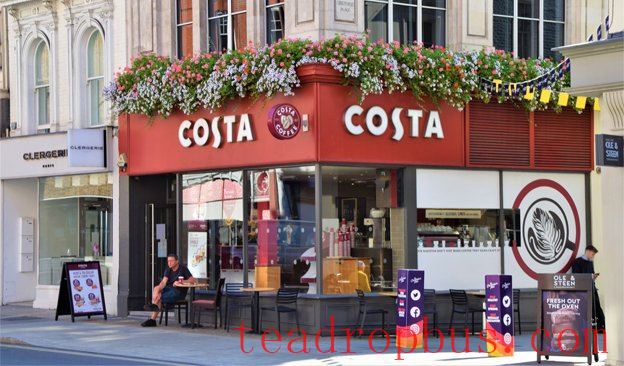
Coinciding with the BCA’s announcement that Gen Z is drinking more coffee than ever before, Costa Coffee finally turns sales around.
For the first time since 2022, Costa Coffee has posted an operating profit. The United Kingdom-based chain has struggled in recent years, to the point where owner Coca-Cola reportedly tried to sell the company. But a turnaround strategy based on store refurbishments and an expanded menu, featuring matcha and iced drinks to attract younger consumers, has helped it recover.
Coffee Alternatives Attract a Younger Crowd
After reporting losses between 2023 and 2024, Costa made an operating profit of £20 million ($26.4 million) in the year to 31 December, 2025. Revenue rose 5%, and CEO Philippe Schaillee told The Guardian’s Sarah Butler that the company had seen the largest rise in customer visits in a decade.
Many of those customers are also looking for caffeine alternatives such as matcha. “The coffee shop is increasingly a destination for morning and afternoon,” Schaillee said. “People not only want caffeine but iced herbal teas and those drinks that people will drink in the afternoon and evening.” Costa says it is now the largest cafe-based matcha seller in the UK.
BCA Says Gen Z Embraces Coffee
News of the company’s recovery comes as the latest UK survey data released by the British Coffee Association (BCA) shows that coffee consumption is soaring among younger people. Butler reported that much of Costa’s growth in sales has come from demand among younger customers.
The BCA’s research found that Britons now drink an estimated 103 million cups of coffee each day, up from 98 million in 2018. This rise can in part be attributed to an enormous jump in consumption among 18-34-year-olds, which has risen nearly 50% since 2021. The BCA’s data also shows that, for the first time, younger coffee lovers are drinking more than their older counterparts.
“These findings show just how firmly coffee is embedded in the social fabric and daily life across the UK, and it’s particularly striking to see the growth among younger adults,” the BCA’s executive director Paul Rooke said in a press release. “We are seeing a new generation embrace coffee, one of the UK’s favorite beverages, with 18-34-year-olds now reporting higher consumption than those aged 55 and over for the first time.”
Coca-Cola Still Might Sell
Costa’s recent history has been one of highs and lows. Coca-Cola paid more than $5 billion to acquire the company in 2018, but despite a promising start, the chain has struggled since 2020. Competition from other high street chains like Greggs and Caffè Nero, as well as trendier brands like Blank Street, has added to cost and supply chain pressures — Greggs recently overtook Costa as the largest coffee operator in the UK.
Last year, Coca-Cola looked to sell the struggling brand for about half what it paid in 2018, but changed its mind when satisfactory offers failed to materialize. However, despite Costa’s return to profit, on October 8 Semafor reported that the beverage giant was once again exploring a sale. Lale Akoner, an analyst at the investment platform eToro, told This is Money that any sale would still likely be at a discount. This “[reflects] the challenges the business has faced and the increasingly competitive coffee market,” Akoner said. Coca-Cola did not reply to Semafor’s request for comment.