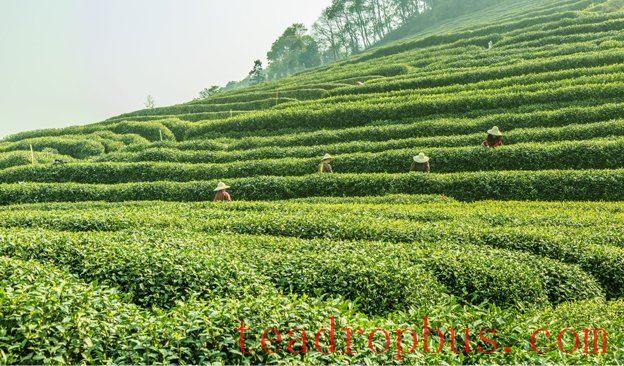
A new study identifies tea’s biggest carbon-emission areas and ways to reduce the industry’s carbon footprint. Photo credit: Yixing Zisha Gallery
In September, researchers from the Technical University of Dresden, Germany, the Tanzania Agricultural Research Institute, and the Department of Policy and Planning at the Tanzanian Ministry of Agriculture released a research paper on the carbon footprint of the tea agrifood system. By identifying the biggest sources of carbon emissions and highlighting the best areas for emission reduction, the study offers a valuable road map for tea producers, processors, and buyers seeking more sustainable and efficient resource management.
The systematic review analyzed 60 studies covering the tea value chain from cultivation to consumption. It found that energy use, fossil fuels, chemical fertilizers, and processing primarily drive the environmental footprint. According to the paper, life cycle assessment (LCA) is widely used to evaluate the environmental performance of tea agrifood systems.
Consumption activities accounted for the largest share (47%), followed by processing (27%), cultivation (17%), and packaging (9%). Consumer use (boiling water in a kettle) often accounts for almost 50% of the total footprint, depending on how much water is boiled.
The research also identified potential interventions to reduce emissions across the entire tea value chain. Improving energy efficiency leads with 36% of reported strategies, followed by replacing coal with biomass for tea processing (21%), using organic fertilizers (15%), composting tea-processing waste (9%), and enhancing processing technologies (9%).
Tea vs. Coffee
Tea is one of the lowest-carbon crops. The report Environmental Effects of Coffee, Tea and Cocoa, published in 2022 by the Swedish University of Agricultural Sciences, found that tea has a lower carbon footprint than coffee when measured per cup of prepared beverage. Tea has an estimated carbon footprint of 13g CO₂e per cup, compared with 38g CO₂e for a cup of ground coffee.
A carbon footprint study conducted by Izmir University of Economics in Turkey also analyzed the entire life cycle of tea. The research concluded that tea has a carbon footprint nearly 30 times lower than coffee and 12 times lower than carbonated soft drinks.
The carbon footprint of tea ranges from 3 to 7.1+ kg CO₂e per kg at the cradle-to-gate stage, covering farming, fertilizer production, soil emissions, and factory processing, and rises to 12.4–31.5 kg CO₂e per kg over its cradle-to-grave cycle, including brewing and packaging.
Taiwan Case Study
Taiwan has become the latest country to advance carbon labeling in the tea industry, with its first tea products recently approved for carbon footprint labels following life cycle emissions assessments. Taiwan's Ministry of Agriculture's Tea and Beverage Research Station helped young farmer Li Kuan-yi and Taiwan tea corporation’s Sun Moon Lake Old Tea Factory complete the carbon label application process.
The label is authorized by Taiwan's Ministry of Environment and shows emissions from farming and processing through packaging and transport. Earlier, a group of tea farmers from Taiwan’s southeast has been lauded as the first in the world to produce carbon-neutral oolong tea. It’s part of the Agricultural Ministry’s push to reach net-zero carbon emissions in the country’s agriculture by 2040.
In 2025, the Taitung County Government implemented a net-zero just transition assistance program, guiding three prominent tea estates in Luye Township to calculate their product carbon footprints under strict international standards. As a result, the tea estates passed the British Standards Institution (BSI) audit.