As domestic sales stagnate, Chinese new-style tea chains turn to global expansion to revitalize the market.
The money flowing into tea is becoming difficult to ignore. Public investors, private equity firms, and expanding Asian chains are backing a category whose commercial ambitions now stretch well beyond the traditional tea shop. For suppliers and operators, the question is how that investment translates into sustainable demand.
Mixue Brings Competitive Pricing to the US
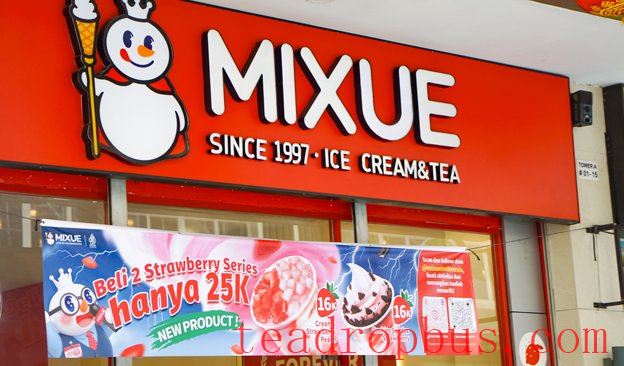
Mixue offers the most conspicuous example. The Chinese drinks and ice cream group raised approximately $444 million in its March 2025 Hong Kong initial public offering. In December 2025, its flagship brand opened its first US store on Hollywood Boulevard in Los Angeles, bringing a business built around affordable drinks into a considerably different operating environment.
The opening menu made its positioning clear: lemonade at $1.99 and bubble tea starting at $3.99. Those prices create an immediate point of comparison for nearby beverage operators. Maintaining them as the network expands will require purchasing power, efficient distribution, and enough sales volume to absorb local operating costs.
Increasing International Demand Balances Domestic Decline
Other chains are pursuing international growth through different propositions. Chagee reported overseas gross merchandise value (GMV) of RMB 504 million ($75.7 million) in the second quarter of 2026, up 114.3% from the same period a year earlier. GMV measures the value of drinks sold through its network; it should not be confused with company revenue or profit.
That distinction matters. Chagee’s Greater China GMV declined over the same period, illustrating why international markets have become strategically important. Strong overseas growth offers an additional source of demand, although it does not establish that every new market will produce attractive returns.
Heytea’s expansion adds another dimension. By August 2025, reporting from Shenzhen placed its US network above 30 stores, up from two. Its combination of fruit, tea, and textured toppings demonstrates how widely the category can stretch. These concepts compete for everyday beverage purchases alongside coffee, refreshers, and other customized drinks.
Private Equity Bets on Tea
Private equity is following the category, too. In August 2026, Bain Capital agreed to acquire Gong cha from TA Associates and other shareholders. The announcement described a network of nearly 2,200 stores across 33 markets. Nation’s Restaurant News reported that 289 locations were in the United States and Canada. The transaction was expected to close toward year-end.
Bain’s announcement emphasized Gong cha’s franchise model and its Digital Kitchen format. The investment case includes the systems behind each cup: brewing consistency, store productivity, franchise support, and the ability to reproduce an experience across markets. A popular menu becomes more valuable when operators can deliver it reliably.
Reliable Consistency Is the Key to Longevity
For the wider tea trade, this investment suggests opportunities beyond supplying additional leaf. Expanding chains need dependable specifications, repeatable extraction, ingredient availability, and products that retain their intended flavor after adding milk, fruit, ice, and toppings. Suppliers that can solve those problems may become valuable partners as purchasing volumes grow.
Independent operators face a more selective challenge. Matching a global chain’s promotional budget or entry price may be impractical. A clearer response is to understand the occasions those chains serve, then build a compelling offer around distinctive products, service, or local relationships.
Capital can finance openings, equipment, and consumer awareness. It cannot guarantee repeat visits or healthy store economics. The next useful measures will be customer retention, comparable-store performance, and franchisee returns. Tea’s expanding international footprint is already visible. Whether the investment creates durable businesses will become clearer in the performance of the stores behind it.