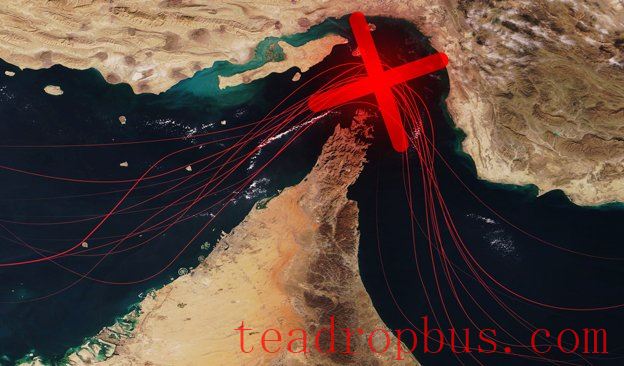
Twenty-eight reported incidents and attacks on cargo vessels in the Strait of Hormuz make October the worst month for shipping since the war began. Photo credit: Alones Creative
Eight months after it began, the Iran war continues to disrupt global coffee supply chains. Iran began blockading the Strait of Hormuz in late February in response to airstrikes from the United States and Israel. That move has affected coffee both directly, through green coffee delivery delays, and indirectly, as part of a wave of ripple effects from fertilizer shortages to higher fuel prices.
In the months since the closure, some cargo ships have braved the narrow waterway that connects the Persian Gulf and the Gulf of Oman. Negotiations to end the war between Iran and the US have been stop-and-go, and several ceasefires have come and gone. This uncertainty has led many shipping companies to reroute their vessels to avoid Iranian attacks.
The Conflict Escalates
Despite ongoing negotiations, those attacks have stepped up — in fact, October was the worst month for cargo shipping in the strait since the beginning of the war, with 28 reported incidents last month. Several ships have sunk, with Iranian fishermen salvaging thousands of Indonesian instant coffee packets from a cargo ship that hit a naval mine in the strait.
Coffee Continues to Be Impacted
Relatively little green coffee moves through the Strait of Hormuz. But the conflict's wider ripple effects have impacted the industry in numerous ways. The region produces a significant share of the world’s fertilizer, and supply has been constrained since the strait closed. Restricted crude oil shipments have sent fuel prices skyrocketing. General uncertainty and risk have also raised shipping and insurance costs.
The knock-on effects are wide-ranging. At a recent meeting of the Swiss Coffee Traders Association, much of the discussion surrounded ongoing supply chain disruption. A poll of attendees saw “war” listed as their main cause for concern, according to a report in Swiss Info. Attendees also noted longer coffee shipping times as many freight companies rerouted cargo around the Cape of Good Hope to avoid possible disruption in the Strait of Hormuz and the Houthi-controlled Red Sea.
Fertilizer Shortages Lead to Future Issues
In October, the head of the International Fund for Agricultural Development, a United Nations agency, told Reuters that fertilizer shortages caused by the strait’s closure were beginning to impact agriculture. "The pass-through from the initial locking down of the Strait of Hormuz . . . is now starting to be seen,” Alvaro Lario said.
In addition to fertilizer, diesel prices have soared over the past eight months. Both are critical to coffee, and rising, unpredictable costs can have a big impact: In Brazil, according to Alexis Rubinstein at StoneX, fertilizer can account for 30-40% of arabica coffee’s production cost. These input cost shocks might not influence coffee in the short term, because most fertilizer has already been applied, but going forward farmers may choose to apply less to save money, which could impact yields and productivity.
In an update on the current tensions in the strait, Worldwide Logistics Group noted the importance of planning ahead for cargo shipping. That’s something Dany Barkha from Sucafina told Swiss Info. “Companies doing well now are the ones that were well-prepared,” Barkha said. “The companies that waited longer to adapt to longer shipping times did not do so well. Putting the coffee on water with delayed transit time is better than waiting for the unknown.”