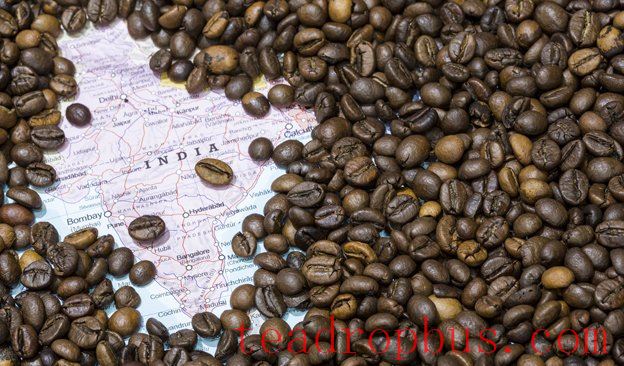
Driven by international demand for robusta and instant coffee, along with a growing domestic market, India’s coffee industry is booming.
India, long known as a tea-drinking nation, is quietly reshaping the global coffee trade. Increased investment in robusta and instant coffee production, backed by new state-level support for growers, is changing who buys Indian beans and why.
Expanding Global Demand for Robusta and Instant
India’s coffee exports jumped 27% in the first four months of the year, lifted by strong global demand for robusta and instant coffee. Shipments rose 26.6% to 174,000 metric tons in January-April, up from 137,000 metric tons a year earlier, according to the Coffee Board of India. Robusta exports climbed 36% to 85,168 metric tons, and instant coffee shipments increased to 20,332 metric tons from 17,504 metric tons.
Arabica was the outlier, with exports falling 58% to 30,589 metric tons. However, Indian specialty coffee exports to the United States grew from roughly $1 million in the 2019/20 season to $61 million in 2022/23, according to figures cited by Asia Matters for America, an East-West Center initiative.
Exporters reported higher orders from Europe and Russia, where buyers have been sourcing Indian robusta for its competitive pricing and consistent quality. The European Union remains the main export destination. India shipped a total of 384,000 metric tons of coffee in 2025, and earnings rose 22.5% to $2.06 billion even as volumes slipped from the prior year, according to Economic Times. Traders cautioned, however, that fluctuations in international prices and logistics costs could affect shipment volumes going forward.
A Fast-Growing Home Market
The broader market outlook is also strong. India’s coffee industry is projected to expand at a compound annual growth rate (CAGR) of 8.9% through 2028, according to a government statement released last November. Out-of-home consumption is growing even faster, compounding at 15-20% annually and heading toward $2.6-3.2 billion by 2028, according to a Redseer Strategy Consultants report.
Premium coffee is leading that shift, with its share of the out-of-home market projected to rise from 46% in 2023 to 55-60% by 2028. Indian Retailer linked the growth to urbanization, café culture, and the rise of specialty brews among urban consumers.
Record Output and Growing State Support
Production is also climbing. The Coffee Board’s estimate for 2025/26, issued after the blossom season, projects record output of 404,000 metric tons, including 120,000 metric tons of arabica and 284,000 metric tons of robusta. Looking further ahead, the board aims to scale national production to 900,000 metric tons by 2047, according to the same government statement.
Robusta accounts for roughly 70% of Indian output, The Week reported, while specialty origins such as Monsooned Malabar, Mysore Nuggets, and Koraput coffee have strengthened India’s reputation for premium beans. Smallholders account for nearly 99% of holdings and 70% of production, and the government statement said cuts to goods and services tax rates and trade agreements, including the India-UK Comprehensive Economic and Trade Agreement, have widened opportunities for value-added exports.
State-level support is growing as well, particularly in Kerala. Karnataka accounted for about 69% of national output in fiscal 2026, and Kerala for about 22%, according to the India Brand Equity Foundation. In Kerala, the World Bank-funded Kerala Climate Resilient Agri-Value Chain Modernization (KERA) project offers replanting aid, irrigation support, and nursery funding to Wayanad growers.
ETV Bharat reported that a 10-year, multiphase plan aims to double Wayanad’s coffee production, with subsidies of up to 70% planned for replanting. In Karnataka, where Kodagu, Chikkamagaluru, and Hassan anchor production, the Coffee Board invited growers to apply for plantation-development subsidies for 2026/27.