Green Tea is made without fermentation, preserving the natural substances in fresh leaves. It contains a high amount of nutrients such as catechins, chlorophyll, caffeine, amino acids, and vitamins. The natural nutrients in green Tea have special effects in anti-aging, cancer prevention, antibacterial properties, and anti-inflammatory actions, which are unparalleled by other types of tea. Green tea is produced from suitable new shoots of tea trees, undergoing typical processes such as fixation, rolling, and drying. Its dry leaves, brewed tea, and infused leaves predominantly feature green hues, hence its name. Freshly picked leaves are first subjected to high-temperature fixation to kill various oxidizing enzymes, preserving the green color of the tea. They are then rolled and dried, resulting in the characteristic clear liquor and green leaves of green tea.
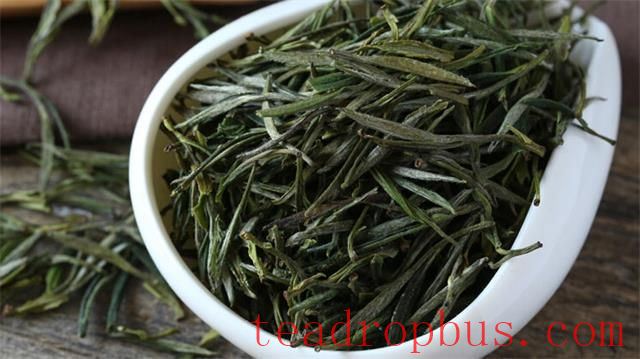
Green tea is one of the primary tea categories in China, with an annual production of around 100,000 tons, ranking it at the top among the six major categories of processed teas. Among Chinese green teas, there are numerous renowned varieties that not only boast exquisite aroma and flavor but also possess unique shapes and high artistic appreciation value. Depending on their drying and fixation methods, green teas can generally be classified into pan-fired, oven-dried, sun-dried, and steamed green teas. Different processing techniques result in varied forms, leading to distinct brewing methods for each type of green tea.
In the Ming Dynasty, Zhang Yuan's “Tea Record” mentions: “The order of adding tea is important and should not be neglected. Adding tea after water is called bottom application. Adding tea when the cup is half full of water and then topping up with water is called middle application. Adding tea before water is called top application. Middle application is used in spring and autumn. Top application is used in summer. Bottom application is used in winter.” This means that when brewing green tea, the sequence of adding tea is significant, and the terms “middle application,” “top application,” and “bottom application” together refer to the three application methods for green tea.
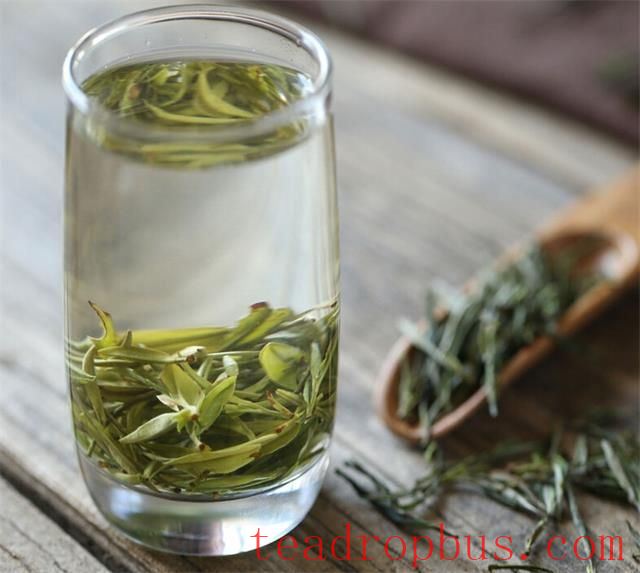
[01. Top Application Method]
The top application method involves adding water first, followed by the tea. This method allows the tea to slowly and gently come into contact with the water, preventing the tea from being scalded by excessively hot water.
The top application method is most suitable for finely shaped, premium green teas, which are typically all buds or covered with fine down, such as Super Grade Biluochun and Xinyang Maojian, which are sensitive to high temperatures. Loose teas that float on the surface and do not easily sink are not recommended for this method.
[Brewing Method]
First, fill the cup with boiling water to about 70% full. Wait a few seconds until the water temperature drops below 90°C, then add the tea. Once the majority of the tea has sunk below the surface, gently rotate the cup to evenly distribute the tea in the water, and it will soon be ready to drink.
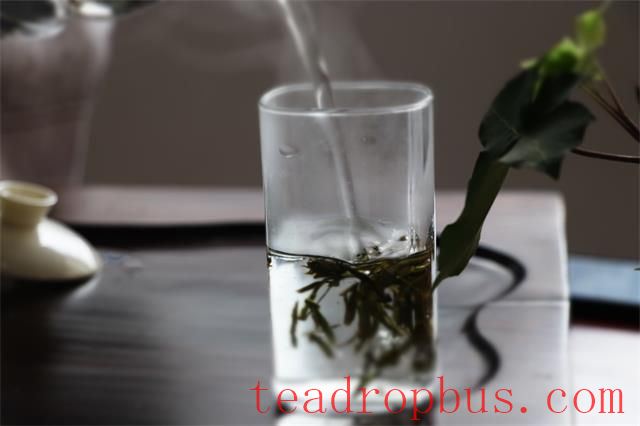
[02. Middle Application Method]
The middle application method involves adding water first, then the tea, and then more water. This method prevents the tea from being damaged by overly hot water while ensuring that the tea and water blend well.
The middle application method is not very selective regarding the type of tea; it can be used for brewing any green tea, especially flat-shaped Longjing.
[Brewing Method]
First, fill the cup with boiling water to about one-third full. When the water cools to around 90°C, add the tea and gently swirl the glass cup to moisten the tea. Then, slowly pour in water at 80-90°C until the cup is about 70% full, and it will soon be ready to drink.
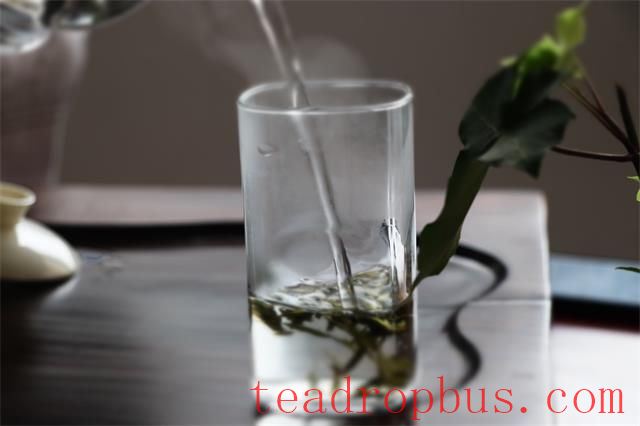
[03. Bottom Application Method]
The bottom application method involves adding the tea first, followed by the water. This method is applicable for brewing tea in cups, lidded bowls, or Teapots, and it suits the majority of teas. This brewing method enables faster contact between the tea and water. Using the bottom application method in winter can avoid the disadvantage of insufficient water temperature.
The bottom application method is relatively suitable for teas made from more mature raw materials and less compact shapes, such as Taiping Houque and Lu'an Guapian.
[Brewing Method]
Add the tea to the cup, then pour in water at 80-90°C until the cup is about 70% full, and it will soon be ready to drink.