Interpreting the wisdom of tea health preservation in 'Dream of the Red Chamber' has the following characteristics:
Tea Health Preservation Presents a Harmonious Picture
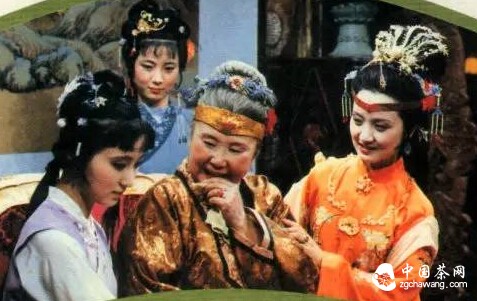
'Dream of the Red Chamber' writes extensively about tea and tea matters. From the ancestral grandmother Jia Mu to the folk old woman Granny Liu, from noblewomen and boudoir young ladies to maids and hired workers, all are related to tea. According to preliminary statistics, there are as many as 263 references to tea and tea matters in the book, creating a good atmosphere for tea health preservation. In the twenty-fifth chapter, it is written that Baoyu, Fengjie, Baochai, Daiyu, Li Gongcai, etc. tasted tea together. Amidst the lively discussion, Fengjie said to Daiyu: "Since you have drunk our tea, why don't you become our daughter-in-law?" This statement reveals the status of tea in marriage customs.
Tea Health Preservation Relies on the演绎 of Tea Culture

In 'Dream of the Red Chamber', the varieties and quality of tea leaves, tea sets, and tea water are written vividly through different characters and scenes, making the tea culture accumulated by tea appear绚丽多彩 (rich and colorful). The book mentions tasting Longjing Tea, Liu'an Tea, Laojun Mei (i.e., precious tea), Fenglu Tea, and also Yunnan's Pu'er Tea, etc. Through everyone's tasting and评论 (evaluation/comments), these famous national teas are pointed out, highlighting the different feelings and effects on human health in subtle ways. Tea sets, known as the "father of tea," naturally have their own particular讲究 (fastidiousness/particularity) in 'Dream of the Red Chamber'. Taking the tea tasting in the栊翠庵 (Brocade翠Nunnery) as an example, the tea set used by Grandmother Jia for drinking Laojun Mei was a small carved lacquer tea tray in the shape of a begonia flower, filled with gold and depicting clouds and dragons offering longevity, inside which was a small covered cup from the Cheng Kiln with五彩 (five-color) decoration. Others also used fine tea sets, "all were identical official kiln脱胎填白 (egg-shell white filled) covered bowls." Drinking tea with各种有文化内涵的精美茶具 (various culturally connotative and exquisite tea sets) is enough to please the eye, increase interest, and promote mental health preservation.
Tea Health Preservation Focuses on Scientific Tea Drinking Methods
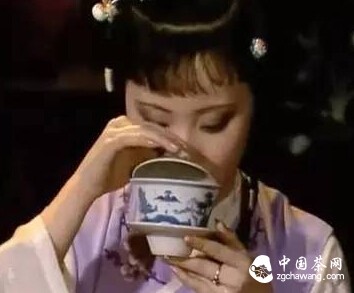
Not taking medicine for minor illnesses was an ancient recipe for health preservation. Tea is not medicine, but long-term tea drinking has the health care effect of eliminating minor ailments. The wisdom of tea health preservation appears in many places in 'Dream of the Red Chamber'. Chapter 41 writes that Grandmother Jia asked to serve tea to Granny Liu. Granny Liu drank it all in one gulp, smiled and said, "It's good, but it's a bit weak. It would be better if it were brewed stronger." Grandmother Jia and everyone laughed. She drank it all in one gulp and preferred strong tea, which is the tea drinking habit of laborers. Miaoyu, one of the Twelve Beauties of Jinling in the Dream of the Red Chamber, had an opinion on tasting tea. She said: "The first cup is for tasting, the second cup is for quenching thirst, foolish thing, and the third cup is for drinking like an ox or a donkey." Judging from Grandmother Jia's tea drinking and Miaoyu's tea theory, it is better not to drink too much tea for health preservation, to sip slowly, and not to drink in large gulps. Tea drinking for health preservation has its own讲究 (particularities) for different genders, ages, and constitutions. Tea drinking also involves different seasons. In winter, even ordinary people should drink less strong green tea, especially those with weak intestines and stomach; it is best to drink black tea. After 4 pm, it is best not to drink strong tea.
'Dream of the Red Chamber' describes tea health preservation from a phenomenological perspective. In fact, modern scientific research on tea health preservation is summarized by experts in seven words: "Three reductions, three eliminations, and anti-radiation," meaning long-term scientific tea drinking is beneficial for lowering blood lipids, blood pressure, and blood sugar; disinfecting, reducing inflammation, and eliminating bacteria; in terms of anti-radiation, the茶酚类 (tea phenols) contained in tea can absorb radioactive substances, making tea drinking a good method against radiation.
Tea Health Preservation Promotes Health and Longevity.
Grandmother Jia in 'Dream of the Red Chamber' can be called a典型 (typical example). The image of Grandmother Jia集中凝聚了 (centrally凝聚/concentrates and embodies) all the cultural characteristics of the thoughts, psychology, sentiments, and demeanor of ancient Chinese grandmothers. All of these are reflected in her extremely naturally and harmoniously. Among them, Grandmother Jia's tea tasting is even more回味无穷 (evocative/leaving a lasting aftertaste). She formed a bond with tea in her beautiful life of enjoying life, knowing and cherishing blessings. She understood the way of being a person from tea, understood the dialectics of life, paid attention to the quantity, quality, and level of享受生活 (enjoying life). Summarizing Grandmother Jia's diet has four major characteristics: first, loves to eat; second, eats with others; third, is good at eating; fourth, assesses the situation and exercises self-restraint. It is no exaggeration to say that Grandmother Jia's mental health preservation, worldly wisdom, and豁达大度 (open-mindedness and generosity) are all related to tea. She lived to be 83 years old, which was very rare in that era. Longevity comes from tea, longevity comes from happiness.
Modern scientific research recognizes green tea and red wine as healthy beverages,公认 (recognized) by the world today. On January 6, 2011, The Guardian载文指出 (published an article pointing out): "Drinking green tea helps prevent Alzheimer's disease and cancer."
Since its publication, 'Dream of the Red Chamber' has been studied from different perspectives, focusing on different aspects. The books and papers written by experts and scholars mostly focus on the great wisdom of life. Relatively speaking, the tea and tea matters in daily life expressed in 'Dream of the Red Chamber' are only small wisdom, but Cao Xueqin's writing is细腻 (detailed and exquisite) and言辞精彩 (brilliant in diction), integrating tea health preservation into the category of "Understanding worldly wisdom is learning, and being experienced and tactful in human affairs is文章 (literature/articles)." The wisdom of tea health preservation in 'Dream of the Red Chamber' is a mirror for people to enjoy精致生活 (refined life), health, and longevity.